
Catalogue Search | MBRL


Are you sure you want to remove the book from the shelf?

{{itemTitle}}
977
result(s) for
"Diplomatic methods"
Sort by:

Diplomatic Elements in Qarakhanid Foreign Policy toward the Saljuqs in the 11th–12th Centuries
Diplomacy was in its formative stages during the Middle Ages, and states used advanced diplomatic tools in their interactions. Diplomatic methods such as treaties, mediation, marriage alliances, and cooperation offered distinct advantages and reflected the role and position of a country in the international arena. Analyzing the interstate relations of the Qarakhanids and Saljuqs, we found that they initially had similar state structures, cultural and economic traditions, and religion, but evolved in different directions as a result of their interactions. This article argues that the diplomatic methods and tools used by a state reflect its level of internal development and affect the effectiveness of its actions. Moreover, the article offers a new holistic perspective on interstate relations in the Turkic world.
Journal Article
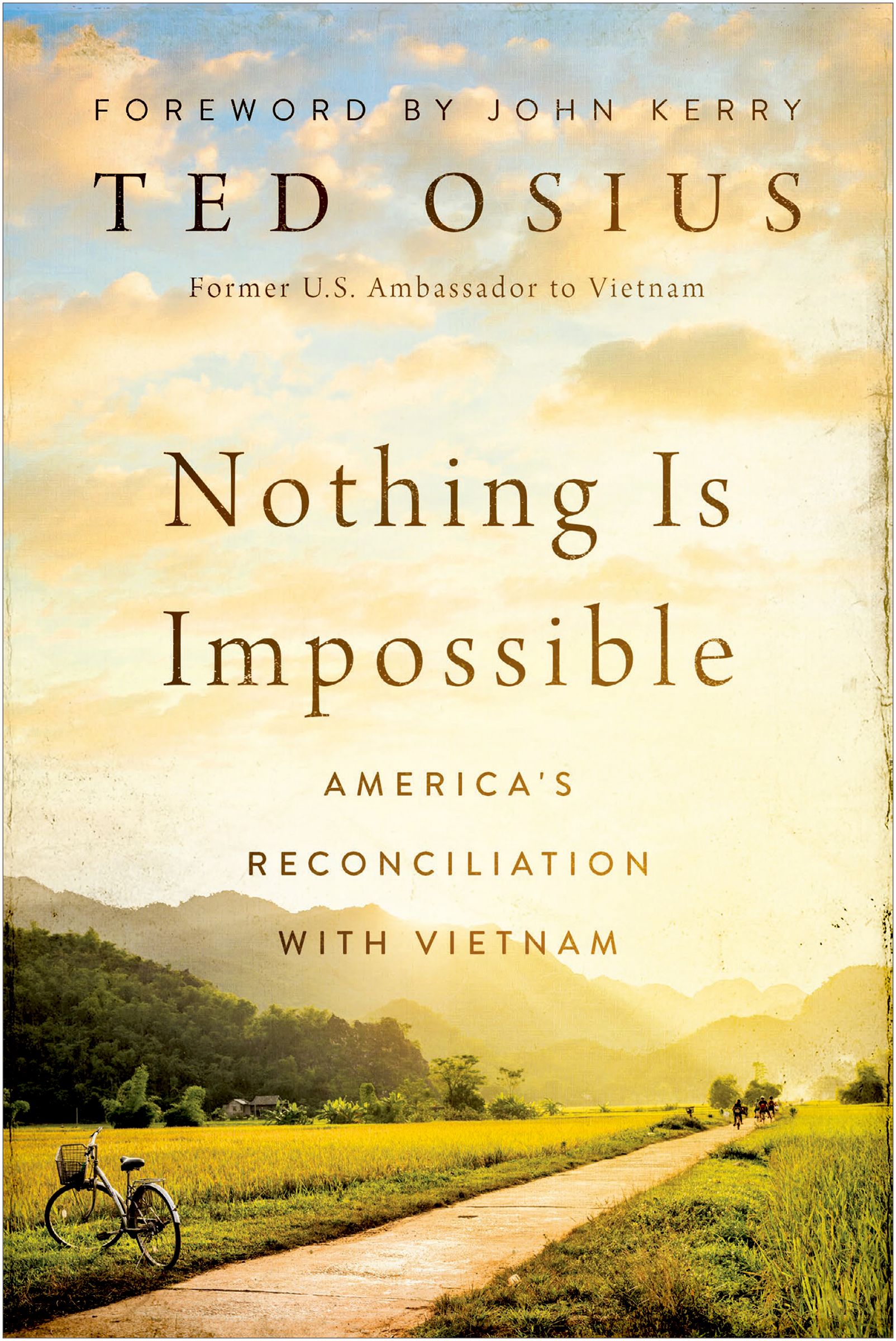
Nothing is Impossible
Today Vietnam is one of America’s strongest international partners, with a thriving economy and a population that welcomes American visitors. How that relationship was formed is a twenty-year story of daring diplomacy and a careful thawing of tensions between the two countries after a lengthy war that cost nearly 60,000 American and more than two million Vietnamese lives. Ted Osius, former ambassador during the Obama administration, offers a vivid account, starting in the 1990s, of the various forms of diplomacy that made this reconciliation possible. He considers the leaders who put aside past traumas to work on creating a brighter future, including senators John McCain and John Kerry, two Vietnam veterans and ideological opponents who set aside their differences for a greater cause, and Pete Peterson—the former POW who became the first U.S. ambassador to a new Vietnam. Osius also draws upon his own experiences working first-hand with various Vietnamese leaders and traveling the country on bicycle to spotlight the ordinary Vietnamese people who have helped bring about their nation’s extraordinary renaissance. With a foreword by former Secretary of State John Kerry, Nothing Is Impossible tells an inspiring story of how international diplomacy can create a better world.
eBook

Governing global problems under uncertainty: making bottom-up climate policy work
With the failure of integrated, top-down bargaining strategies, analysts and diplomats have now turned to bottom-up methods such as “building blocks” and “climate clubs” to coordinate national climate change policies and to avoid persistent diplomatic deadlock. We agree that decomposition of the grand problem of climate change into smaller units is a crucial first step towards effective cooperation. But we argue that given the great uncertainty of the feasibility and costs of potential solutions, this bottom-up approach will only work if it is supported by institutions that promote joint exploration of possibilities by public and private actors along with the scaling up of successes. As politics precludes creating many of these institutions under the consensus-oriented decision rules of the UN system, engaged outsiders—including especially clubs or building blocks that can learn in the face of uncertainty—working in parallel with the UN diplomatic process will have to provide them.
Journal Article

OBSERVING AND PREDICTING THE 2015/16 EL NIÑO
The El Niño of 2015/16 was among the strongest El Niño events observed since 1950 and took place almost two decades after the previous major event in 1997/98. Here, perspectives of the event are shared by scientists from three national meteorological or climate services that issue regular operational updates on the status and prediction of El Niño–Southern Oscillation (ENSO). Public advisories on the unfolding El Niño were issued in the first half of 2015. This was followed by significant growth in sea surface temperature (SST) anomalies, a peak during November 2015–January 2016, subsequent decay, and its demise during May 2016. The life cycle and magnitude of the 2015/16 El Niño was well predicted by most models used by national meteorological services, in contrast to the generally overexuberant model predictions made the previous year. The evolution of multiple atmospheric and oceanic measures demonstrates the rich complexity of ENSO, as a coupled ocean–atmosphere phenomenon with pronounced global impacts. While some aspects of the 2015/16 El Niño rivaled the events of 1982/83 and 1997/98, we show that it also differed in unique and important ways, with implications for the study and evaluation of past and future ENSO events. Unlike previous major El Niños, remarkably above-average SST anomalies occurred in the western and central equatorial Pacific but were milder near the coast of South America. While operational ENSO systems have progressed markedly over the past several decades, the 2015/16 El Niño highlights several challenges that will continue to test both the research and operational forecast communities.
Journal Article

Experiential learning to advocacy: A peer-led approach to safe medication disposal in pharmacy education
Safe medication disposal is crucial for public health and environmental sustainability, yet public awareness remains limited. While educational campaigns exist, pharmacy students can serve as key advocates in promoting proper disposal practices. This study integrates experiential learning and peer-led education to enhance students' advocacy skills.
A two-phase mixed-method approach was used. In Phase 1, 35 pharmacy student ambassadors underwent hands-on training at community pharmacies, actively participating in medication take-back programs. Their experiences were documented and analyzed thematically. In Phase 2, they conducted a peer-led workshop for 43 undergraduate pharmacy students. A pre- and post-test assessed knowledge improvement among workshop participants.
The thematic analysis identified five key themes: increased awareness, recognition of environmental and health risks, sense of responsibility, motivation for advocacy, and challenges in promoting safe disposal. Knowledge among workshop participants significantly improved, increasing from mean score 6.86 to 8.44 (Z = -4.827, p < 0.001), demonstrating the effectiveness of peer-led education.
Experiential learning combined with peer-led education effectively strengthened pharmacy students' knowledge and advocacy for safe medication disposal. Engaging students as educators not only enhanced their own competencies but also improved awareness among peers. This approach empowers future pharmacists to advocate for responsible disposal practices within their communities.
Journal Article
Representing national images of self and others through China's diplomatic discourse: A corpus-based study
Drawing on van Dijk's Ideological Square framework, this paper adopts a corpus-based method to examine the discursive strategies in their responses by the spokespersons for China's Ministry of Foreign Affairs during regular press conferences amid a public health crisis. The analysis focuses on how these discursive strategies shape the national images of China and the other four permanent members of the United Nations Security Council. The results show that (1) the spokespersons actively employed communicative discursive strategy to clarify China's stance and international cooperation initiatives while also using offensive discourse strategy to counter criticisms from US-led Western nations and media regarding the virus and the pandemic; (2) although the spokespersons' discourse generally aligns with van Dijk's Ideological Square of positive self-presentation and negative other-presentation, this model is not fixed but subject to dynamic changes driven by the self-serving principle. It is argued that factors such as diplomatic ideology, geopolitical relations, and traditional Chinese culture underlie the spokespersons' use of discursive strategies and national images representations. This study contributes to reconceptualizing an existing discourse model by offering data-driven insights into the operational mechanisms of ideological discourse in the contexts of global political communication and national image construction.
Journal Article

Educational innovation as a communication strategy in palliative care: A study protocol and preliminary results
Society associates palliative care with \"death\" or \"end of life\", which cause them fear and anxiety. In Spain, the media worsens the misunderstanding by depicting a wrong picture of palliative care. Educational innovation for university students may serve as an alternative communication strategy. Care and Society is a university course designed by and for students from non-health degrees to help disseminate the palliative care message. The first year of the Teach-Inn Pal project aims to evaluate the effects of the course and to identify areas of improvement.
To present an evaluation to determine if the course can work as a campaign to refocus the public opinion on palliative care and share the preliminary results of the pilot study.
A prospective Participatory Action Research study. University students enrolled in the course (n = 29) are invited to test and redesign the palliative care message. Knowledge and empathy will be measured throughout the learning process. Afterwards, qualitative, thematic, inductive analysis of the course material will be carried out. This study is registered on the ISRCTN Registry under the name \"Can a university course help communicate palliative care?\" (Registration number: ISRCTN10236642).
This study is part of a doctoral thesis. Education is used as a creative outlet, allowing rapid testing of multiple tools to create ambassadors of palliative care that may reframe the public opinion.
The understanding of students about palliative care changed, the overall impression of the experience was positive, and students were also able to explain palliative care to people with little or no experience in the topic. However, to determine if they became ambassadors the results of the mid-term assessment are required.
Journal Article

Targeting the Poor: Evidence from a Field Experiment in Indonesia
This paper reports an experiment in 640 Indonesian villages on three approaches to target the poor: proxy means tests (PMT), where assets are used to predict consumption; community targeting, where villagers rank everyone from richest to poorest; and a hybrid. Defining poverty based on PPP$2 per capita consumption, community targeting and the hybrid perform somewhat worse in identifying the poor than PMT, though not by enough to significantly affect poverty outcomes for a typical program. Elite capture does not explain these results. Instead, communities appear to apply a different concept of poverty. Consistent with this finding, community targeting results in higher satisfaction.
Journal Article
The CrowdWater game: A playful way to improve the accuracy of crowdsourced water level class data
Data quality control is important for any data collection program, especially in citizen science projects, where it is more likely that errors occur due to the human factor. Ideally, data quality control in citizen science projects is also crowdsourced so that it can handle large amounts of data. Here we present the CrowdWater game as a gamified method to check crowdsourced water level class data that are submitted by citizen scientists through the CrowdWater app. The app uses a virtual staff gauge approach, which means that a digital scale is added to the first picture taken at a site and this scale is used for water level class observations at different times. In the game, participants classify water levels based on the comparison of the new picture with the picture containing the virtual staff gauge. By March 2019, 153 people had played the CrowdWater game and 841 pictures were classified. The average water level for the game votes for the classified pictures was compared to the water level class submitted through the app to determine whether the game can improve the quality of the data submitted through the app. For about 70% of the classified pictures, the water level class was the same for the CrowdWater app and game. For a quarter of the classified pictures, there was disagreement between the value submitted through the app and the average game vote. Expert judgement suggests that for three quarters of these cases, the game based average value was correct. The initial results indicate that the CrowdWater game helps to identify erroneous water level class observations from the CrowdWater app and provides a useful approach for crowdsourced data quality control. This study thus demonstrates the potential of gamified approaches for data quality control in citizen science projects.
Journal Article