
Catalogue Search | MBRL


Are you sure you want to remove the book from the shelf?

{{itemTitle}}
1,902
result(s) for
"Diplomatic protocol"
Sort by:
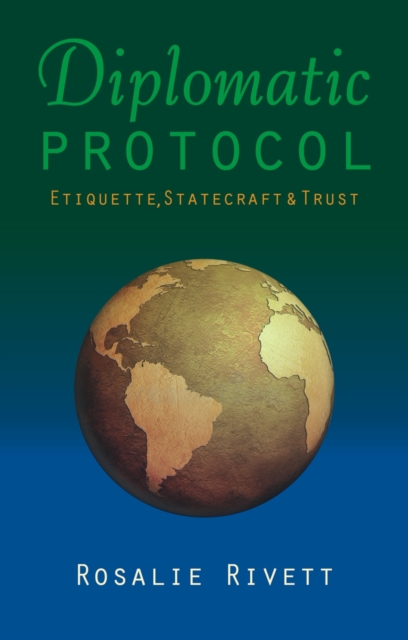
Diplomatic Protocol, Etiquette, Statecraft and Trust
Highlights the important relevance of Protocol as it applies to the Vienna Convention on Diplomatic Relations. Provides factual and anecdotal examples of this vital aspect of statecraft and international diplomacy
eBook

Preserving Montreal Protocol Climate Benefits by Limiting HFCs
With no impending global controls on HFCs, the Montreal Protocol offers a near-term path to preserve its climate benefits. The Montreal Protocol is perhaps the most successful international environmental treaty, responsible for global phaseout of the consumption and production of ozone-depleting substances (ODSs), e.g., chlorofluorocarbons (CFCs) and hydrochlorofluorocarbons (HCFCs). Hydrofluorocarbons (HFCs), which do not destroy stratospheric ozone, were considered long-term substitutes for ODSs and are not controlled by the Montreal Protocol. Because most HFCs are potent greenhouse gases (GHGs), they are included in the Kyoto Protocol. But climate benefits provided by this protocol are limited as they apply only to developed countries and over a short time (2008–2012). As we describe below, with no impending global controls on HFCs, inclusion of HFCs under the Montreal Protocol offers a path, starting in the short term, to preserve the climate benefits already achieved by this protocol.
Journal Article


Cultural Differences and the Application of Diplomatic Protocol in the Central and Eastern European Region
The success of diplomatic relations is closely linked to the understanding of cultural differences and the proper application of diplomatic protocol. In the countries of the Central and Eastern European region, the diverse historical experiences, collective memories, and socio-cultural characteristics significantly shape both formal and informal diplomatic behavior. This paper examines how cultural differences influence the application of diplomatic protocols in the region, with a particular focus on the role of cultural sensitivity in diplomatic interactions. Adopting a qualitative, multiple case study approach, the research analyzes contemporary diplomatic incidents in which culturally embedded symbols, gestures, dress codes, and gift-giving practices led to protocol unconventionalities or failures. The findings demonstrate that a lack of cultural sensitivity may result in misunderstandings, public embarrassment or diplomatic tension, while culturally informed protocol practices can contribute to strengthening bilateral and multilateral relations. By integrating cultural sensitivity theory with the analysis of diplomatic protocol and providing empirical evidence from Central and Eastern Europe, the paper contributes to the literature by offering a region-specific and practice-oriented perspective on diplomacy. The paper highlights how seemingly minor protocol deviations can carry significant symbolic and political meanings in culturally sensitive contexts, thereby influencing the elusiveness of international relations.
Journal Article

United States Protocol
United States Protocol is a must-have reference for communicating with government and business officials, international organizations, and high-level military personnel, both in the United States and abroad. Everything you need is presented in a comprehensive, detailed, and well-organized book that makes it easy to navigate official protocol. Former President Bill Clinton says in his foreword that it is 'an authoritative user's manual for international relations, it promises to become an indispensable reference_not only for those in Washington, but for all Americans in contact with people in other nations.' Ambassador Mary Mel French uses her personal experience as a former Chief of Protocol to give us the most up-to-date and user-friendly guide to diplomatic protocol at the international, national, and state level. She includes meticulous instructions, in-depth diagrams and tables, a comprehensive table of contents, and a plethora of examples that make United States Protocol the perfect guide to any official event.
eBook

Nothing is Impossible
Today Vietnam is one of America’s strongest international partners, with a thriving economy and a population that welcomes American visitors. How that relationship was formed is a twenty-year story of daring diplomacy and a careful thawing of tensions between the two countries after a lengthy war that cost nearly 60,000 American and more than two million Vietnamese lives. Ted Osius, former ambassador during the Obama administration, offers a vivid account, starting in the 1990s, of the various forms of diplomacy that made this reconciliation possible. He considers the leaders who put aside past traumas to work on creating a brighter future, including senators John McCain and John Kerry, two Vietnam veterans and ideological opponents who set aside their differences for a greater cause, and Pete Peterson—the former POW who became the first U.S. ambassador to a new Vietnam. Osius also draws upon his own experiences working first-hand with various Vietnamese leaders and traveling the country on bicycle to spotlight the ordinary Vietnamese people who have helped bring about their nation’s extraordinary renaissance. With a foreword by former Secretary of State John Kerry, Nothing Is Impossible tells an inspiring story of how international diplomacy can create a better world.
eBook

Escalating Indecision: Between Reification and Strategic Ambiguity
This paper examines an organizational pathology that we label \"escalating indecision\"-where people find themselves driven to invest time and energy in activities and decision processes aimed at resolving an issue of common concern, but where closure appears elusive. The phenomenon is illustrated through a case history in which a strategic orientation decision involving the configuration of a group of large teaching hospitals was continually made, unmade, and remade, producing little concrete strategic action over many years before achieving more tangible moves toward implementation. The paper introduces the notion of a \"network of indecision\" in which participants have become sufficiently attached to a common project to continue working together to move it forward, but their divergent conceptions of what this involves prevent them from materializing it in a tangible form. The paper suggests that networks of indecision are dialectically constituted through a set of practices of reification and practices of strategic ambiguity. The phenomenon is strongly associated with pluralistic settings characterized by diffuse power and divergent interests, and its prevalence is likely to be greater in situations of reactive leadership, uncertain resource availabilities, and long time horizons.
Journal Article

Identifying Representational Competence With Multi-Representational Displays
Increasingly, multi-representational educational technologies are being deployed in science classrooms to support science learning and the development of representational competence. Several studies have indicated that students experience significant challenges working with these multi-representational displays and prefer to use only one representation while problem solving. Here, we examine the use of one such display, a multi-representational molecular mechanics animation, by organic chemistry undergraduates in a problem-solving interview. Using both protocol analysis and eye fixation data, our analysis indicates that students rely mainly on two visual-spatial representations in the display and do not make use of two accompanying mathematical representations. Moreover, we explore how eye fixation data complement verbal protocols by providing information about how students allocate their attention to different locations of a multi-representational display with and without concurrent verbal utterances. Our analysis indicates that verbal protocols and eye movement data are highly correlated, suggesting that eye fixations and verbalizations reflect similar cognitive processes in such studies.
Journal Article

Sample size determinations in original research protocols for randomised clinical trials submitted to UK research ethics committees: review
Objectives To assess the completeness of reporting of sample size determinations in unpublished research protocols and to develop guidance for research ethics committees and for statisticians advising these committees.Design Review of original research protocols.Study selection Unpublished research protocols for phase IIb, III, and IV randomised clinical trials of investigational medicinal products submitted to research ethics committees in the United Kingdom during 1 January to 31 December 2009.Main outcome measures Completeness of reporting of the sample size determination, including the justification of design assumptions, and disagreement between reported and recalculated sample size. Results 446 study protocols were reviewed. Of these, 190 (43%) justified the treatment effect and 213 (48%) justified the population variability or survival experience. Only 55 (12%) discussed the clinical importance of the treatment effect sought. Few protocols provided a reasoned explanation as to why the design assumptions were plausible for the planned study. Sensitivity analyses investigating how the sample size changed under different design assumptions were lacking; six (1%) protocols included a re-estimation of the sample size in the study design. Overall, 188 (42%) protocols reported all of the information to accurately recalculate the sample size; the assumed withdrawal or dropout rate was not given in 177 (40%) studies. Only 134 of the 446 (30%) sample size calculations could be accurately reproduced. Study size tended to be over-estimated rather than under-estimated. Studies with non-commercial sponsors justified the design assumptions used in the calculation more often than studies with commercial sponsors but less often reported all the components needed to reproduce the sample size calculation. Sample sizes for studies with non-commercial sponsors were less often reproduced.Conclusions Most research protocols did not contain sufficient information to allow the sample size to be reproduced or the plausibility of the design assumptions to be assessed. Greater transparency in the reporting of the determination of the sample size and more focus on study design during the ethical review process would allow deficiencies to be resolved early, before the trial begins. Guidance for research ethics committees and statisticians advising these committees is needed.
Journal Article

Medical futility at the end of life: the perspectives of intensive care and palliative care clinicians
ObjectivesMedical futility at the end of life is a growing challenge to medicine. The goals of the authors were to elucidate how clinicians define futility, when they perceive life-sustaining treatment (LST) to be futile, how they communicate this situation and why LST is sometimes continued despite being recognised as futile.MethodsThe authors reviewed ethics case consultation protocols and conducted semi-structured interviews with 18 physicians and 11 nurses from adult intensive and palliative care units at a tertiary hospital in Germany. The transcripts were subjected to qualitative content analysis.ResultsFutility was identified in the majority of case consultations. Interviewees associated futility with the failure to achieve goals of care that offer a benefit to the patient's quality of life and are proportionate to the risks, harms and costs. Prototypic examples mentioned are situations of irreversible dependence on LST, advanced metastatic malignancies and extensive brain injury. Participants agreed that futility should be assessed by physicians after consultation with the care team. Intensivists favoured an indirect and stepwise disclosure of the prognosis. Palliative care clinicians focused on a candid and empathetic information strategy. The reasons for continuing futile LST are primarily emotional, such as guilt, grief, fear of legal consequences and concerns about the family's reaction. Other obstacles are organisational routines, insufficient legal and palliative knowledge and treatment requests by patients or families.ConclusionManaging futility could be improved by communication training, knowledge transfer, organisational improvements and emotional and ethical support systems. The authors propose an algorithm for end-of-life decision making focusing on goals of treatment.
Journal Article