
Catalogue Search | MBRL


Are you sure you want to remove the book from the shelf?

{{itemTitle}}
146,333
result(s) for
"Diplomatic relations"
Sort by:


Great Delusion
A major theoretical statement by a distinguished political scholar explains why a policy of liberal hegemony is doomed to failIn this major statement, the renowned international-relations scholar John Mearsheimer argues that liberal hegemony, the foreign policy pursued by the United States since the Cold War ended, is doomed to fail. It makes far more sense, he maintains, for Washington to adopt a more restrained foreign policy based on a sound understanding of how nationalism and realism constrain great powers abroad.It is widely believed in the West that the United States should spread liberal democracy across the world, foster an open international economy, and build institutions. This policy of remaking the world in America's image is supposed to protect human rights, promote peace, and make the world safe for democracy. But this is not what has happened. Instead, the United States has ended up as a highly militarized state fighting wars that undermine peace, harm human rights, and threaten liberal values at home. Mearsheimer tells us why this has happened.
eBook
Post 9/11 Indian foreign policy : challenges and opportunities
Papers presented at a national seminar held at New Delhi.
Book
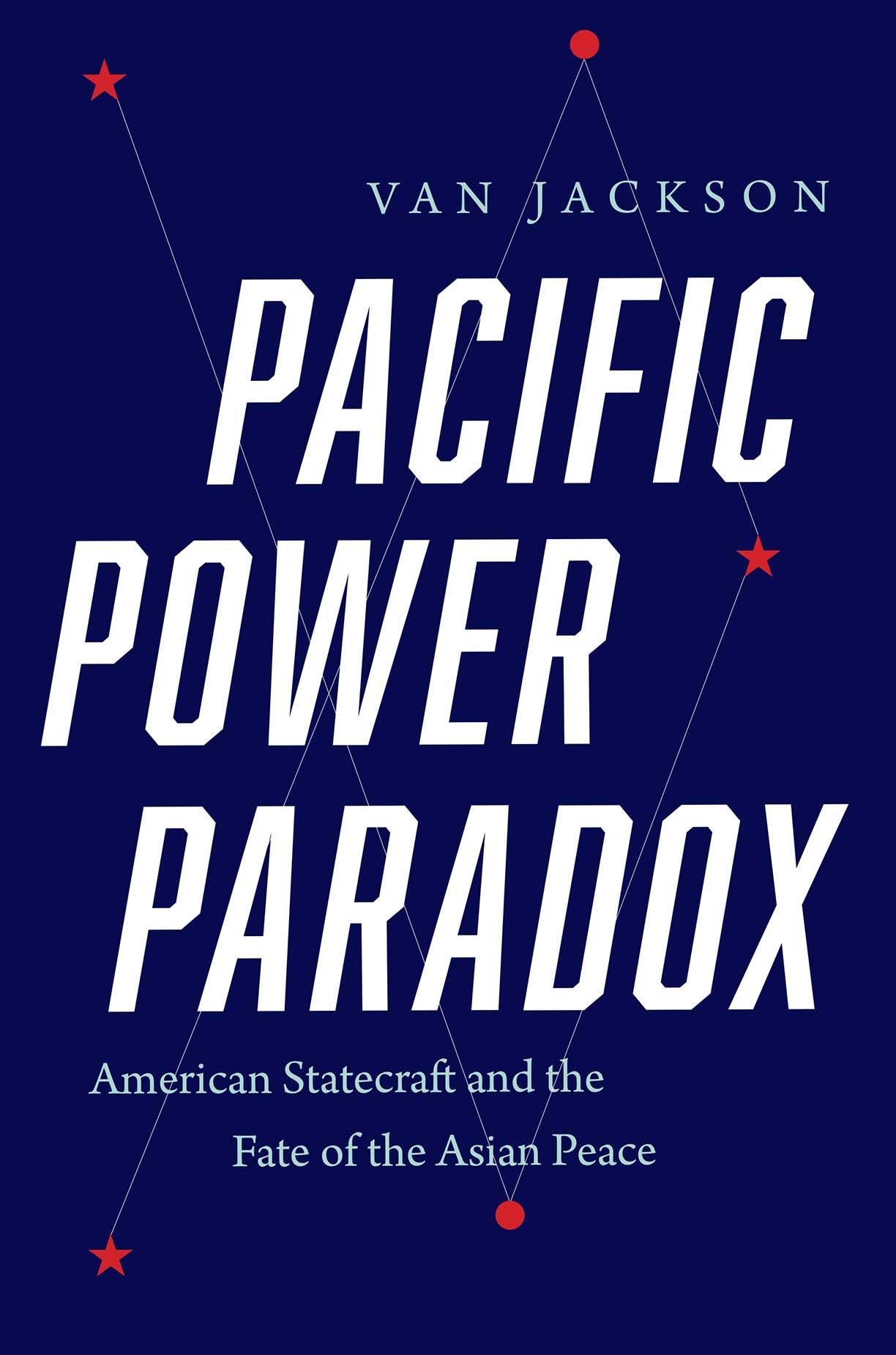
Pacific Power Paradox
A new history of Asian peace since 1979 that considers America's paradoxical role After more than a century of recurring conflict, the countries of the Asia-Pacific region have managed something remarkable: avoiding war among nations. Since 1979, Asia has endured threats, near-miss crises, and nuclear proliferation but no interstate war. How fragile is this \"Asian peace,\" and what is America's role in it? Van Jackson argues that because Washington takes for granted that the United States is a force for good, successive presidencies have failed to see how their statecraft impedes more durable forms of security and inadvertently embrittles peace. At times, the United States has been the region's bulwark against instability, but America has been a threat to Asian peace as much as it has been its guarantor. By grappling with how America fits into the Asian story, Jackson shows how regional stability has diminished because of U.S. choices, and why America's margin for geopolitical error is less now than ever before.
eBook

The Monetary Gold Principle: Back to Basics
In The Case of the Monetary Gold Removed from Rome in 1943, the International Court of Justice concluded that it cannot decide a dispute in which a third party's legal interests “would form the very subject-matter of the decision.” This Article argues that what has become known as the Monetary Gold principle conflicts with the Court's obligation to decide cases submitted by consenting parties and should be abandoned.
Journal Article

Germany in the world : a global history, 1500-2000
Brilliantly conceived and majestically written, this monumental work of European history recasts the five-hundred-year history of Germany.
Book

\Our Hemisphere\?
An accessible course book on U.S.-Latin American
relations \"Our Hemisphere\"? uncovers the range,
depth, and veracity of the United States' relationship with the
Americas. Using short historical vignettes, Britta and Russell
Crandall chart the course of inter‑American relations from 1776 to
the present, highlighting the roles that individuals and groups of
soldiers, intellectuals, private citizens, and politicians have had
in shaping U.S. policy toward Latin America in the postcolonial,
Cold War, and post-Cold War eras. The United States is usually and
correctly seen as pursuing a monolithic, hegemonic agenda in Latin
America, wielding political, economic, and military muscle to force
Latin American countries to do its bidding, but the Crandalls
reveal unexpected yet salient regional interactions where Latin
Americans have exercised their own power with their northern and
very powerful neighbor. Moreover, they show that Washington's
relationship with the region has relied, in addition to the usual
heavy‑handedness, on cooperation and mutual respect since the
beginning of the relationship.
eBook

Pakistan : a very short introduction
\"What is Pakistan? The name refers to a seventy-year-old post-colonial product of the bloodiest partition of territory and population that accompanied the end of British empire in South Asia. But the region of the Indus Valley has a four-thousand-year-old history, and was the site of one of the earliest and greatest riverine civilizations in the world. Although the modern nation of Pakistan as we know it was created as a homeland for the Muslims of British India, it is impossible to understand the complex tapestry of linguistic, ethnic, and cultural identities and tensions of the region without tracing its deep past.\"--Amazon.com.
BOOK

America Unbound: The Bush Revolution in Foreign Policy
George W. Bush has launched a revolution in American foreign policy. He has redefined how America engages the world, shedding the constraints that friends, allies, and international institutions impose on its freedom of action. He has insisted that an America unbound is a more secure America. How did a man once mocked for knowing little about the world come to be a foreign policy revolutionary? In America Unbound, Ivo H. Daalder and James M. Lindsay dismiss claims that neoconservatives have captured the heart and mind of the president. They show that George W. Bush has been no one's puppet. He has been a strong and decisive leader with a coherent worldview that was evident even during the 2000 presidential campaign. Daalder and Lindsay caution that the Bush revolution comes with significant risks. Raw power alone is not enough to preserve and extend America's security and prosperity in the modern world. The United States often needs the help of others to meet the challenges it faces overseas. But Bush's revolutionary impulse has stirred great resentment abroad. At some point, Daalder and Lindsay warn, Bush could find that America's friends and allies refuse to follow his lead. America will then stand alone-a great power unable to achieve its most important goals.
eBook