
Catalogue Search | MBRL


Are you sure you want to remove the book from the shelf?

{{itemTitle}}
14,426
result(s) for
"Diptera"
Sort by:

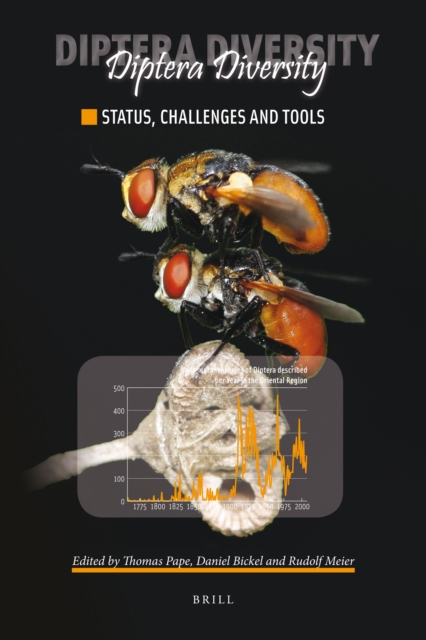
Diptera Diversity: Status, Challenges and Tools
This is the first comprehensive synopsis of the biodiversity of Diptera, which with more than 150.000 described species contain more than one tenth of all described animal species. The first part is a review of what is already known, with treatments of all the major biogeographical regions and important archipelagoes; the second part contains case studies on open-ended taxa, Diptera as ecological indicators, and how to estimate the still unknown proportion of our fauna; and the third part discusses the digital and molecular tools needed to document the fauna. The book has an emphasis on principles and analytical approaches as well as on practical 'how-to' information and is intended for academicians and other professionals but with a significant outreach to students.
eBook

The forgotten flies: the importance of non-syrphid Diptera as pollinators
Bees, hoverflies and butterflies are taxa frequently studied as pollinators in agricultural and conservation contexts. Although there are many records of non-syrphid Diptera visiting flowers, they are generally not regarded as important pollinators. We use data from 30 pollen-transport networks and 71 pollinator-visitation networks to compare the importance of various flower-visiting taxa as pollen-vectors. We specifically compare non-syrphid Diptera and Syrphidae to determine whether neglect of the former in the literature is justified. We found no significant difference in pollen-loads between the syrphid and non-syrphid Diptera. Moreover, there was no significant difference in the level of specialization between the two groups in the pollen-transport networks, though the Syrphidae had significantly greater visitation evenness. Flower visitation data from 33 farms showed that non-syrphid Diptera made up the majority of the flower-visiting Diptera in the agricultural studies (on average 82% abundance and 73% species richness), and we estimate that non-syrphid Diptera carry 84% of total pollen carried by farmland Diptera. As important pollinators, such as bees, have suffered serious declines, it would be prudent to improve our understanding of the role of non-syrphid Diptera as pollinators.
Journal Article

Revision of the Afrotropical endemic Eumerus triangularis group (Diptera: Syrphidae: Merodontini) – Species with glistering antennae
The Eumerus triangularis group (Diptera: Syrphidae: Merodontini), which is endemic to the Afrotropical Region, has been thoroughly reviewed. This study identifies nine species within the group, with four of them redescribed: E . rubidus Hull, 1964, E . tessellatus Hull, 1964, E . triangularis Hervé-Bazin, 1913, and E . villeneuvei Hervé-Bazin, 1913 and with the description of four new species – E . argentipedicellus Radenković, Vujić & Grković sp. nov., E . brunnipennis Radenković, Vujić & Grković sp. nov., E . clavicercus Radenković, Vujić & Grković sp. nov., and E . setifemoratus Radenković, Vujić & Grković sp. nov. Furthermore, the previously unknown male of E . rubidus and the female of E . tessellatus are described. This study includes illustrated identification keys for males and females, along with detailed drawings of male terminalia for all nine species. DNA sequences of two regions of the mitochondrial DNA, cytochrome c oxidase subunit 1 (COI) gene and cytochrome b, and a region of the nuclear ribosomal 28rRNA gene are used to confirm morphological identification. Both molecular and morphological analyses indicate the presence of two distinct clades within the E . triangularis species group.
Journal Article
Effects of insecticides on mortality, growth and bioaccumulation in black soldier fly (Hermetia illucens) larvae
Residues of persistent insecticides may be present in the substrates on which insects are reared for food and feed, which may affect insect growth or survival. In addition, insecticidal substances may bio-accumulate in reared insects. The objective of this study was to assess potential effects of selected insecticides on the growth and survival of black soldier fly larvae (BSFL, Hermetia illucens ) and on their safety when used as animal feed. Six insecticides (chlorpyrifos, propoxur, cypermethrin, imidacloprid, spinosad, tebufenozide) with different modes of action were tested in two sequential experiments. Cypermethrin was also tested with the synergist piperonyl butoxide (PBO). Standard BSFL substrate was spiked to the respective maximum residue level (MRL) of each insecticide allowed by the European Union to occur in feed; and BSFL were reared on these substrates. Depending on the observed effects in the first experiment, spiked concentrations tested in the second experiment were increased or reduced. At the concentrations applied (1 and 10 times MRL), three of the six tested substances (chlorpyrifos, propoxur, tebufenozide) did not affect the survival or biomass growth of BSFL, compared to the control (non-spiked) treatments. At MRL, imidacloprid stimulated the growth of BSFL compared to the controls. Spinosad and cypermethrin at the MRL level negatively affected growth and survival. The effects of cypermethrin appeared to be augmented by addition of PBO. A mean bio-accumulation factor of ≤0.01 was found in both experiments for all substances–except for cypermethrin, which was comparatively high, but still below 1 (0.79 at 0.1 mg/kg). The lack of accumulation of insecticides in the larvae suggests that there is no risk of larval products being uncompliant with feed MRLs. However, we conclude that insecticides present in substrates may affect growth and survival of BSFL. More research on a larger variety of substances and insect species is recommended.
Journal Article

Genomic landscape and genetic manipulation of the black soldier fly Hermetia illucens, a natural waste recycler
The black soldier fly (BSF),
Hermetia illucens
(Diptera: Stratiomyidae), is renowned for its bioconversion of organic waste into a sustainable source of animal feed. We report a high-quality genome of 1.1 Gb and a consensus set of 16,770 gene models for this beneficial species. Compared to those of other dipteran species, the BSF genome has undergone a substantial expansion in functional modules related to septic adaptation, including immune system factors, olfactory receptors, and cytochrome P450s. We further profiled midgut transcriptomes and associated microbiomes of BSF larvae fed with representative types of organic waste. We find that the pathways related to digestive system and fighting infection are commonly enriched and that Firmicutes bacteria dominate the microbial community in BSF across all diets. To extend its potential practical applications, we further developed an efficient CRISPR/Cas9-based gene editing approach and implemented this to yield flightless and enhanced feeding capacity phenotypes, both of which could expand BSF production capabilities. Our study provides valuable genomic and technical resources for optimizing BSF lines for industrialization.
Journal Article

Deer Keds (Diptera: Hippoboscidae: Lipoptena and Neolipoptena) in the United States and Canada: New State and County Records, Pathogen Records, and an Illustrated Key to Species
Deer keds (Diptera: Hippoboscidae: Lipoptena Nitzsch, 1818 and NeolipoptenaBequaert, 1942) are parasitic flies that primarily attack cervids and occasionally bite humans. Recent reports have documented nearly half a dozen pathogens in deer keds, but it is unknown whether keds are competent vectors. Although geographic ranges of the four North American deer ked species are known generally, precise limits are not well understood. If keds are competent vectors, knowing where they occur will inform the risk of pathogen transmission to people and animals. Herein, we report deer ked occurrence by county in the United States and Canada, including 10 new state and 122 new county/parish/administrative district records. We also include a key to North American deer ked species to facilitate specimen identification.
Journal Article

Numerous Transitions of Sex Chromosomes in Diptera
Many species groups, including mammals and many insects, determine sex using heteromorphic sex chromosomes. Diptera flies, which include the model Drosophila melanogaster, generally have XY sex chromosomes and a conserved karyotype consisting of six chromosomal arms (five large rods and a small dot), but superficially similar karyotypes may conceal the true extent of sex chromosome variation. Here, we use whole-genome analysis in 37 fly species belonging to 22 different families of Diptera and uncover tremendous hidden diversity in sex chromosome karyotypes among flies. We identify over a dozen different sex chromosome configurations, and the small dot chromosome is repeatedly used as the sex chromosome, which presumably reflects the ancestral karyotype of higher Diptera. However, we identify species with undifferentiated sex chromosomes, others in which a different chromosome replaced the dot as a sex chromosome or in which up to three chromosomal elements became incorporated into the sex chromosomes, and others yet with female heterogamety (ZW sex chromosomes). Transcriptome analysis shows that dosage compensation has evolved multiple times in flies, consistently through up-regulation of the single X in males. However, X chromosomes generally show a deficiency of genes with male-biased expression, possibly reflecting sex-specific selective pressures. These species thus provide a rich resource to study sex chromosome biology in a comparative manner and show that similar selective forces have shaped the unique evolution of sex chromosomes in diverse fly taxa.
Journal Article


Rearing substrate impacts growth and macronutrient composition of Hermetia illucens (L.) (Diptera: Stratiomyidae) larvae produced at an industrial scale
Organic waste is a rapidly increasing problem due to the growth of the agricultural production needed to meet global food demands. Development of sustainable waste management solutions is essential. Black soldier fly,
Hermetia illucens
(L.) (Diptera: Stratiomyidae) (BSF), larvae are voracious consumers of a wide range of organic materials ranging from fruits and vegetables to animal remains, and manure. Thanks to this ability and considering the larval high protein and lipid content, BSF larvae are a useful additive in animal feeds and biodiesel production. Unfortunately, the feasibility of using the black soldier fly as a tool for waste valorization and feed production has primarily been investigated at the benchtop scale. Thus, mobilization of current practices to an industrial scale is challenging because scaling up from small laboratory studies to large industrial studies is not necessarily linear. The goal of this study was to demonstrate the ability of the BSF to recycle organic waste at an industrial scale. To accomplish this goal, three organic waste streams were used (e.g., apples, bananas, and spent grain from a brewery) to test six diet treatments (1) apple, (2) banana, (3) spent grain, (4) apple and banana, (5) apple and spent grain, and (6) banana and spent grain. Working at scale of 10,000 BSF larvae life history traits, waste valorization, protein and lipid profiles were measured for each diet treatment. Differences were recorded across all variables, except substrate conversion, for larvae fed on fruit and spent grain (alone or with fruit). Growth rate significantly differed across treatments; larvae reared on spent grain grew twice as fast as those fed apples alone, but those reared on the apple and spent grain mixture produced twice as much insect biomass. However, it should be noted that larvae resulting from the apple diet contained 50% more fat than larvae fed the fruit and spent grain mixtures. Commonly-available organic wastes were successfully used at an industrial scale to produce BSF larvae that have the potential to substitute other sources of protein and lipids in different industrial applications. Industrialization efforts are encouraged to assess these impacts when integrating diverse ingredients into larval diets as a means to more precisely predict output, such as larval development time and final larval biomass.
Journal Article