
Catalogue Search | MBRL


Are you sure you want to remove the book from the shelf?

{{itemTitle}}
5,645
result(s) for
"Direct democracy."
Sort by:

Direct democracy worldwide
\"Challenging the assumption that models of direct democracy and representative democracy are necessarily at odds, this book demonstrates how practices of direct and representative democracy interact under different institutional settings and uncovers the conditions that allow them to coexist in a mutually reinforcing manner\"-- Provided by publisher.
Book

Evaluating Democratic Innovations
In the face of increasing political disenchantment, many Western governments have experimented, with innovations which aim to enhance the working and quality of democracy as well as increasing citizens' political awareness and understanding of political matters.
This text is the most comprehensive account of these various democratic innovations. Written by an outstanding team of international experts it examines the theories behind these democratic innovations, how they have worked in practice and evaluates their success or failure. It explains experiments with new forms of democratic engagement such as:
Direct Democracy
Deliberative Democracy
Co-Governance
E-Democracy
Drawing on a wide variety of theoretical perspectives and with a broad range of case studies, this is essential reading for all students of democratic theory and all those with an interest in how we might revitalise democracy and increase citizen involvement in the political process.
eBook


In the Name of “Freedom” and “Democracy”
This article examines the rise of the populist radical right in the Czech Republic, where this party family had no parliamentary representation for many years. We show that by clarifying its ideological profile, the SPD achieved results in accordance with the social marginality and welfare chauvinism hypothesis. This is also confirmed by a spatial analysis, which shows that success of the SPD relied especially on mobilizing voters in traditional strongholds of the Czech left. In contrast, the Czech case yielded only very small support for the group threat effect and only mixed results for a U-shaped effect of age.
Journal Article


Direct Democracy and Minority Rights
This book conclusively demonstrates that direct democracy-institutions like the ballot initiative and the referendum-endangers the rights of minorities and perpetuates a tyranny of the majority. While advocates of direct democracy advocate that these institutions protect citizens from corrupt lawmakers beholden to special interests, Daniel Lewis's thorough investigation shows how such mass participation exposes minority groups to negative policy outcomes favored by only a slim majority of voters. Some would argue that greater democratic responsiveness is a positive outcome, but without the checks and balances of a representative, separated powers system that encourages deliberation and minority representation, minority rights are at increased risk under direct democracy institutions.
While research has been presented that supports both sides of the debate, the existing literature has yet to produce consistent and compelling evidence in favor of one side or the other. This book undertakes a comprehensive examination of the \"tyranny of the majority\" critique of direct democracy by examining a host of contemporary American state policies that affect the rights of a variety of minority groups. By assessing the impact of direct democracy on both ballot measures and traditional legislation, the book provides a more complete picture of how citizen legislative institutions can affect minority rights, covering a myriad of contemporary (and sometimes controversial) minority rights issues, including same-sex marriage, affirmative action, official English, hate crimes laws, racial profiling, and anti-discrimination laws.
The book is unique in its approach and scope, making it compelling for scholars interested in direct democracy, state politics, minority politics and electoral institutions, as well as American politics generally.
eBook


What’s Wrong with Democracy?
Fifth-century Athens is praised as the cradle of democracy and sometimes treated as a potential model for modern political theory or practice. In this daring reassessment of classical Athenian democracy and its significance for the United States today, Loren J. Samons provides ample justification for our founding fathers' distrust of democracy, a form of government they scorned precisely because of their familiarity with classical Athens. How Americans have come to embrace \"democracy\" in its modern form-and what the positive and negative effects have been-is an important story for all contemporary citizens. Confronting head-on many of the beliefs we hold dear but seldom question, Samons examines Athens's history in the fifth and fourth centuries B.C. in order to test the popular idea that majority rule leads to good government. Challenging many basic assumptions about the character and success of Athenian democracy,What's Wrong with Democracy?offers fascinating and accessible discussions of topics including the dangers of the popular vote, Athens's acquisitive foreign policy, the tendency of the state to overspend, the place of religion in Athenian society, and more. Sure to generate controversy, Samons's bold and iconoclastic book finds that democracy has begun to function like an unacknowledged religion in our culture, immune from criticism and dissent, and he asks that we remember the Athenian example and begin to question our uncritical worship of democratic values such as freedom, choice, and diversity.
eBook

Campaign strategy in direct democracy
\"This book takes a fresh look at direct democracy by exploring how political actors run direct-democratic campaigns. It is the first study of comparative direct-democratic campaigning and examines eight campaigns on four salient policy domains: immigration, health politics, welfare state issues, and economic liberalism centering on the world's champion par excellence of direct-democracy, Switzerland. Bernhard derives much of his analysis through interviews conducted with campaign managers providing first-hand accounts that offer unprecedented access into the organization and strategy behind direct-democratic campaigns. Campaign Strategy in Direct Democracy is essential reading for students and scholars of political communication and political science.\"--Publisher's website.
Book
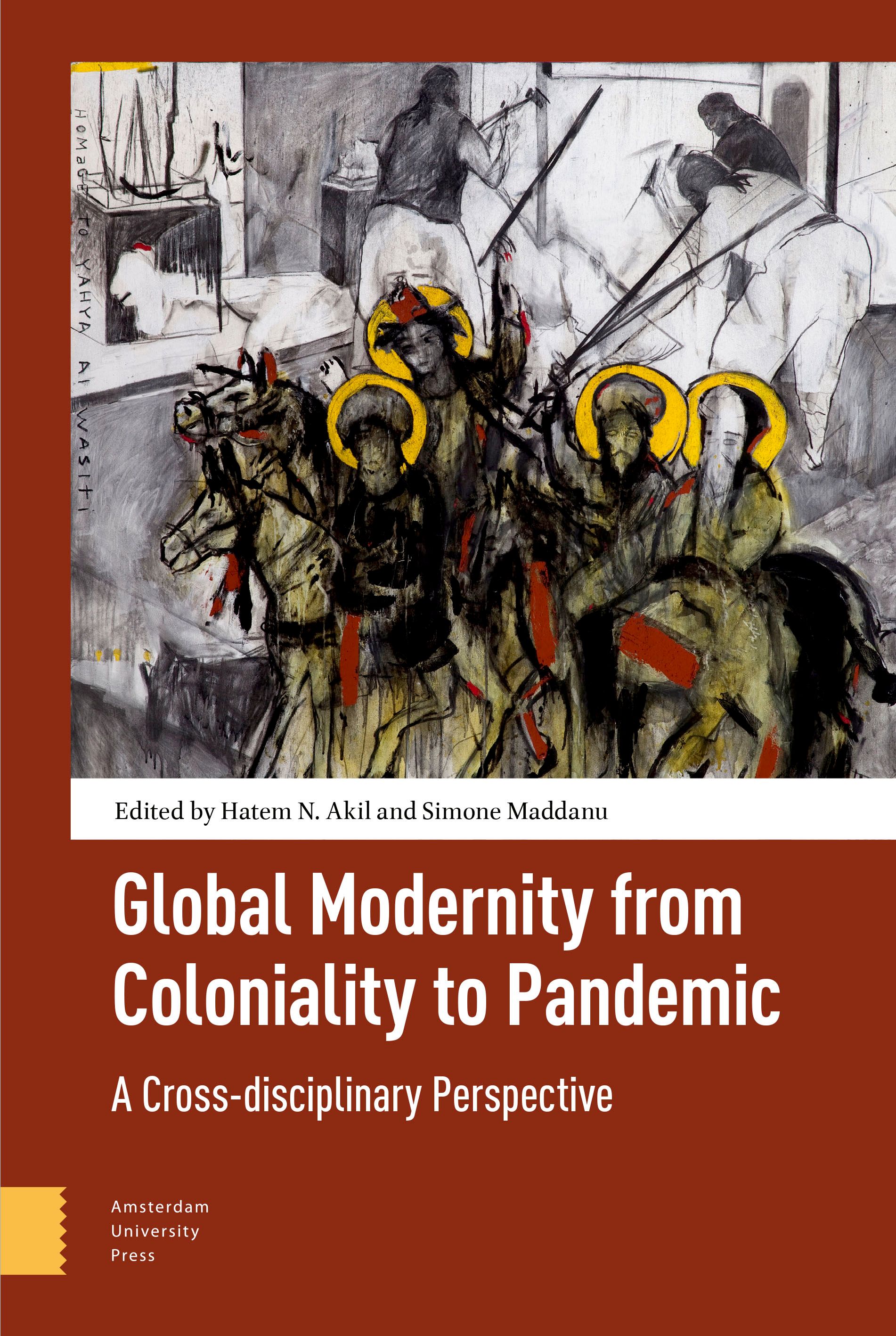
Global Modernity from Coloniality to Pandemic
Global Modernity from Coloniality to Pandemic explores issues related to the global crises of our time: reason, science, and the environment by revisiting the notions of modernity, modernism, and modernization, which can no longer be considered purely Western or strictly secular. The book poses questions about viewing modernity today from the vantage point of traditionally disparate disciplines - engaging scholars from sociology to science, philosophy to robotics, medicine to visual culture, mathematics to cultural theory, biology to environmental studies. Leading sociologist Alain Touraine contributes a new text in which he reflects on the role of women, refugees and migrants, and the future of democracy. In their conclusion, the editors posit a fundamental ethical distinction between modernization and modernity and call for a new understanding of modernity that is globally distributed, informed by the voices of many, and concerned with crises that threaten all of us at the level of the species - a modernity-to-come.
eBook