
Catalogue Search | MBRL


Are you sure you want to remove the book from the shelf?

{{itemTitle}}
231
result(s) for
"Disarmament Case studies."
Sort by:

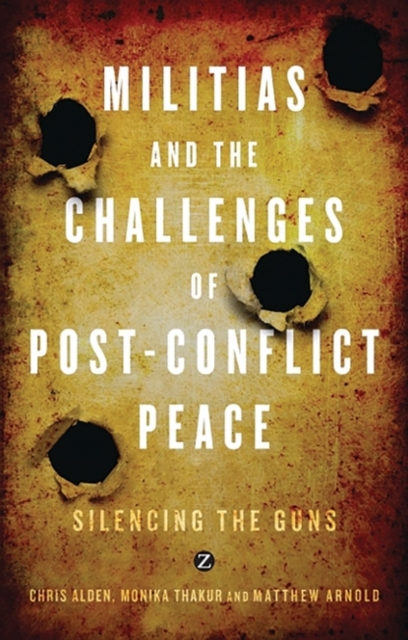
Militias and the Challenges of Post-Conflict Peace
Militias have proven to be an enduring obstacle to peace in war zones around the world. Linked variously to atrocities against civilians or international criminal elements, these groups occupy an uncertain and deeply controversial position in the changing landscape of conflict. Their diversity of form, unorthodox nature and sheer numbers make achieving short-term stability and an enduring peace consistently difficult. Bringing together four intensively researched case studies - the Democratic Republic of Congo, Timor-Leste, Afghanistan and Sudan - Militias and the Challenges of Post-Conflict Peace argues that the international community's 'cookie-cutter' approach to demilitarization is ineffective at meeting the myriad of challenges involving militias. In doing so, the authors propose a radical new framework for demilitarization that questions conventional models and takes into account the reality on the ground.
eBook

War veterans in postwar situations : Chechnya, Serbia, Turkey, Peru, and Cote d'Ivoire
\"This edited volume deals with the reintegration and trajectories of intrastate or interstate war veterans. It raises the question of the effects of the war experience on ex-combatants with regards, in particular, to the perpetuation of a certain level of violence as well as the maintaining of structures, networks, and war methods after the war. The book considers various modalities of reintegration and analyzes how they are linked to resources, statuses, and sociabilities that were all built during the war. The various chapters of the book also analyze the role of policies that were made for war veterans, the way society welcomed them back, and the social and economic context. \"-- Provided by publisher.
Book

States, Citizens and the Privatisation of Security
Recent years have seen a growing role for private military contractors in national and international security. To understand the reasons for this, Elke Krahmann examines changing models of the state, the citizen and the soldier in the UK, the US and Germany. She focuses on both the national differences with regard to the outsourcing of military services to private companies and their specific consequences for the democratic control over the legitimate use of armed force. Tracing developments and debates from the late eighteenth century to the present, she explains the transition from the centralized warfare state of the Cold War era to the privatized and fragmented security governance, and the different national attitudes to the privatization of force.
eBook

Nuclear Strategy in the Modern Era
The world is in a second nuclear age in which regional powers play an increasingly prominent role. These states have small nuclear arsenals, often face multiple active conflicts, and sometimes have weak institutions. How do these nuclear states-and potential future ones-manage their nuclear forces and influence international conflict? Examining the reasoning and deterrence consequences of regional power nuclear strategies, this book demonstrates that these strategies matter greatly to international stability and it provides new insights into conflict dynamics across important areas of the world such as the Middle East, East Asia, and South Asia.
Vipin Narang identifies the diversity of regional power nuclear strategies and describes in detail the posture each regional power has adopted over time. Developing a theory for the sources of regional power nuclear strategies, he offers the first systematic explanation of why states choose the postures they do and under what conditions they might shift strategies. Narang then analyzes the effects of these choices on a state's ability to deter conflict. Using both quantitative and qualitative analysis, he shows that, contrary to a bedrock article of faith in the canon of nuclear deterrence, the acquisition of nuclear weapons does not produce a uniform deterrent effect against opponents. Rather, some postures deter conflict more successfully than others.
Nuclear Strategy in the Modern Eraconsiders the range of nuclear choices made by regional powers and the critical challenges they pose to modern international security.
eBook

Resiliency dynamics of norm clusters: Norm contestation and international cooperation
This study examines the effects of contestation on individual norms that are embedded in larger norm clusters. We define norm clusters as collections of aligned, but distinct norms or principles at the center of a regime. Norm clusters include multiple norms that can be insulated from contestatory challenges by degrees of cohesion, institutionalisation, and legalisation. While some constructivists argue that the most important dynamic to study is ‘robustness’ of individual norms, we contend that ‘resiliency’ of norm clusters offers a richer assessment of prospects for international cooperation and long-term impact on state behaviours. Thus, this study distinguishes conceptually between different structural layers that can generate various effects in conjunction with norm contestation. We add a third, or intervening layer of explanation with norm clusters, between the intersection of norms (lowest layer) and normative structures (broadest layer). To explore this argument, comparative case studies examine the resiliency of two prohibitionary norms – the nuclear disarmament norm within the non-proliferation regime and the norm banning assassination of foreign adversaries, which is not embedded in a regime structure. While the robustness of individual norms may be challenged, our results suggest a role for resilient structures in promoting overall longevity of norm clusters.
Journal Article

Why rivals intervene : international security and civil conflict
Rivals – states with acrimonious, militarized histories – often intervene on opposing sides of civil conflicts. These interventions are known to exacerbate and prolong civil wars, but scholars have yet to fully understand why states engage in them, given the significant costs and countervailing strategic interests.
Why Rivals Intervene argues that rivals are driven by security considerations at the international level – specifically, the prospect of future confrontations with their rival – to intervene in civil conflicts. Drawing on a theory of rivalry which accounts for this strategic rationale, John Mitton explores three case studies: Indian and Pakistani intervention in Afghanistan, Israeli and Syrian intervention in Lebanon, and US and Soviet intervention in Angola. The book examines a range of evidence, including declassified memoranda, meeting transcripts, government reports, published interviews, memoirs of political leaders, and other evidence of the thought process, rationale, and justifications of relevant decision-makers.
The book claims that the imperatives for intervention are consistent across time and space, as rivals are conditioned by a history of conflict to worry about future confrontations. As a result, Why Rivals Intervene illuminates an important driver of civil conflict, with implications for how such conflicts might be solved or mitigated in the future. At the same time, it offers new insight into the nature of long-standing, acrimonious international relationships.
eBook

Spreading Temptation: Proliferation and Peaceful Nuclear Cooperation Agreements
Peaceful nuclear cooperation—the transfer of nuclear technology, materials, or know-how from one state to another for peaceful purposes—leads to the spread of nuclear weapons. In particular, countries that receive peaceful nuclear assistance are more likely to initiate weapons programs and successfully develop the bomb, especially when they are also faced with security threats. Statistical analysis based on a new data set of more than 2,000 bilateral civilian nuclear cooperation agreements signed from 1950 to 2000 lends strong support for this argument. Brief case studies of the Indian and Pakistani nuclear weapons programs provide further evidence of the links between peaceful nuclear assistance and proliferation. The finding that supplier countries inadvertently raise the risks of nuclear proliferation poses challenges to the conventional wisdom. Indeed, the relationship between civilian nuclear cooperation and proliferation is surprisingly broad. Even assistance that is often viewed as innocuous, such as training nuclear scientists or providing research or power reactors, increases the likelihood that nuclear weapons will spread. \"Proliferation-proof\" nuclear assistance does not exist. With a renaissance in nuclear power on the horizon, major suppliers, including the United States, should reconsider their willingness to assist other countries in developing peaceful nuclear programs.
Journal Article

Demilitarization in the Contemporary World
Contemporary world history has highlighted militarization in many
ways, from the global Cold War and numerous regional conflicts to
the general assumption that nationhood implies a significant and
growing military. Yet the twentieth century also offers notable
examples of large-scale demilitarization, both imposed and
voluntary. Demilitarization in the Contemporary World
fills a key gap in current historical understanding by examining
demilitarization programs in Germany, Japan, Honduras, Guatemala,
El Salvador, and Costa Rica.
In nine insightful chapters, this volume's contributors outline
each nation's demilitarization choices and how they were made. They
investigate factors such as military defeat, border security risks,
economic pressures, and the development of strong peace cultures
among citizenry. Also at center stage is the influence of the
United States, which fills a paradoxical role as both an enabler of
demilitarization and a leader in steadily accelerating
militarization.
Bookended by Peter N. Stearns' thought-provoking historical
introduction and forward-looking conclusion, the chapters in this
volume explore what true demilitarization means and how it impacts
a society at all levels, military and civilian, political and
private. The examples chosen reveal that successful
demilitarization must go beyond mere troop demobilization or arms
reduction to generate significant political and even psychological
shifts in the culture at large. Exemplifying the political
difficulties of demilitarization in both its failures and
successes, Demilitarization in the Contemporary World
provides a possible roadmap for future policies and practices.
eBook

The Spotlight's Harsh Glare: Rethinking Publicity and International Order
How does publicizing states' illicit activities affect the stability of international order? What does this relationship tell us about how governments react to violations of international rules? In contrast to the conventional wisdom that transparent monitoring strengthens the normative legal order, we argue that these activities often undermine it. We develop two mechanisms through which this occurs: by raising the known rate of noncompliance, and by sharpening the threat that deviance poses to other states. We argue that when enforcers understand the dangers of publicizing transgressions, they do so selectively. Focusing on the nuclear nonproliferation domain, we demonstrate that these concerns shaped American decisions to reveal or obfuscate other states' efforts to obtain nuclear weapons. We formalize this argument and then empirically test the model's predictions using in-depth case study analyses. We find that the US failed to disclose infractions when this publicity would have undermined the rules through the two mechanisms we identify. However, while concealing violations can prevent proliferation in response to specific nuclear programs, it can also create potential dangers to a regime's overall health and stability. In addition to reassessing a widely shared assumption about the value of transparent monitoring, this article's broad theoretical framework can shed light on enforcement and compliance dynamics in a variety of international settings.
Journal Article