
Catalogue Search | MBRL


Are you sure you want to remove the book from the shelf?

{{itemTitle}}
788
result(s) for
"Disaster Victims -- psychology"
Sort by:

Community resilience in natural disasters
\"Told through the voices of local community leaders, this book analyzes how communities respond to natural disasters and how outsiders contribute positively--or negatively--to their response, promoting debate on the role of aid and the media in times of crisis\"-- Provided by publisher.
Book

Multidimensional Scale of Perceived Social Support in Indonesian adolescent disaster survivors: A psychometric evaluation
Social support plays an important role in adolescents' mental health and well-being, and even more so for disaster survivors. To measure the level of social support, one needs an appropriate tool to produce valid and reliable results; therefore, we aimed to measure the invariance across gender groups, and analyze the construct validity and reliability of the Indonesian version of the Multidimensional Scale of Perceived Social Support (MSPSS), a social support measurement tool which was theoretically constructed and has been well validated in many countries with various cultures and backgrounds.
A school-based assessment was conducted in junior and senior high schools in a post-disaster setting in Yogyakarta Province, Indonesia. We analyzed 299 adolescent survivors of a volcanic eruption, aged 12~18 years who completed a 12-item Indonesian version of the MSPSS.
The factorial validity confirmed the three-factor structure of the scale (Family, Friends, and Significant Others) which met all of the criteria of parameter indices and provided evidence of high internal consistency reliability. The three-level measurement of invariance, which consisted of configural, metric, and scalar invariance, also performed very well across gender groups with our data and corresponded to the recommended parameters. Our composite reliability values were all fine (>0.7) and indicated that the items in the same construct were strongly correlated and reliable.
The Indonesian version of the MSPSS was shown to be a valid, reliable, theoretically constructed, and applicable instrument for adolescent disaster survivors.
Journal Article


\That was the Last Time I Saw my House\: The Importance of Place Attachment among Children and Youth in Disaster Contexts
Place attachment is important for children and youth's disaster preparedness, experiences, recovery, and resilience, but most of the literature on place and disasters has focused on adults. Drawing on the community disaster risk reduction, recovery, and resilience literature as well as the literature on normative place attachment, children and youth's place‐relevant disaster experiences are examined. Prior to a disaster, place attachments are postulated to enhance children and youth's disaster preparedness contributions and reinforce their pre‐disaster resilience. During a disaster, damage of, and displacement from, places of importance can create significant emotional distress among children and youth. Following a disaster, pre‐existing as well as new place ties can aid in their recovery and bolster their resilience moving forward. This framework enriches current theories of disaster recovery, resilience, and place attachment, and sets an agenda for future research.
Journal Article

Textbook of disaster psychiatry
\"Covering both natural and man-made scenarios including war and terrorism, the Textbook of Disaster Psychiatry is a vital international reference for medical professionals, community leaders and disaster responders a decade after its initial publication. Spanning a decade of advances in disaster psychiatry, this new and updated second edition brings together the views of current international experts to offer a cutting-edge comprehensive review of the psychological, biological and social responses to disaster, in order to help prepare, react and aid effective recovery. Topics range from the epidemiology of disaster response, disaster ecology, the neurobiology of disaster exposure, to socio-cultural issues, early intervention and consultation-liaison care for injured victims. The role of non-governmental organizations, workplace policies and the implications for public health planning at both an individual and community level are also addressed\"-- Provided by publisher.
Book

COPEWELL: A Conceptual Framework and System Dynamics Model for Predicting Community Functioning and Resilience After Disasters
Policy-makers and practitioners have a need to assess community resilience in disasters. Prior efforts conflated resilience with community functioning, combined resistance and recovery (the components of resilience), and relied on a static model for what is inherently a dynamic process. We sought to develop linked conceptual and computational models of community functioning and resilience after a disaster.
We developed a system dynamics computational model that predicts community functioning after a disaster. The computational model outputted the time course of community functioning before, during, and after a disaster, which was used to calculate resistance, recovery, and resilience for all US counties.
The conceptual model explicitly separated resilience from community functioning and identified all key components for each, which were translated into a system dynamics computational model with connections and feedbacks. The components were represented by publicly available measures at the county level. Baseline community functioning, resistance, recovery, and resilience evidenced a range of values and geographic clustering, consistent with hypotheses based on the disaster literature.
The work is transparent, motivates ongoing refinements, and identifies areas for improved measurements. After validation, such a model can be used to identify effective investments to enhance community resilience. (Disaster Med Public Health Preparedness. 2018;12:127-137).
Journal Article

Surviving our catastrophes : resilience and renewal from Hiroshima to the COVID-19 pandemic
\"A powerful rumination on how we can draw on historical examples of \"survivor power\" to understand the upheaval and death caused by the COVID-19 pandemic and collectively heal\"-- Provided by publisher.
BOOK
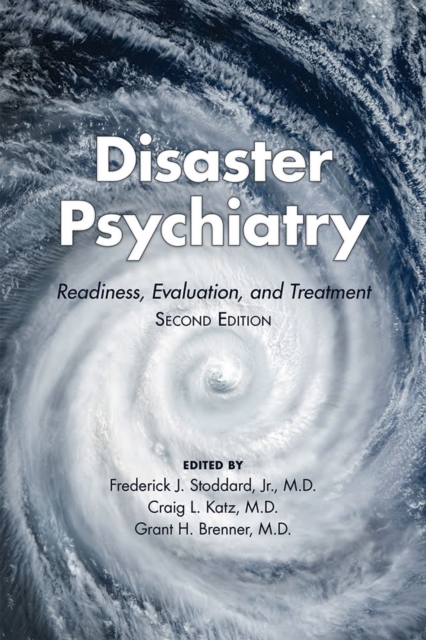
Disaster psychiatry : readiness, evaluation, and treatment
Spurred in part by the coronavirus disease 2019 (COVID-19) pandemic, which turned nearly all mental health professionals into de facto disaster mental health professionals--this second edition of Disaster Psychiatry remains a clinically oriented, evidence-based, and practical guide to mental health evaluation and interventions against the backdrop of adversity.
eBook

The effect of therapeutic play-based intervention programme applied to earthquake victim preschool children on psychosocial well-being: a randomised controlled trial
Objectives
Therapeutic play intervention is an effective strategy that can promote cognitive development, reduce anxiety and stress, and increase confidence, enabling children to explore their problems, find solutions, and regulate their emotions. The current study aims to evaluate the effectiveness of the therapeutic play-based intervention program (TOTEM), which was developed to reduce the adverse psychosocial effects of earthquakes in preschool children.
Methods
This study was conducted as a randomised, single-blinded, two-arm trial with a pre-test and post-test control. The study was conducted between May and September 2024 with 53 earthquake survivor children aged 4–6 years (Intervention Group: 26, Control Group: 27) in a container area in Kahramanmaraş. They were randomised to either a control group receiving usual care or an intervention group receiving a therapeutic play-based intervention program. The Descriptive Information Form, Preschool Anxiety Scale (PAS), Psychosocial Status Assessment Scale for Children Aged 3–6 Years – Parent-Form (PSAS 3–6), and Sleep Disturbance Scale for Children (SDSC) were used to collect the data.
Results
When the differences between the mean scores of the PAS, PSAS 3–6 and SDSC were examined, it was found that there was no significant difference between the groups before the intervention (
p
> 0.05). However, a statistically significant difference was observed in the post-test of the first month after the intervention (
p
< 0.05). Accordingly, it was determined that the scores of the experimental group were lower than those of the control group.
Conclusions
This study concluded that TOTEM can be an effective intervention that can support the psychosocial well-being of preschool children with disaster experience. This study may provide insight into the necessity of including therapeutic play in intervention programs aiming to contribute to the psychosocial well-being of all professional groups working with children.
Trial registration
This study was registered in ClinicalTrials.gov on 24/02//2025; registration number: NCT06845111.
Journal Article

Examination of factors affecting insomnia in older victims of the Kumamoto earthquake
Post-disaster survivors are prone to increased risks related to mental disorders such as insomnia and depression. In addition, it has been recently noted that elderly people have difficulty falling asleep and waking up in the middle of the night, decreasing sleep efficiency. Therefore, there is a need to understand the actual situation of insomnia among the older persons affected after the earthquake and consider appropriate support. However, the actual situation after the Kumamoto earthquake in 2016 has not been clarified. Therefore, this study aimed to examine the factors affecting insomnia among the older adults affected by the Kumamoto earthquake.
The study included 4,758 persons (2,010 men and 2,748 women; mean age 75.36 ± 7.33 years) aged 65 years or older among those who had moved out of temporary housing in Kumamoto City. The survey was a self-administered questionnaire sent by mail. The independence of each variable was confirmed using the
test. Binomial logistic regression analysis was used to examine factors influencing insomnia.
Persons significantly more likely to report insomnia had the following characteristics: age ≥ 75, no exercise habits, not eating three times a day, no appetite, eating alone, not participating in community activities, not knowing information about community activities, no one to talk to, no family to talk to, and no coworkers to talk to. Conversely, those less likely to fall into the insomnia category had the following attributes: men, those who had no employers, those who consulted friends, those who consulted a medical institution, those who consulted a care welfare office, and those who consulted city hall. Additionally, the respondents were more likely to report insomnia when they moved out of the community.
Support for insomnia requires both informal supports to prevent isolation based on mutual community support and formal support for those suspected of insomnia.
Journal Article