
Catalogue Search | MBRL


Are you sure you want to remove the book from the shelf?

{{itemTitle}}
950
result(s) for
"Disasters Europe History."
Sort by:

Vanished kingdoms : the rise and fall of states and nations
Chronicles the history of fourteen lost European kingdoms and what their stories can teach the modern world, providing narrative accounts of the rise and fall of nations ranging from Tolosa to the Soviet Union.
Book
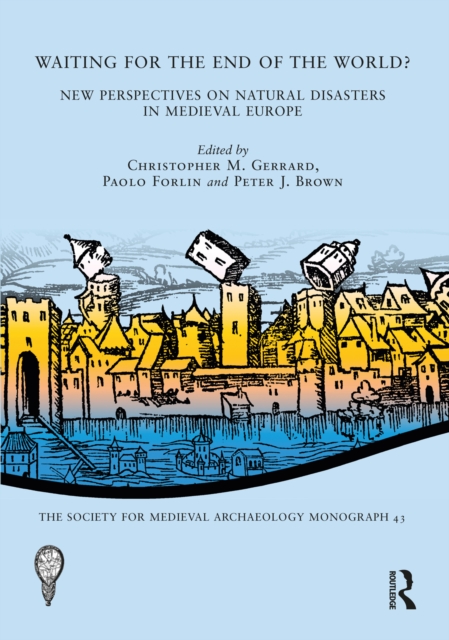
Waiting for the End of the World?
Waiting for the End of the World? addresses the archaeological, architectural, historical, and geological evidence for natural disasters in the Middle Ages between the 11th and 16th centuries. This volume adopts a fresh interdisciplinary approach to explore the many ways in which environmental hazards affected European populations and, in turn, how medieval communities coped and responded to short- and long-term consequences. Three sections, which focus on geotectonic hazards (Part I), severe storms and hydrological hazards (Part II) and biophysical hazards (Part III), draw together 18 papers of the latest research while additional detail is provided in a catalogue of the 20 most significant disasters to have affected Europe during the period. These include earthquakes, landslides, tsunamis, storms, floods and outbreaks of infectious diseases. Spanning Europe from the British Isles to Italy and from the Canary Islands to Cyprus, these contributions will be of interest to earth scientists, geographers, historians, sociologists, anthropologists and climatologists but are also relevant to students and non-specialist readers interested in medieval archaeology and history as well as those studying human geography and disaster studies. Despite a different set of beliefs relating to the natural world and protection against environmental hazards, the evidence suggests that medieval communities frequently adopted a surprisingly ‘modern’, well-informed and practically-minded outlook.
eBook
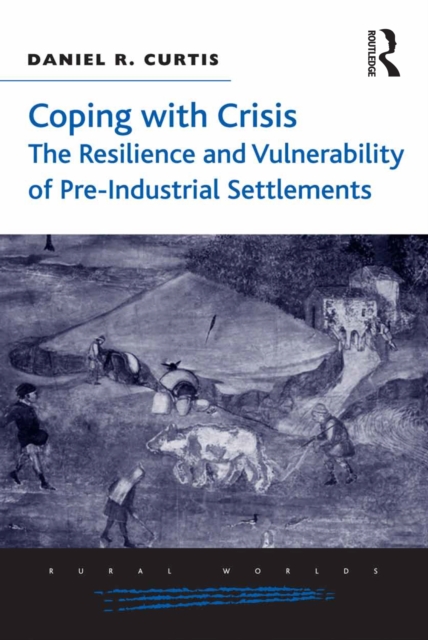
Coping with Crisis
Why in the pre-industrial period were some settlements resilient and stable over the long term while other settlements were vulnerable to crisis? Indeed, what made certain human habitations more prone to decline or even total collapse, than others? All pre-industrial societies had to face certain challenges: exogenous environmental hazards such as earthquakes or plagues, economic or political hazards from 'outside' such as warfare or expropriation of property, or hazards of their own-making such as soil erosion or subsistence crises. How then can we explain why some societies were able to overcome or negate these problems, while other societies proved susceptible to failure, as settlements contracted, stagnated, were abandoned, or even disappeared entirely? This book has been stimulated by the questions and hypotheses put forward by a recent 'disaster studies' literature - in particular, by placing the intrinsic arrangement of societies at the forefront of the explanatory framework. Essentially it is suggested that the resilience or vulnerability of habitation has less to do with exogenous crises themselves, but on endogenous societal responses which dictate: (a) the extent of destruction caused by crises and the capacity for society to protect itself; and (b) the capacity to create a sufficient recovery. By empirically testing the explanatory framework on a number of societies between the Middle Ages and the nineteenth century in England, the Low Countries, and Italy, it is ultimately argued in this book that rather than the protective functions of the state or the market, or the implementation of technological innovation or capital investment, the most resilient human habitations in the pre-industrial period were those than displayed an equitable distribution of property and a well-balanced distribution of power between social interest groups. Equitable distributions of power and property were the underlying conditions in pre-industrial societies that all
eBook
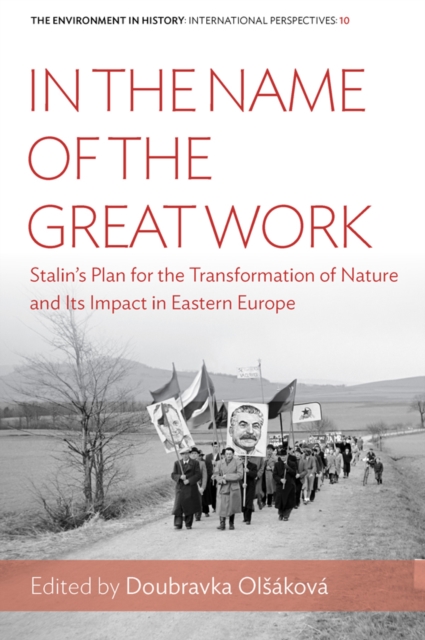
In the name of the great work
Beginning in 1948, the Soviet Union launched a series of wildly ambitious projects to implement Joseph Stalin's vision of a total \"transformation of nature.\" Intended to increase agricultural yields dramatically, this utopian impulse quickly spread to the newly communist states of Eastern Europe, captivating political elites and war-fatigued publics alike. By the time of Stalin's death, however, these attempts at \"transformation\"-which relied upon ideologically corrupted and pseudoscientific theories-had proven a spectacular failure. This richly detailed volume follows the history of such projects in three communist states-Poland, Hungary, and Czechoslovakia-and explores their varied, but largely disastrous, consequences.
eBook

The Destruction and Recovery of Monte Cassino, 529-1964
Between the sixth and twentieth centuries, the Benedictine Abbey of Monte Cassino (est. 529) experienced a cycle of atrocities which forever transformed its identity. This book examines how such a tumultuous history has been constructed, remembered, and represented from the Middle Ages to the present day. It uses this singular and pivotal case to analyse the historical process of remembering and its impact on modern representations of the past. Exactly how Monte Cassino is remembered is distinctive and diagnostic. The abbey is recognizable today as a beacon of western civilization, culture, and learning precisely because of its 'destruction tradition' over fourteen centuries. The Destruction and Recovery of Monte Cassino, 529.1964 asks how the abbey's fragmented past has been ideologically, politically, and culturally constituted and preserved; how its experience with destruction and suffering . and recovery and rebirth . has become incorporated into a modern narrative of progress and triumph.
eBook

EARTHQUAKES, RELIGION, AND TRANSITION TO SELF-GOVERNMENT IN ITALIAN CITIES
This article presents a unique historical experiment to explore the dynamics of institutional change in the Middle Ages. We have assembled a novel data set, where information on political institutions for northern central Italian cities between 1000 and 1300 is matched with detailed information on the earthquakes that occurred in the area and period of interest. Exploiting the panel structure of the data, we document that the occurrence of an earthquake retarded institutional transition from autocratic regimes to self-government (the commune) in cities where the political and the religious leaders were the same person (episcopal see cities), but not in cities where political and religious powers were distinct (non–episcopal see cities). Such differential effect holds for destructive seismic episodes and for events that were felt by the population but did not cause any material damage to persons or objects. Ancillary results show that seismic events provoked a positive and statistically significant differential effect on the construction and further ornamentation of religious buildings between episcopal and non–episcopal see cities. Our findings are consistent with the idea that earthquakes, interpreted in the Middle Ages as manifestation of the will and outrage of God, represented a shock to people’s religious beliefs and, as a consequence, enhanced the ability of political-religious leaders to restore social order after a crisis relative to the emerging communal institutions. This interpretation is supported by historical evidence.
Journal Article

Weak States
We document that the spread of the Mafia in Sicily at the end of the 19th century was in part caused by the rise of socialist Peasant Fasci organizations. In an environment with weak state presence, this socialist threat triggered landowners, estate managers, and local politicians to turn to the Mafia to resist and combat peasant demands. We show that the location of the Peasant Fasci is significantly affected by a severe drought in 1893, and using information on rainfall, we estimate the impact of the Peasant Fasci on the location of the Mafia in 1900. We provide extensive evidence that rainfall before and after this critical period has no effect on the spread of the Mafia or various economic and political outcomes. In the second part of the article, we use this source of variation in the strength of the Mafia in 1900 to estimate its medium-term and long-term effects. We find significant and quantitatively large negative impacts of the Mafia on literacy and various public goods in the 1910s and 20s.We also show a sizable impact of the Mafia on political competition, which could be one of the channels via which it affected local economic outcomes. We document negative effects of the Mafia on longer-term outcomes (in the 1960s, 70s, and 80s) as well, but these are in general weaker and often only marginally significant. One exception is its persistent and strong impact on political competition.
Journal Article

causality analysis of climate change and large-scale human crisis
Recent studies have shown strong temporal correlations between past climate changes and societal crises. However, the specific causal mechanisms underlying this relation have not been addressed. We explored quantitative responses of 14 fine-grained agro-ecological, socioeconomic, and demographic variables to climate fluctuations from A.D. 1500–1800 in Europe. Results show that cooling from A.D. 1560–1660 caused successive agro-ecological, socioeconomic, and demographic catastrophes, leading to the General Crisis of the Seventeenth Century. We identified a set of causal linkages between climate change and human crisis. Using temperature data and climate-driven economic variables, we simulated the alternation of defined \"golden\" and \"dark\" ages in Europe and the Northern Hemisphere during the past millennium. Our findings indicate that climate change was the ultimate cause, and climate-driven economic downturn was the direct cause, of large-scale human crises in preindustrial Europe and the Northern Hemisphere.
Journal Article

Timing and climate forcing of volcanic eruptions for the past 2,500 years
Volcanic eruptions contribute to climate variability, but quantifying these contributions has been limited by inconsistencies in the timing of atmospheric volcanic aerosol loading determined from ice cores and subsequent cooling from climate proxies such as tree rings. Here we resolve these inconsistencies and show that large eruptions in the tropics and high latitudes were primary drivers of interannual-to-decadal temperature variability in the Northern Hemisphere during the past 2,500 years. Our results are based on new records of atmospheric aerosol loading developed from high-resolution, multi-parameter measurements from an array of Greenland and Antarctic ice cores as well as distinctive age markers to constrain chronologies. Overall, cooling was proportional to the magnitude of volcanic forcing and persisted for up to ten years after some of the largest eruptive episodes. Our revised timescale more firmly implicates volcanic eruptions as catalysts in the major sixth-century pandemics, famines, and socioeconomic disruptions in Eurasia and Mesoamerica while allowing multi-millennium quantification of climate response to volcanic forcing.
Ice-core and tree-ring data show that large volcanic eruptions in the tropics and high latitudes were primary drivers of temperature variability in the Northern Hemisphere during the past 2,500 years, firmly implicating such eruptions as catalysts in major sixth-century pandemics, famines, and socioeconomic disruptions.
Recalibration of volcanic eruptions/climate linkage
Past research has suggested that volcanic eruptions influence climate, but it has proved difficult to match the chronologies of annually resolved and precisely dated tree rings to the chronologies of volcanic variability recorded in ice cores. Michael Sigl
et al
. use a spike in atmospheric
10
Be — clearly linked to a cosmic-ray anomaly that left a unique atmospheric
14
C fingerprint in tree rings across Europe in the year 775 — as a means of dating a similar spike observed in ice cores from Greenland and Antarctica. In making this connection the authors establish that the ice core record should be adjusted by seven years. The data confirm that large volcanic eruptions in the tropics and high latitudes were primary drivers of temperature variability in the Northern Hemisphere during the past 2,500 years, and implicate such eruptions as catalysts in major sixth-century pandemics, famines, and socioeconomic disruptions.
Journal Article

JEWISH PERSECUTIONS AND WEATHER SHOCKS: 1100-1800
What factors caused the persecution of minorities in pre-modern Europe? Using panel data consisting of 1,366 persecutions of Jews from 936 European cities between 1100 and 1800, we test whether persecutions were more likely following colder growing seasons. A one standard deviation decrease in growing season temperature in the previous five-year period increased the probability of a persecution by between 1 and 1.5 percentage points (relative to a baseline of 2%). This effect was strongest in weak states and with poor quality soil. The long-run decline in persecutions was partly attributable to greater market integration and state capacity.
Journal Article