
Catalogue Search | MBRL


Are you sure you want to remove the book from the shelf?

{{itemTitle}}
564
result(s) for
"Disasters Fiction."
Sort by:

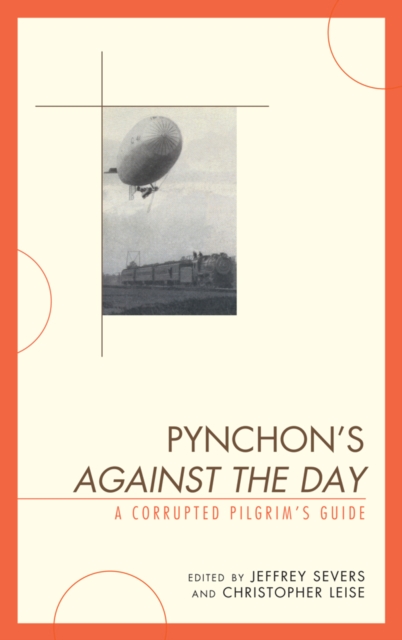
Pynchon's Against the day
Thomas Pynchon's longest novel to date, Against the Day (2006), excited diverse and energetic opinions when it appeared on bookstore shelves nine years after the critically acclaimed Mason & Dixon. Its wide-ranging plot covers nearly three decades—from the 1893 World's Fair to the years just after World War I—and follows hundreds of characters within its 1085 pages. The book’s eleven essays by established luminaries and emerging voices in the field of Pynchon criticism, address a significant aspect of the novel's manifold interests. By focusing on three major thematic trajectories (the novel's narrative strategies; its commentary on science, belief, and faith; and its views on politics and economics), the contributors contend that Against the Day is not only a major addition to Pynchon's already impressive body of work, but also a defining moment in the emergence of twenty-first century American literature.
eBook

The sociology of disasters : fictional explorations of human experiences
\"In a book as illuminating as it is captivating, Thomas E. Drabek presents an in-depth analysis of the emotional impacts of disaster events and the many ripple effects that follow. Through the technique of storytelling, a series of nine fictional stories where characters experience actual disasters of different types throughout the United States illustrate the vulnerabilities and resilience to enhance the readers understanding of disaster consequences. Designed for classroom use, each story is followed by an \"Analysis\" section wherein discussion and research paper topics are recommended. These highlight links to published research findings. A \"References\" section details citations for all works included. Brief commentary in a \"Notes\" section adds further connections to other disasters and relevant research studies. The Sociology of Disaster is an important innovation in disaster education and will become an invaluable resource within universities and colleges that offer degrees in emergency management at both the undergraduate and graduate levels\"-- Provided by publisher.
Book

Posthuman Affirmative Business Ethics: Reimagining Human–Animal Relations Through Speculative Fiction
Posthuman affirmative ethics relies upon a fluid, nomadic conception of the ethical subject who develops affective, material and immaterial connections to multiple others. Our purpose in this paper is to consider what posthuman affirmative business ethics would look like, and to reflect on the shift in thinking and practice this would involve. The need for a revised understanding of human–animal relations in business ethics is amplified by crises such as climate change and pandemics that are related to ecologically destructive business practices such as factory farming. In this analysis, we use feminist speculative fiction as a resource for reimagination and posthuman ethical thinking. By focusing on three ethical movements experienced by a central character named Toby in Margaret Atwood’s MaddAddam trilogy, we show how she is continually becoming through affective, embodied encounters with human and nonhuman others. In the discussion, we consider the vulnerability that arises from openness to affect which engenders heightened response-ability to and with, rather than for, multiple others. This expanded concept of subjectivity enables a more relational understanding of equality that is urgently needed in order to respond affirmatively to posthuman futures.
Journal Article


Mary Shelley's The Last Man: Existentialism and IR meet the post-apocalyptic pandemic novel
Mary Shelley mined the ideas of international thought to help develop three new subgenres of modern political science fiction (‘poliscifi’): post-apocalyptic, existential, and dystopian. Her two great works of poliscifi, Frankenstein (1818), and The Last Man (1826) – confront the social problems that arise from humanity's technological and cultural interventions in the wider environment. This article recovers The Last Man not only as the first modern post-apocalyptic pandemic novel, but also as an important source for the existentialist tradition, dystopian literature, and their intersections with what I call ‘Literary IR’. Comparing The Last Man with its probable sources and influences – from Thucydides and Vattel to Orwell and Camus – reveals Shelley's ethical and political concerns with the overlapping problems of interpersonal and international conflict. The Last Man dramatises how interpersonal conflict, if left unchecked, can spiral into the wider sociopolitical injustices of violence, war, and other human-made disasters such as species extinction, pandemics, and more metaphorical ‘existential’ plagues like loneliness and despair. Despite these dark themes and legacies, Shelley's authorship of the great plague novel of the nineteenth century also inspired a truly hopeful post-apocalyptic existential response to crisis and conflict in feminist poliscifi by Margaret Atwood, Octavia Butler, and Emily St. John Mandel.
Journal Article


Monitoring of Public Opinion on Typhoon Disaster Using Improved Clustering Model Based on Single-Pass Approach
Ambiguities in information and difficulties in distinguishing truth from fiction during natural disasters produce negative emotions and create problems in emergency rescue work. In this study, we focused on two aspects. First, we propose a method that improves upon the existing streaming data clustering method based on twin networks, which is a single-pass topic clustering method based on the Siamese-bidirectional gated recurring units (BiGRUs)-attention technique. Second, a bidirectional encoder representation from transformers (BERT)-BiGRU-conditional random field (CRF) sentiment analysis model based on the idea of sequence tagging was designed. Combining this method with the proposed topic clustering method, we propose a new disaster management method that analyzes the public opinion before and after a disaster. We conducted experiments that showed that the single-pass topic clustering model based on Siamese-BiGRU-attention outperformed other clustering methods in terms of clustering performance. Simultaneously, the BERT-BiGRU-CRF model was employed to statistically analyze data on daily public opinion monitoring. The statistics of the clustering results before and after disasters occur and the emotion distribution based on each category were obtained. Overall, the proposed method can help rescue workers and governmental officials understand the sentiments of the public more clearly and provide the necessary response measures more effectively during disasters.
Journal Article

The diamond of Darkhold
When a roamer trades them an ancient book with only a few pages remaining, Lina and Doon return to Ember to seek the machine the book seems to describe in hopes that it will get their new community, Sparks, through the winter.
Book

Learning from our vulnerabilities: Insights from Octavia E. Butler’s parable of the sower and West Sumatra’s 2024 flood disasters
This article discusses the correlation between flood disasters in West Sumatra in March and May 2024 and the science fiction novel Parable in the Sower by Octavia E. Butler. The novel explores how social and environmental degradation amidst the extreme weather and climate change in the fictional setting of America in 2024-2027 mirrors West Sumatra’s lack of preparedness to face similar situations in reality. The novel warns people of the consequences of environmental issues by addressing our vulnerabilities and resistance to change. Through the concept of “Earthseed”, the story reminds society to work toward positive changes through resilient infrastructure, disaster preparedness, and empathy when facing natural disasters.
Journal Article