
Catalogue Search | MBRL


Are you sure you want to remove the book from the shelf?

{{itemTitle}}
3,881
result(s) for
"Disasters Forecasting."
Sort by:


Environment Disaster Linkages
This is one of the first books to focus on explicit linkages between the changing environment and disasters and suggests proactive approaches towards disaster management. A ready-reference for field practitioners it covers areas such as elements of environmental entry, impacts of environment and disaster, strategies, planning and the way forward.
eBook


Environmental Apocalypse in Science and Art
At a time when it is clear that climate change adaptation and mitigation are failing, this book examines how our assumptions about (valid and usable) knowledge are preventing effective climate action. Through a cross-disciplinary, empirically-based analysis of climate science and policy, the book situates the failures of climate policy in the cultural history of prediction and its interfaces with policy.
Fava calls into question the current interfaces between scientific research and climate policy by tracing multiple connections between modelling, epistemology, politics, food security, religion, art, and the apocalyptic. Demonstrating how the current domination of climate policy by models and scenarios is part of the problem, the book examines how artistic practices are a critical location to ask questions differently, rethink environmental futures, and activate social change. The analysis starts with another moment of climatic change in recent western history: the overlap of the Little Ice Age and the \"scientific revolution,\" during which intense climatic, scientific and political change were contemporary with mathematical calculation of the apocalypse.
Dealing with the need for complex answers to complex and urgent questions, this is essential reading for those interested in climate action, interdisciplinary research and methodological innovation. The empirical analyses amount to a methodological experiment, across history of science, theology, art theory and history, architecture, future studies, climatology, computer modelling, and agricultural policy. This book is a major contribution to understanding how we are precluding effective climate action, and designing futures that resemble our worst nightmares.
eBook

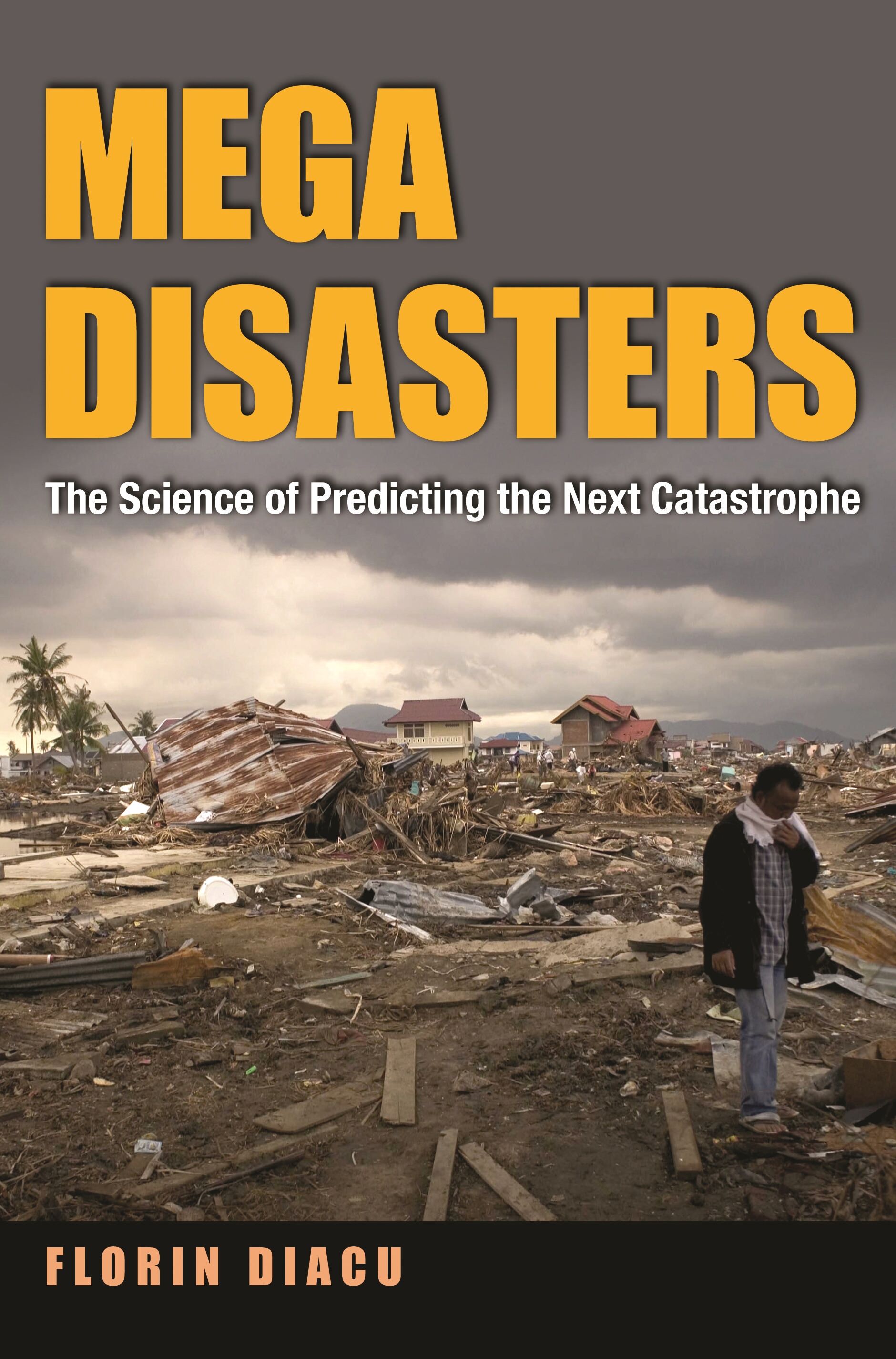
Megadisasters
Can we predict cataclysmic disasters such as earthquakes, volcanic eruptions, or stock market crashes? The Indian Ocean tsunami of 2004 claimed more than 200,000 lives. Hurricane Katrina killed over 1,800 people and devastated the city of New Orleans. The recent global financial crisis has cost corporations and ordinary people around the world billions of dollars.Megadisastersis a book that asks why catastrophes such as these catch us by surprise, and reveals the history and groundbreaking science behind efforts to forecast major disasters and minimize their destruction.
Each chapter of this exciting and eye-opening book explores a particular type of cataclysmic event and the research surrounding it, including earthquakes, tsunamis, volcanic eruptions, hurricanes, rapid climate change, collisions with asteroids or comets, pandemics, and financial crashes. Florin Diacu tells the harrowing true stories of people impacted by these terrible events, and of the scientists racing against time to predict when the next big disaster will strike. He describes the mathematical models that are so critical to understanding the laws of nature and foretelling potentially lethal phenomena, the history of modeling and its prospects for success in the future, and the enormous challenges to scientific prediction posed by the chaos phenomenon, which is the high instability that underlies many processes around us.
Yielding new insights into the perils that can touch every one of us,Megadisastersshows how the science of predicting disasters holds the promise of a safer and brighter tomorrow.
eBook

Bridging science and policy implication for managing climate extremes
\"Since 1980, the number of climate-related disasters has been greatly increased glocally. Scientific consensus based on the IPCC fifth report suggested that global warming would bring more intense and frequent extreme climate events. These climate-related disasters hinder the achievement of sustainable economic growth and prosperity by disrupting supply chains, impeding production, destroying infrastructure, and necessitating high-cost rebuilding and recovery. To mitigate the climate extreme risks and possible losses, it is essential to maximize the utilization of scientific outputs and to share best practices in disaster risk management. Aligned with such purposes, Asia-Pacific Economic Cooperation (APEC) Climate Center (APCC) hosts the APEC Climate Symposium (APCS) every year. APCS focused on drought predction and management in 2013, climate extremes and hydrological disaster in 2014, and efficient use of climate information for disaster risk management in 2015. This book aims to compile some of the important results from the latest research in climate extreme prediction and services and its application studies with a focus on climate extremes such as typhoons, droughts, and floods based on the APCS presentations during 2013-2015\"-- Page 4 of cover.
Book

Crashes, crises, and calamities : how we can use science to read the early-warning signs
Why do certain civilizations, societies, and ecosystems collapse? How does the domino effect relate to the credit crunch? When can mathematics help explain marriage? And how on earth do toads predict earthquakes? The future is uncertain. But science can help foretell what lies ahead.Drawing on ecology and biology, math and physics,Crashes, Crises, and Calamitiesoffers four fundamental tools that scientists and engineers use to forecast the likelihood of sudden change: stability, catastrophe, complexity, and game theories. In accessible prose, Len Fisher demonstrates how we can foresee and manage events that might otherwise catch us by surprise.At the cutting edge of science, Fisher helps us find ways to act before a full-fledged catastrophe is upon us.Crashes, Crises, and Calamitiesis a witty and informative exploration of the chaos, complexity, and patterns of our daily lives.
eBook


When Weather Matters: Science and Service to Meet Critical Societal Needs
The goal of weather prediction is to provide information people and organizations can use to reduce weather-related losses and enhance societal benefits, including protection of life and property, public health and safety, and support of economic prosperity and quality of life. In economic terms, the benefit of the investment in public weather forecasts and warnings is substantial: the estimated annualized benefit is about $31.5 billion, compared to the $5.1 billion cost of generating the information. Between 1980 and 2009, 96 weather disasters in the United States each caused at least $1 billion in damages, with total losses exceeding $700 billion. Between 1999 and 2008, there were an average of 629 direct weather fatalities per year. The annual impacts of adverse weather on the national highway system and roads are staggering: 1.5 million weather-related crashes with 7,400 deaths, more than 700,000 injuries, and $42 billion in economic losses.
Book