
Catalogue Search | MBRL


Are you sure you want to remove the book from the shelf?

{{itemTitle}}
5,945
result(s) for
"Discretion"
Sort by:


The Holocaust of His Discretion
Abstract
This essay establishes the significance of the concept of \"discretion\" to the scope and nature of episcopal power in the early Stuart Church. Examples are drawn from the Church's constitutional documents and the ecclesiology of Richard Hooker, where \"discretion\" named a faculty of judgment and the particularly controversial form of autonomous power over adiaphora, or \"things indifferent,\" proper to the clergy. Turning to the manuscript and print records of a dispute between Bishop of Lincoln John Williams and the Archiepiscopal regime of William Laud, the essay argues that contrasting interpretations of discretion within the Church's institutional culture characterized divergent approaches to conformity. These differences were established through the metaphors that translated between objects at the edges of episcopal jurisdictions and the concerns closest to the Church's doctrinal identity. Disputes over these metaphors aggravated constitutional tensions in the years preceding the civil wars.
Journal Article

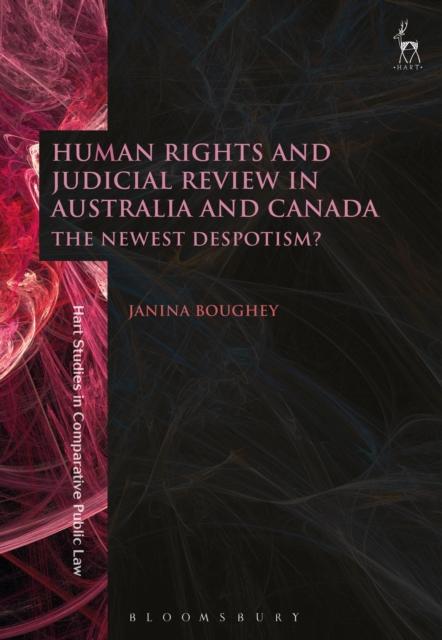
Human Rights and Judicial Review in Australia and Canada
It is commonly asserted that bills of rights have had a ‘righting’ effect on the principles of judicial review of administrative action and have been a key driver of the modern expansion in judicial oversight of the executive arm of government. A number of commentators have pointed to Australian administrative law as evidence for this ‘righting’ hypothesis. They have suggested that the fact that Australia is an outlier among common law jurisdictions in having neither a statutory nor a constitutional framework to expressly protect human rights explains why Australia alone continues to take an apparently ‘formalist’, ‘legalist’, and ‘conservative’ approach to administrative law. Other commentators and judges, including a number in Canada, have argued the opposite: that bills of rights have the effect of stifling the development of the common law. However, for the most part, all these claims remain just that—there has been limited detailed analysis of the issue, and no detailed comparative analysis of the veracity of the claims. This book analyses in detail the interaction between administrative and human rights law in Australia and Canada, arguing that both jurisdictions have reached remarkably similar positions regarding the balance between judicial and executive power, and between broader fundamental principles including the rule of law, parliamentary sovereignty, and the separation of powers. It will provide valuable reading for all those researching judicial review and human rights. Volume 16 in the series Hart Studies in Comparative Public Law
eBook


Managerial discretion, say on pay, and CEO compensation
PurposeThe purpose of this paper is to analyze the influence of managerial discretion on the effectiveness of say on pay (SOP) as a governance mechanism. This goal covers an important gap since the issue of how effective SOP is in promoting more aligned compensation has proved somewhat controversial.Design/methodology/approachThis empirical research opted for a panel methodology for the period 2003–2017, using a sample of large UK listed-companies (specifically, 3,445 firm-year observations). Data were obtained from several sources (Manifest Ltd, BoardEx, Worldscope, Factset Ownership and DataStream).FindingsResults show that managerial discretion plays an important role in the effectiveness of SOP as a mechanism for increasing aligned CEO compensation. While individual discretion (latitude of objectives) exerts a negative effect, contextual discretion (latitude of action) increases SOP effectiveness. The global effect of managerial discretion is positive when there is high level of both individual and contextual discretion.Originality/valueThis empirical study provides evidence concerning an emerging topic in the literature regarding the impact of SOP as a shareholder activism mechanism of corporate governance on executive compensation. By taking managerial discretion into consideration as a relevant moderating factor, it also offers a better explanation of SOP effectiveness as a governance mechanism.
Journal Article


Toward more accurate contextualization of the CEO effect on firm performance
We introduce multiple refinements to the standard method for assessing CEO effects on performance, variance partitioning methodology, more accurately contextualizing CEOs' contributions. Based on a large 20-year sample, our new 'CEO in Context' technique points to a much larger aggregate CEO effect than is obtained from typical approaches. As a validation test, we show that our technique yields estimates of CEO effects more in line with what would be expected from accepted theory about CEO influence on performance. We do this by examining the CEO effects in subsamples of low-, medium-, and high-discretion industries. Finally, we show that our technique generates substantially different—and we argue more logical—estimates of the effects of many individual CEOs than are obtained through customary analyses.
Journal Article

When CEO Career Horizon Problems Matter for Corporate Social Responsibility: The Moderating Roles of Industry-Level Discretion and Blockholder Ownership
This paper examines the influence of CEO career horizon problems on corporate social responsibility (CSR). We assume that as CEOs are getting older, they tend to disengage in CSR due to their shorter career horizons. We further argue that high levels of industry-level discretion (ILD) and blockholder ownership amplify the negative effects of CEO age on CSR. Using a panel sample of US-based firms over 2004–2009, we do not find the main effect of CEO age on CSR, but find support for the moderating effects, such that CEO age is negatively associated with CSR when there are high levels of ILD and blockholder ownership. Therefore, results suggest that CEO career horizon problems matter for CSR when (1) CEOs have sufficient discretion over the firm's strategic decisions and (2) outside blockholders put more pressure on CEOs to engage in financial earning management.
Journal Article

Freedom of the Judicial Discretion in the Interpretation of Evaluative Categories
Introduction: evaluative categories in the Russian civil law are quite widespread. These categories include reasonableness in determining the amount of losses, a significant drawback, good faith of the acquirer, a reasonable period of time, and others. There are different approaches to the definition of the institute of evaluative categories. To date, no single approach to the concept-of “evaluative category” has been developed. Evaluative concepts are fuzzy, inaccurate and abstract. In this regard, the main purpose of this study is to determine the mechanism of application of the analogy of the law for the purpose of official interpretation and explanation of evaluative concepts. It is necessary to simplify the task of distinguishing between statements of fact and evaluative judgments. Methods: the study used both the general scientific methods (the dialectical method of cognition, analysis, synthesis, formal logical method, etc.) and the specific scientific methods (formal legal, analytical, etc.). Results: the paper assesses the implementation of approaches to the interpretation of evaluative categories in cases with the use of judicial discretion. The main groups of evaluative categories are identified. Conclusions: as a result of the study, the need to create additional mechanisms for the use of evaluative categories in the adjudication of civil disputes is identified. It is advisable to fix the limits of qualitative and quantitative characteristics of evaluative categories.
Journal Article