
Catalogue Search | MBRL


Are you sure you want to remove the book from the shelf?

{{itemTitle}}
899
result(s) for
"Discrimination Fiction."
Sort by:


Mississippi bridge
During a heavy rainstorm in 1930s rural Mississippi, a ten-year-old white boy sees a bus driver order all the black passengers off a crowded bus to make room for late-arriving white passengers and then set off across the raging Rosa Lee River.
Book

Star Wars Multiverse
Star Wars may have started out as a film about a Manichean battle between good and evil, but as countless filmmakers, novelists, animators, fan artists and even cosplayers have taken the opportunity to play in the fictional world George Lucas created, it has expanded into something far greater, resulting in a richly layered and diverse Star Wars multiverse. Drawing from a full range of Star Wars media, including comics, children's books, fan films, and television shows like Clone Wars and The Mandalorian, Carmelo Esterrich explores how these stories set in a galaxy far far away reflect issues that hit closer to home. He examines what they have to say about political oppression, authoritarianism, colonialism, discrimination, xenophobia, and perpetual war. Yet he also investigates subtler ways in which the personal is political within the multiverse, including its articulations of gender and sexuality, its cultural hierarchies of language use, and its complex relationships between humans, droids and myriad species. This book demonstrates that the Star Wars multiverse is not just a stage for thrilling interstellar battles, but also an exciting space for interpretation and discovery.
eBook

If you see me, don't say hi
\"In eleven ... stories, [the author] gives voice to our most deeply held stereotypes and then slowly undermines them. His characters, almost all of who are first-generation Indian Americans, subvert our expectations that they will sit quietly by\"--Amazon.com.
Book

Racial worldmaking : the power of popular fiction
When does racial description become racism? Critical race studies has not come up with good answers to this question because it has overemphasized the visuality of race. According to dominant theories of racial formation, we see race on bodies and persons and then link those perceptions to unjust practices of racial inequality. Racial Worldmaking argues that we do not just see race. We are taught when, where, and how to notice race by a set of narrative and interpretive strategies. These strategies are named “racial worldmaking” because they get us to notice race not just at the level of the biological representation of bodies or the social categorization of persons. Rather, they get us to embed race into our expectations for how the world operates. As Mark C. Jerng shows us, these strategies find their most powerful expression in popular genre fiction: science fiction, romance, and fantasy.
Taking up the work of H.G. Wells, Margaret Mitchell, Samuel Delany, Philip K. Dick and others, Racial Worldmaking rethinks racial formation in relation to both African American and Asian American studies, as well as how scholars have addressed the relationships between literary representation and racial ideology. In doing so, it engages questions central to our current moment: In what ways do we participate in racist worlds, and how can we imagine and build one that is anti-racist?
eBook

He who dreams
\"When John discovers dancing, he finds himself facing ridicule from his soccer teammates and hostility from the dancers at the cultural center. To dance at the Pow Wow, he must learn to balance his responsibilities, confront his fears and embrace both the Irish and the Cree sides of his heritage\"--Back cover.
Book
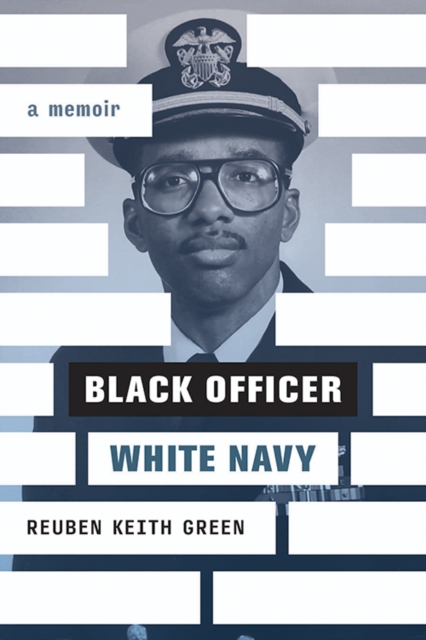
Black Officer, White Navy
In Black Officer, White Navy , Lieutenant Commander
Reuben Keith Green shares a compelling and enthralling account of
how, as a Black man in the post-Vietnam War era, he navigated his
unique career path from high school dropout to unrestricted line
officer in the US Navy. Weaving history with personal narrative,
Green's engaging, raw, and insightful storytelling style provides
an insider's analysis of what was happening within the navy,
ultimately exposing systemic racism throughout the US military.
Using the \"power of the pen,\" he offers uninhibited accounts of
sometimes life-threatening confrontations that resulted from
personal and institutional racial bias, describing what it was like
to \"sail second class\" in the navy. Green, who retired as a
decorated surface-warfare officer in the mid-1990s, presents an
eye-opening account of the challenges, discrimination, and
resistance he faced while serving in the military. Through it all,
Green's characteristic sense of humor and honesty shine as he tells
one hell of a sea story.
eBook

The tenth muse : a novel
Determined to conquer the Riemann hypothesis despite cultural discrimination against women intellectuals, a genius mathematician uncovers a mysterious theorem's unexpected World War II link to her family.
Book

Do book consumers discriminate against Black, female, or young authors?
The publishing industry shows marked evidence of both gender and racial discrimination. A rational explanation for this difference in treatment of both female and Black authors might relate to the taste-based preferences of book consumers, who might be less willing to pay for books by such authors. We ran a randomized experiment to test for the presence of discriminatory preferences by consumers based on authors’ race, gender and/or age. We collected ratings of 25,201 book surveys across 9,072 subjects on Amazon’s Mechanical Turk, making this study the largest experimental study of the book market to date. Subjects were presented with mocked-up book covers and descriptions from each of 14 fiction and non-fiction genres, with one of three possible titles per book randomly assigned. Using author names and photographs, we signaled authors’ race, gender, and age and randomly assigned these combinations to each book presented to our subjects. We then asked subjects to rate their interest in purchasing the book, their evaluation of the author’s credentials, and the amount they were willing to pay for the book. The experimental design of this study strived to eliminate the potential for proxy-based discrimination by providing book descriptions that detailed the authors’ relevant professional experience. The large sample allowed for exploration of various types of taste-based discrimination observed in the literature, including discrimination against particular groups, homophily, and pro-social behavior. Overall, book consumers showed a willingness to pay approximately $0.50 or 3.5% more on average for books by Black authors and little, if any, practically meaningful discrimination based on age or gender. In other words, our study finds no and even contrary evidence of taste-based preferences by consumers that would rationalize the historic discriminatory treatment of Black or of female authors by publishers nor of discrimination based on an author’s age.
Journal Article