
Catalogue Search | MBRL


Are you sure you want to remove the book from the shelf?

{{itemTitle}}
31
result(s) for
"Discrimination in sports -- United States -- History -- 20th century"
Sort by:

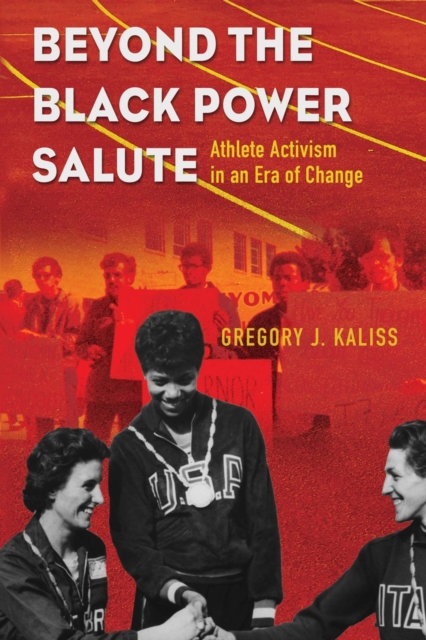
Beyond the Black Power Salute
Unequal opportunity sparked Jim Brown’s endeavors to encourage Black development while Billie Jean King fought so that women tennis players could earn more money and enjoy greater freedom. Gregory J. Kaliss examines these events and others to guide readers through the unprecedented wave of protest that swept sports in the 1960s and 1970s. The little-known story of the University of Wyoming football players suspended for their activism highlights an analysis of protests by college athletes. The 1971 Muhammad Ali–Joe Frazier clash provides a high-profile example of the Black male athlete’s effort to redefine Black masculinity. An in-depth look at the American Basketball Association reveals a league that put Black culture front and center with its style of play and shows how the ABA influenced the development of hip-hop. As Kaliss describes the breakthroughs achieved by these athletes, he also explores the barriers that remained--and in some cases remain today.
eBook


Black Baseball, Black Business
Roberta J. Newman and Joel Nathan Rosen have written an authoritative social history of the Negro Leagues. This book examines how the relationship between black baseball and black businesses functioned, particularly in urban areas with significant African American populations--Chicago, Detroit, Indianapolis, Kansas City, Newark, New York, Philadelphia, and more. Inextricably bound together by circumstance, these sports and business alliances faced destruction and upheaval.
Once Jackie Robinson and a select handful of black baseball's elite gained acceptance in Major League Baseball and financial stability in the mainstream economy, shock waves traveled throughout the black business world. Though the economic impact on Negro League baseball is perhaps obvious due to its demise, the impact on other black-owned businesses and on segregated neighborhoods is often undervalued if not outright ignored in current accounts. There have been many books written on great individual players who played in the Negro Leagues and/or integrated the Major Leagues. But Newman and Rosen move beyond hagiography to analyze what happens when a community has its economic footing undermined while simultaneously being called upon to celebrate a larger social progress. In this regard,Black Baseball, Black Businessmoves beyond the diamond to explore baseball's desegregation narrative in a critical and wide ranging fashion.
eBook

Black ball : Kareem Abdul-Jabbar, Spencer Haywood, and the generation that saved the soul of the NBA
\"Against the backdrop of ongoing massive resistance to racial desegregation and increasingly strident calls for Black Power, the NBA in the 1970s embodied the nation's imagined descent into disorder. The press and the public blamed young Black players for the chaos in the NBA, citing drugs, violence, greed, and criminality. The supposed decline of pro basketball became a metaphor for the first decades of integration in America: the rules of the game had changed, allowing more Black people onto a formerly white playing field, and now they were ruining everything. But Black Ball argues that this much-maligned period was pivotal to the rise of the NBA as the star-laden powerhouse we know today, thanks largely to the efforts of Black players in challenging the white basketball establishment of owners, coaches, and spectators. Spotlighting legendary players like Kareem Abdul-Jabbar, Bernard King, and Connie Hawkins, scholar Theresa Runstedtler expertly rewrites basketball's \"Dark Ages,\" weaving together her deep knowledge of the game's key icons and institutions with incisive social and political analysis of the era. Black ballers created an aerial, improvisational, and creative style derived from the playground courts of their neighborhoods, laying the foundation for the explosive popularity and profitability of the league in subsequent decades. They also transformed labor in the pro-basketball world, filing lawsuits and organizing unions to demand better salaries and greater autonomy. Without their skills, style, and savvy, there would be no Michael Jordan, Allen Iverson, or LeBron James today\"-- Provided by publisher.
Book

Conspiracy of Silence
The campaign to desegregate baseball was one of the most important civil rights stories of the 1930s and 1940s. But most of white America knew nothing about this story because mainstream newspapers said little about the color line and less about the efforts to end it. Even today, as far as most Americans know, the integration of baseball revolved around Branch Rickey's signing of Jackie Robinson to the Brooklyn Dodgers' organization in 1945. This book shows how Rickey's move, critical as it may well have been, came after more than a decade of work by black and left-leaning journalists to desegregate the game.
Drawing on hundreds of newspaper articles and interviews with journalists, Chris Lamb reveals how differently black and white newspapers, and black and white America, viewed racial equality. He shows how white mainstream sportswriters perpetuated the color line by participating in what their black counterparts called a \"conspiracy of silence.\" Between 1933 and 1945, black newspapers and the CommunistDaily Workerpublished hundreds of articles and editorials calling for an end to baseball's color line. The efforts of the alternative presses to end baseball's color line, chronicled for the first time inConspiracy of Silence, constitute one of baseball's-and the civil rights movement's-great untold stories.
eBook

Sport and the Color Line
The year 2003 marks the one-hundredth anniversary of W.E.B. Du Bois' \"Souls of Black Folk,\" in which he declared that \"the color line\" would be the problem of the twentieth century. Half a century later, Jackie Robinson would display his remarkable athletic skills in \"baseball's great experiment.\" Now, \"Sport and the Color Line\" takes a look at the last century through the lens of sports and race, drawing together articles by many of the leading figures in Sport Studies to address the African American experience and the history of race relations. The history of African Americans in sport is not simple, and it certainly did not begin in 1947 when Jackie Robinson first donned a Brooklyn Dodgers uniform. The essays presented here examine the complexity of black American sports culture, from the organization of semi-pro baseball and athletic programs at historically black colleges and universities, to the careers of individual stars such as Jack Johnson and Joe Louis, to the challenges faced by black women in sports. What are today's black athletes doing in the aftermath of desegregation, or with the legacy of Muhammad Ali's political stance? The essays gathered here engage such issues, as well as the paradoxes of corporate sport and the persistence of scientific racism in the athletic realm.
eBook

Waiting for Pumpsie
In 1959 Bernard is a young Red Sox fan, troubled by the lack of black players in major league baseball, especially as there are none at all on his favorite team--but change is coming in the form of a rookie named Pumpsie Green.
Book

Baseball Rebels
In Baseball Rebels Peter Dreier and Robert Elias examine
the key social challenges-racism, sexism and homophobia-that shaped
society and worked their way into baseball's culture, economics,
and politics. Since baseball emerged in the mid-1800s to become
America's pastime, the nation's battles over race, gender, and
sexuality have been reflected on the playing field, in the
executive suites, in the press box, and in the community. Some of
baseball's rebels are widely recognized, but most of them are
either little known or known primarily for their baseball
achievements-not their political views and activism. Everyone knows
the story of Jackie Robinson breaking baseball's color line, but
less known is Sam Nahem, who opposed the racial divide in the U.S.
military and organized an integrated military team that won a
championship in 1945. Or Toni Stone, the first of three women who
played for the Indianapolis Clowns in the previously all-male Negro
Leagues. Or Dave Pallone, MLB's first gay umpire. Many players,
owners, reporters, and other activists challenged both the baseball
establishment and society's status quo. Baseball Rebels
tells stories of baseball's reformers and radicals who were
influenced by, and in turn influenced, America's broader political
and social protest movements, making the game-and society-better
along the way.
eBook