
Catalogue Search | MBRL


Are you sure you want to remove the book from the shelf?

{{itemTitle}}
165,390
result(s) for
"Disorderly conduct."
Sort by:
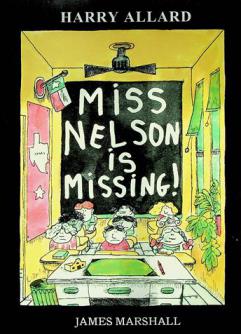
Miss Nelson is missing!
The kids in Room 207 take advantage of their teacher's good nature until she disappears and they are faced with a vile substitute.
Book

Assessing the use and impact of Anti-Social Behaviour Orders
Anti-Social Behaviour Orders (ASBOs) have become the main sanction for dealing with anti-social behaviour in the UK. This book provides one of the first assessments of this sanction, which has become widely used but remains extremely controversial. The report is based on detailed interviews with ASBO recipients, practitioners and community representatives in areas affected by anti-social behaviour. Examining its use and impact from these various perspectives, the book assesses the effects of ASBOs on the behaviour and attitudes of recipients as well as examining the various issues which arise in relation to their implementation. The report should be read by academics and students who want to make sense of ASBOs, practitioners who are involved in implementing them as well as policy makers who are responsible for designing this sanction. It will also be of interest to all those who have an interest in addressing the issue of anti-social behaviour.
eBook


Challenge to China
Challenge to China draws attention to an underappreciated aspect of legal reforms in Taiwan: its 2009 abolition of labor camps for liumang, very loosely translated as \"hooligans,\" and asks how Taiwan's experience might be relevant to its giant neighbor across the Taiwan Strait.
eBook

Horrid Henry's revenge
An unabridged CD of the bestselling naughty child., so you can read along. Horrid Henry is hugely popular with children and adults - over 500,000 audio copies sold in various formats. Unmissable entertainment for 3-9-year-olds. A brilliant collection of four stories about this favourite character - one of the few new characters to have emerged in recent years for this age group. Wickedly subversive, hilariously funny and bang up to date, Horrid Henry's fame is spreading. In this collection, enhanced by Miranda Richardson's brilliant reading and really horrid music and sound effects, Henry accompanies his father to the office, hacks into his parents' computer, meets the Demon Dinner Lady and plans the ultimate revenge on Perfect Peter.
Book

Striking a balance with high-entropy alloys
Jet engines convert heat energy from burning fuel into thrust, and the greater the temperature difference between the heat source and the cool air outside the engine, the more thrust the engines can get from a given amount of fuel. By increasing the relative proportions of the elements and introducing more internal entropy, the formation of such compounds becomes energetically much less favourable, giving the resultant alloys improved physical properties without the drawbacks of conventional mixtures. Cem Tasan, a metallurgist at the Massachusetts Institute of Technology in Cambridge, is particularly interested in materials that are resistant to hydrogen embrittlement. Because they are so small, hydrogen atoms can easily penetrate many ductile materials and cause them to become more fragile.
Journal Article

Marge in charge
\"Meet Marge, the mischievous babysitter with rainbow hair who loves to make a mess and bend the rules ... At dinnertime Chef Marge cooks up chocolate soup, and at school Marge the Musician conducts a chaotic concert in the playground! In these three stories, Jake and Jemima have brilliant fun with their new babysitter, but will they manage to tick off all the jobs on Mummy's list?
Book

Rethinking Disorderly Conduct
Disorderly conduct laws are a combination of common law offenses aimed at protecting the public order, peace, and tranquility. Yet, contrary to common legal conceptions, the criminalization of disorderly conduct is not just about policing behavior that threatens to disrupt public order or even the public’s peace and tranquility. Policing disorderly conduct reflects and reinforces deeply rooted discriminatory understandings about what behavior—and which persons—violate community norms. By relying on a false dichotomy between “order” and “disorder,” disorderly conduct laws construct and reinforce a hierarchy of normative behaviors that are imbued with racism, sexism, and ableism. Disorderly conduct laws “otherize” certain nonconforming behaviors, delegitimize them through the label of “disorderly,” and in doing so exclude certain historically marginalized groups from normative conceptions of community. They do this in part by prohibiting a wide range of behaviors and conferring vast amounts of discretion upon law enforcement and private citizens to target individuals for behavior regulation, physical removal, and community exclusion. These laws often determine access to shared community spaces, resulting in the exclusion of historically marginalized groups from these purportedly “public” spaces. In this way, disorderly conduct laws delineate and police the normative boundaries of communities.
This Article begins by offering an overview and substantive critique of disorderly conduct laws. It then demonstrates how enforcement of these laws reinforces social hierarchies on the basis of race, gender, and disability and defines and constructs community boundaries. In this way, the Article offers a site for problematizing unitary models of community in criminal law and is situated within criminal legal scholarship’s ongoing discussions on the role of “the community” in criminal justice reform. The Article concludes by identifying pathways to end the harms of the disorderly conduct enforcement regime, including decriminalizing and abolishing disorderly conduct. Instead of honing in on specific policy reforms, the Article aims to set forth certain models that rely less on consensus and more on contestatory approaches to democratic participation, which better account for the multiplicity of communities affected by criminal law enforcement.
Journal Article


The Effects of Local Police Surges on Crime and Arrests in New York City
The New York Police Department (NYPD) under Operation Impact deployed extra police officers to high crime areas designated as impact zones. Officers were encouraged to conduct investigative stops in these areas. City officials credited the program as one of the leading causes of New York City's low crime rate. We tested the effects of Operation Impact on reported crimes and arrests from 2004 to 2012 using a difference-in-differences approach. We used Poisson regression models to compare differences in crime and arrest counts before and after census block groups were designated as impact zones compared to census block groups in the same NYPD precincts but outside impact zones. Impact zones were significantly associated with reductions in total reported crimes, assaults, burglaries, drug violations, misdemeanor crimes, felony property crimes, robberies, and felony violent crimes. Impact zones were significantly associated with increases in total reported arrests, arrests for burglary, arrests for weapons, arrests for misdemeanor crimes, and arrests for property felony crimes. Impact zones were also significantly associated with increases in investigative stops for suspected crimes, but only the increase in stops made based on probable cause indicators of criminal behaviors were associated with crime reductions. The largest increase in investigative stops in impact zones was based on indicators of suspicious behavior that had no measurable effect on crime. The findings suggest that saturating high crime blocks with police helped reduce crime in New York City, but that the bulk of the investigative stops did not play an important role in the crime reductions. The findings indicate that crime reduction can be achieved with more focused investigative stops.
Journal Article