
Catalogue Search | MBRL


Are you sure you want to remove the book from the shelf?

{{itemTitle}}
112
result(s) for
"Division Fiction."
Sort by:

Bean thirteen
Two bugs, Ralph and Flora, try to divide thirteen beans so that the unlucky thirteenth bean disappears, but they soon discover that the math is not so easy.
Book
Women's work
Women's Work challenges influential accounts about gender and the novel by revealing the complex ways in which labour, informed the lives and writing of a number of middling and genteel women authors publishing between 1750 and 1830. This book provides a particularly rich, yet largely neglected, seam of texts for exploring the vexed relationship between gender, work and writing. The four chapters that follow contain thoroughly contextualized case studies of the treatment of manual, intellectual and domestic labour in the work and careers of Sarah Scott, Charlotte Smith, Mary Wollstonecraft and women applicants to the writer's charity, the Literary Fund. By making women's work visible in our studies of female-authored fiction of the period, Batchelor reveals the crucial role that these women played in articulating debates about the gendered division of labour, the (in)compatibility of women's domestic and professional lives and the status and true value of women's work that shaped eighteenth-century culture as surely as they shape our own.
eBook

The multiplying menace divides : a math adventure
Prince Peter uses division to outwit Rumpelstiltskin and a witch named Matilda who are threatening to destroy the entire kingdom. Includes math notes about dividing by whole numbers and by fractions.
Book

'At Home in the Water': Swimming and Progressive Girlhood in Early Twentieth-Century Club Fiction
In series fiction about the Girl Scouts and the Camp Fire Girls from the 1910s and 1920s, swimming enables new opportunities that question and disrupt nineteenth-century models of girlhood. Girl characters move beyond domestic roles and experiences, which contributes to the changing gender dynamics of this time period.
Journal Article

The return of Faraz Ali
\"Not since childhood has Faraz returned to the Mohalla, Lahore's infamous walled inner city, where women still pass down the profession of courtesan to their daughters. But he still remembers the day he was abducted from the home he shared with his mother and sister there, at the direction of his powerful father, who wanted to give him a chance at a respectable life. Now Wajid, once more dictating his fate from afar, has sent Faraz back to Lahore, installing him as head of the Mohalla police station and charging him with a mission: to cover up the violent death of a young kanjari. It should be a simple assignment to carry out in a marginalized community, but for the first time in his career, Faraz finds himself unable to follow orders. As the city assails him with a jumble of memories, he cannot stop asking questions or chasing down the walled city's labyrinthine alleyways for the secrets-his family's and his own-that risk shattering his precariously constructed existence. Profoundly intimate and propulsive, The Return of Faraz Ali is a spellbindingly assured first novel that poses a timeless question: Whom do we choose to protect, and at what price?\"-- Provided by publisher.
Book

Anti-Japanism as a strategy for reshaping national identity in post-liberation South Korean fictions (1945–1948)
This article argues that South Koreans' anti-Japanism in the post-liberation period can be regarded as an ideological construction, which was inevitably required to reshape their national identity, rather than as a reasonable and serious critical consideration of colonial Japan. Anti-Japanism functions as an identification framework in an era when Koreans needed to develop a new discourse which reflects the rapid politico-socio-cultural changes of that period. Under military control of the United States and the Soviet Union, Koreans made Japan the other in a number of ways in order to unite their nation state and national identity, relying specifically on racial difference and hierarchy. First, Korean intellectuals, who once cooperated with colonial Japan in the political sphere or in their ordinary lives, explicitly revealed their anti-Japanese sentiments in their writings right after liberation. Second, after liberation, anti-Japanism emerged from a process that Koreans would exploit, after demarcating the moral difference between themselves and the remaining Japanese migrants, to exclude the Japanese from their community. Finally, anti-Japanism in the post-liberation period can be detected in Koreans' tenacious attitude, as they tacitly restricted the articulation of filial or cultural hybridity with the Japanese people in order to reconfigure their national identity.
Journal Article
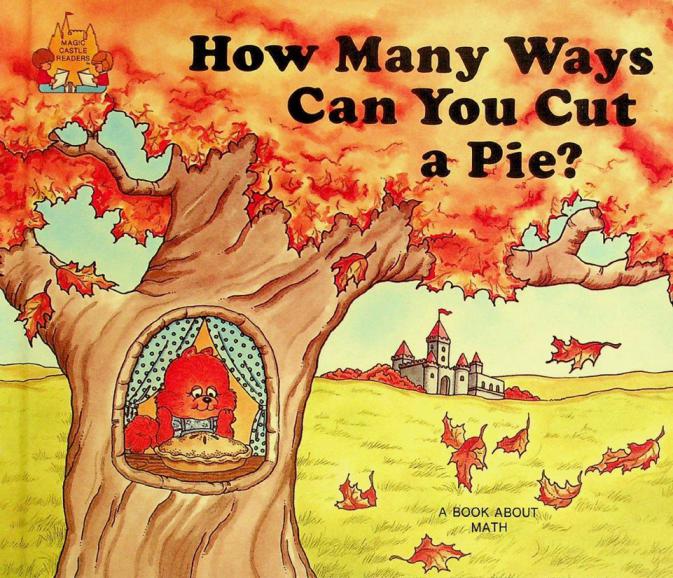
How many ways can you cut a pie ?
Squirrel promises to divide her pie into sections for her animal friends if she wins the pie contest.


A time for war
When his plane is shot down on June 6, 1944, D-Day, paratrooper Private Michael Donovan must find a way to survive and locate his platoon.
Book

Unwriting Brexit? Bridging Fictions and Liminal Aesthetics Within the UK’s Hostile Environment
The article considers the various frictions and fissures in contemporary European politics. Contrary to its historical genesis, this politics often aims at division rather than community, a development epitomized by Brexit. The creation, reinforcement, and protection of borders seem to be a core aim of this policy, which can be observed in EU foreign policy in the narrower sense, but also in the central framing narratives that the EU pursues in the context of border politics and migration in order to fortify the ‘fortress Europe’, as does the UK with its Hostile Environment policy. Contrary to the supposed populist success of such policies, which were clearly demonstrated by the Brexit referendum vote, there is also widespread skepticism towards such disintegrating governance.A vast body of literature, mostly so-called Brexlit, addresses the fractures created by Brexit but also the many pre-existing divisions that Brexit did not cause, but was a consequence of. Some of these works establish an antagonistic Leave or Remain dichotomy, perfectly understandable from the point of view of the losing side of the referendum, but perhaps not necessarily productive in terms of reducing the divisions in society or even generating compassion for the opposition. The article argues that there is, however, a body of literature that aims at the erasure of borders, that seeks to bridge the existing ruptures within society and to reconcile the divided camps. I would like to focus on two respective literary projects, the EFACIS Kaleidoscope series which features various writers and artists from Ireland and their respective views on Europe, and Ali Smith’s Seasonal Quartet and Companion Piece, five novels that negotiate contemporary UK politics post Brexit. While both projects perceptibly address contemporary borders and exclusions, they do not present them as inevitable. Rather, they offer alternative designs for overcoming the existing divisions by integrating them into their plots, but they also reflect this communal unity on the formal level of their works. In this respect, both projects seem particularly suited to create a welcoming climate of solidarity, in order to unwrite, if not Brexit itself, at least some of its consequences.
Journal Article