
Catalogue Search | MBRL


Are you sure you want to remove the book from the shelf?

{{itemTitle}}
147
result(s) for
"Division of Korea"
Sort by:

Korean Division Films
As one half of what is currently the only divided country in the world, the phenomenon of the so-called “division film” in South Korea has developed as a reflection of the social changes associated with its divided national background. The divided Korean Peninsula, the cause of military confrontation between the two Koreas, the Korean War, and espionage activities, is the background for Korean division films. As a result, the divided state serves as a narrative element and can be explored as a theme. Since the release of the first division films in 1949, a year after the Korean Peninsula was split into two countries, division films have been produced constantly. This entry analyzes major political changes, focusing on the regime changes represented in division films and, based on this approach, explores the cinematic illustrations of modern Korean history in three distinct periods. In a bid to reflect the characteristics of the times, division films portray historical elements while acting successfully as an advanced form of art. Herein, I will examine the definition and the range of these division films. This entry thus aims to discuss, in depth, the origin and history of Korea’s division films.
Journal Article

Korean Endgame
Nearly half a century after the fighting stopped, the 1953 Armistice has yet to be replaced with a peace treaty formally ending the Korean War. While Russia and China withdrew the last of their forces in 1958, the United States maintains 37,000 troops in South Korea and is pledged to defend it with nuclear weapons. In Korean Endgame, Selig Harrison mounts the first authoritative challenge to this long-standing U.S. policy. Harrison shows why North Korea is not--as many policymakers expect--about to collapse. And he explains why existing U.S. policies hamper North-South reconciliation and reunification. Assessing North Korean capabilities and the motivations that have led to its forward deployments, he spells out the arms control concessions by North Korea, South Korea, and the United States necessary to ease the dangers of confrontation, centering on reciprocal U.S. force redeployments and U.S. withdrawals in return for North Korean pullbacks from the thirty-eighth parallel.
eBook

The Influence of Korean Lobbying on U.S.-Korean Relations, 1905–1945
This study examines how Syngman Rhee and the Korean independence movement used the rhetoric of American exceptionalism to lobby the U.S. government and the American public to support Korean independence between 1905–1945. Alleging that Theodore Roosevelt violated the 1882 Korean-American Treaty when he tacitly supported the Japanese annexation of Korea in 1905, Rhee and his surrogates argued that Germany was not the only nation guilty of regarding treaties as “mere scraps of paper” and exhorted Americans to right this historical wrong by supporting Korean independence. They argued that by doing so Americans could prove they were the exceptional people many believed themselves to be. Rhee’s message gained credibility not only because the concept of American exceptionalism resonated with American audiences, but also because at various junctures certain American political factions found taking up the cause of Korean independence useful. During the fight over the Versailles Treaty the so-called Irreconcilables used the Korean issue to criticize President Woodrow Wilson and also to deflect the charge that they were isolationists. During the denouement of World War II, anti-communist politicians and civic organizations argued that Korea must not be abandoned to communism and that the United States’ treatment of Korea would be a test of American resolve in establishing a new rules-based order. The publicity and sympathy Korea received from these and many other episodes transformed Korea into an issue that could not be ignored in the postwar period. The irony and tragedy of Rhee’s efforts, however, is they not only failed to regain Korea’s independence, but directly contributed to the decision to divide Korea—an outcome he never foresaw nor supported.
Dissertation

Gender and Labour in Korea and Japan
Bringing together for the first time sexual and industrial labour as the means to understand gender, work and class in modern Japan and Korea, this book shows that a key feature of the industrialisation of these countries was the associated development of a modern sex labour industry. Tying industrial and sexual labour together, the book opens up a range of key questions: In what economy do we place the labour of the former \"comfort women\"? Why have sex workers not been part of the labour movements of Korea and Japan? Why is it difficult to be \"working-class\" and \"feminine\"? What sort of labour hierarchies operate in hostess clubs? How do financial crises translate into gender crises? This book explores how sexuality is inscribed in working-class identities and traces the ways in which sexual and labour relations have shaped the cultures of contemporary Japan and Korea. It addresses important historical episodes such as the Japanese colonial industrialisation of Korea, wartime labour mobilisation, women engaged in forced sex work for the Japanese army throughout the Asian continent, and issues of ethnicity and sex in the contemporary workplace. The case studies provide specific examples of the way gender and work have operated across a variety of contexts, including Korean shipyard unions, Japanese hostess clubs, and the autobiographical literature of Korean factory girls. Overall, this book provides a compelling account of the entanglement of sexual and industrial labour throughout the twentieth century, and shows clearly how ideas about gender have contributed in fundamental ways to conceptions of class and worker identities.
\" This edited volume is a marvelous text in terms of understanding gendered labour in Japan and South Korea.\" - Jesook Song, Pacific Affairs: Volume 83, No. 4 – December 2010
\"Women are often divided by their gender roles in traditional societies. They must choose to either erase their gender or maintain their femininity; and between their reproductive role and being objects of male sexual pleasure, cast as either mothers and wives or as prostitutes. Women’s role as industrial workers hangs in the balance between the two. In closely examining this divide and the experiences of the women who exist within it, this book makes a significant contribution to both gender studies and studies of labour history.\" Maho Toyoda, Kansai University, Asian Studies Review
1: Introduction: The entanglement of sexual and industrial labour - Ruth Barraclough and Elyssa Faison 2: Sexing class: \"The Prostitute\" in Japanese proletarian literature - Heather Bowen-Struyk 3: Gender and Korean labour in wartime Japan - Elyssa Faison 4: Military prostitution and women’s sexual labour in Japan and Korea - Chunghee Sarah Soh 5: Slum romance in Korean factory girl literature - Ruth Barraclough 6: Shipyard women and the politics of gender: a case study of the KSEC yard in South Korea - Hwasook Nam 7: The frailty of men: the redemption of masculinity in the Korean labour movement - Jong Bum Kwon 8: Gender and ethnicity at work: Korean \"hostess\" club Rose in Japan - Haeng-ja Sachiko Chung
Ruth Barraclough teaches modern Korean history and literature at the Australian National University. She is currently working on her book: Korean Factory Girls: Capitalism and the Seductions of Literature . Elyssa Faison is an Associate Professor of History at the University of Oklahoma and the author of Managing Women: Disciplining Labour in Modern Japan . Her current research interests include issues of citizenship and national belonging in imperial and postwar Japan.
eBook


Embedded Autonomy
In recent years, debate on the state's economic role has too often devolved into diatribes against intervention. Peter Evans questions such simplistic views, offering a new vision of why state involvement works in some cases and produces disasters in others. To illustrate, he looks at how state agencies, local entrepreneurs, and transnational corporations shaped the emergence of computer industries in Brazil, India, and Korea during the seventies and eighties.
Evans starts with the idea that states vary in the way they are organized and tied to society. In some nations, like Zaire, the state is predatory, ruthlessly extracting and providing nothing of value in return. In others, like Korea, it is developmental, promoting industrial transformation. In still others, like Brazil and India, it is in between, sometimes helping, sometimes hindering. Evans's years of comparative research on the successes and failures of state involvement in the process of industrialization have here been crafted into a persuasive and entertaining work, which demonstrates that successful state action requires an understanding of its own limits, a realistic relationship to the global economy, and the combination of coherent internal organization and close links to society that Evans called \"embedded autonomy.\"
eBook
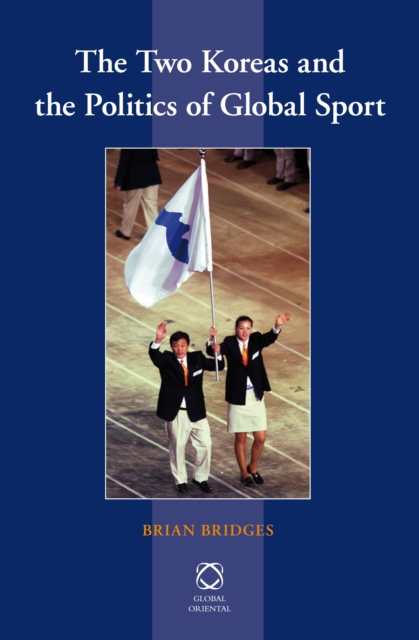
The Two Koreas and the Politics of Global Sport
The Two Koreas and the Politics of Global Sport analyses the impact of politics on the development of sport in the two Koreas over six decades and argues that inter-Korean rivalry has significantly influenced sporting ambitions and development.
eBook
A Representation of Nationhood in the Museum
A Representation of Nationhood in the Museum examines how the National Museum of Korea, as a national repository of material culture and the state's premier exhibition facility, has shaped and been shaped by Korean nationalism.
Exploring the processes by which the museum has discovered and interpreted material culture, using concepts of ethnic nationalism in the historical and political contexts of South Korean society, the book analyses how this nationalist interpretation has regulated South Koreans' understanding of their material culture. Issues considered include: cultural and political relations with China; Japanese colonial rule, cultural imperialism and its legacy; the division of Korea since 1945; the Korean War and nation building since liberation in 1945; and domestic political upheavals, including military coups in 1961 and in 1979. Demonstrating that authoritarian regimes' emphasis on the promotion of national unity drove national museums to establish national identity through material culture, Jang argues that international political and diplomatic factors also affect the process of the formation of national identity in a specific political context.
Concerning itself with issues such as the relationship between politics and identity, museums and authoritarian regimes, this book should be essential reading for academics, researchers and postgraduate students in museum studies, nationalism studies, Asian studies and history departments.
eBook

Marriage Decline in Korea
Explanations for the substantial decline in rates of marriage in East Asian countries often emphasize the role of rapid educational expansion for women in reducing the desirability of marriages characterized by a strong gender-based division of labor. Focusing on South Korea, we consider a very different scenario in which changing educational composition of the marriage market reduces the demographic feasibility of such marriages. Analyses of 1% microsamples of the 1990 and 2010 Korean censuses show that changes in the availability of potential spouses accounted for part of the decline in marriage rates over a period of 20 years (1985–1989 to 2005–2009) for highly educated women and less-educated men. We also show that growth in international marriages played a role in preventing an even more dramatic decline in marriage among low-educated men. These findings support the general relevance of marriage market mismatches in gender-inegalitarian societies and highlight the declining feasibility of marriage for low-educated men in such contexts. Findings also hint at important implications for inequality in a society such as Korea, where marriage remains a symbol of social success and is closely related to women’s economic wellbeing and men’s health and subjective well-being.
Journal Article

Probiogenomic In-Silico Analysis and Safety Assessment of Lactiplantibacillus plantarum DJF10 Strain Isolated from Korean Raw Milk
The whole genome sequence of Lactiplantibacillus plantarum DJF10, isolated from Korean raw milk, is reported, along with its genomic analysis of probiotics and safety features. The genome consists of 29 contigs with a total length of 3,385,113 bp and a GC content of 44.3%. The average nucleotide identity and whole genome phylogenetic analysis showed the strain belongs to Lactiplantibacillus plantarum with 99% identity. Genome annotation using Prokka predicted a total of 3235 genes, including 3168 protein-coding sequences (CDS), 59 tRNAs, 7 rRNAs and 1 tmRNA. The functional annotation results by EggNOG and KEGG showed a high number of genes associated with genetic information and processing, transport and metabolism, suggesting the strain’s ability to adapt to several environments. Various genes conferring probiotic characteristics, including genes related to stress adaptation to the gastrointestinal tract, biosynthesis of vitamins, cell adhesion and production of bacteriocins, were identified. The CAZyme analysis detected 98 genes distributed under five CAZymes classes. In addition, several genes encoding carbohydrate transport and metabolism were identified. The genome also revealed the presence of insertion sequences, genomic islands, phage regions, CRISPR-cas regions, and the absence of virulence and toxin genes. However, the presence of hemolysin and antibiotic-resistance-related genes detected in the KEGG search needs further experimental validation to confirm the safety of the strain. The presence of two bacteriocin clusters, sactipeptide and plantaricin J, as detected by the BAGEL 4 webserver, confer the higher antimicrobial potential of DJF10. Altogether, the analyses in this study performed highlight this strain’s functional characteristics. However, further in vitro and in vivo studies are required on the safety assurance and potential application of L. plantarum DJF10 as a probiotic agent.
Journal Article