
Catalogue Search | MBRL


Are you sure you want to remove the book from the shelf?

{{itemTitle}}
779
result(s) for
"Documentary films Influence."
Sort by:

The Grierson effect : tracing documentary's international movement
This landmark collection of essays considers the global legacy of John Grierson, the father of British documentary. Exploring the influence of his ideas on documentary and educational film in a wide range of national contexts, this book foregrounds core issues and new perspectives in international documentary cinema cultures and histories.
BOOK

Film and Everyday Eco-disasters
pEco-disasters such as coal-mining accidents, oil spills, and food-borne diseases appear regularly in the news, making them seem nearly commonplace. These ecological crises highlight the continual tensions between human needs and the environmental impact these needs produce. Contemporary documentaries and feature films explore environmental-human conflicts by depicting the consequences of our overconsumption and dependence on nonrenewable energy./p p emFilm and Everyday Eco-disasters/em examines changing perspectives toward everyday eco-disasters as reflected in the work of filmmakers from the silent era forward, with an emphasis on recent films such as emDead Ahead/em, an HBO dramatization of the Exxon Valdez disaster; emTotal Recall/em, a science fiction action film highlighting oxygen as a commodity; emThe Devil Wears Prada/em, a comment on the fashion industry; and emFood, Inc/em., a documentary interrogation of the food industry. The authors evaluate not only the success of these films as rhetorical arguments but also their rhetorical strategies. This interdisciplinary approach to film studies fuses cultural, economic, and literary critiques in articulating an approach to ecology that points to sustainable development as an alternative to resource exploitations and their associated everyday eco-disasters./p
eBook

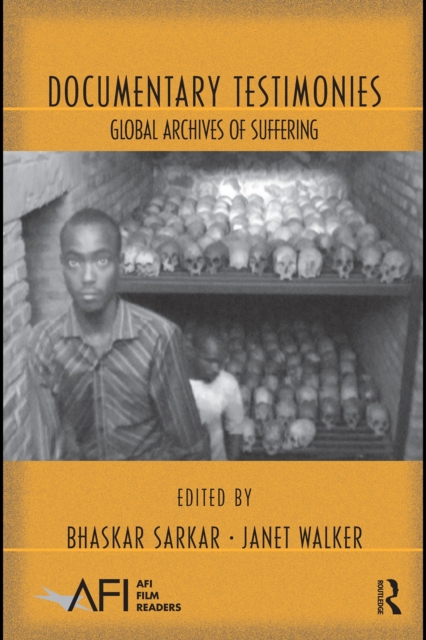
Documentary Testimonies
Documentary Testimonies examines documentary films that compel us to bear witness, move us to anger or tears, and possibly mobilize us to action.
Comprising ten new essays and a substantive introduction, this interdisciplinary volume examines audiovisual testimonial practices, forms, and institutions. Topics include: technologies of capture, storage and circulation; problems of historical veracity/frail memory; generation of video archives--official, renegade, and ephemeral; limits and potentialities of documentary as public record; architectonics of memory; ethics of witnessing and commemoration; human rights and activist publics.
The essays provide in-depth analysis of archives of social suffering tied to particular locales: Cambodia, Chiapas, Darfur, India, Indonesia, Korea, New Orleans, Norway, Rwanda, South Africa, and Washington, DC. The contributors focus on the generation and use of testimony by public administrators and institutions, human rights activists, documentary filmmakers, and others with interest in environmental justice, human rights, social advocacy, and the commemoration/prevention of genocide. Thus, this volume aims to investigate, from a critical and translocal perspective, testimony as social practice.
Introduction: Moving Testimonies Bhaskar Sarkar and Janet Walker
1. Embodied Memory: The Institutional Mediation of Survivor Testimony in the United States Holocaust Memorial Museum Noah Shenker
2. \"We Shall Drown, But We Shall Not Move\": The Ecologics of Testimony in NBA Documentaries Bishnupriya Ghosh
3. Rights and Return: Perils and Fantasies of Situated Testimony after Katrina Janet Walker
4. From \"Superbabies\" and \"Nazi Bastards\" to Victims Finding a Voice: The Memory Trajectory of the Norwegian Lebensborn Children Bjørn Sørenssen
5. Reclamation of Voice: The Joint Authorship of Testimony in The Murmuring Trilogy Hye Jean Chung
6. Trauma, Memory, Documentary: Re-enactment in Two Films by Rithy Panh (Cambodia) and Garin Nugroho (Indonesia) Deirdre Boyle
7. On Documentary and Testimony: The Revisionists’ History, the Politics of Truth, and the Remembrance of the Massacre at Acteal, Chiapas José Rabasa
8. Mediating Testimony: Broadcasting South Africa’s Truth and Reconciliation Commission Catherine Cole
9. Mediating Genocide: Producing Digital Survivor Testimony in Rwanda Mick Broderick
10. Between Orbit and the Ground: Conflict Monitoring, Google Earth and the \"Crisis in Darfur\" Project Lisa Parks
Bhaskar Sarkar is Associate Professor of Film and Media Studies at the University of California, Santa Barbara. He is author of Mourning the Nation: Indian Cinema in the Wake of Partition.
Janet Walker is Professor and former chair of the Department of Film and Media Studies at the University of California, Santa Barbara. Her many authored and edited books include Couching Resistance: Women, Film, and Psychoanalytic Psychiatry , Feminism and Documentary , Westerns: Films through History , and Trauma Cinema: Documenting Incest and the Holocaust.
eBook
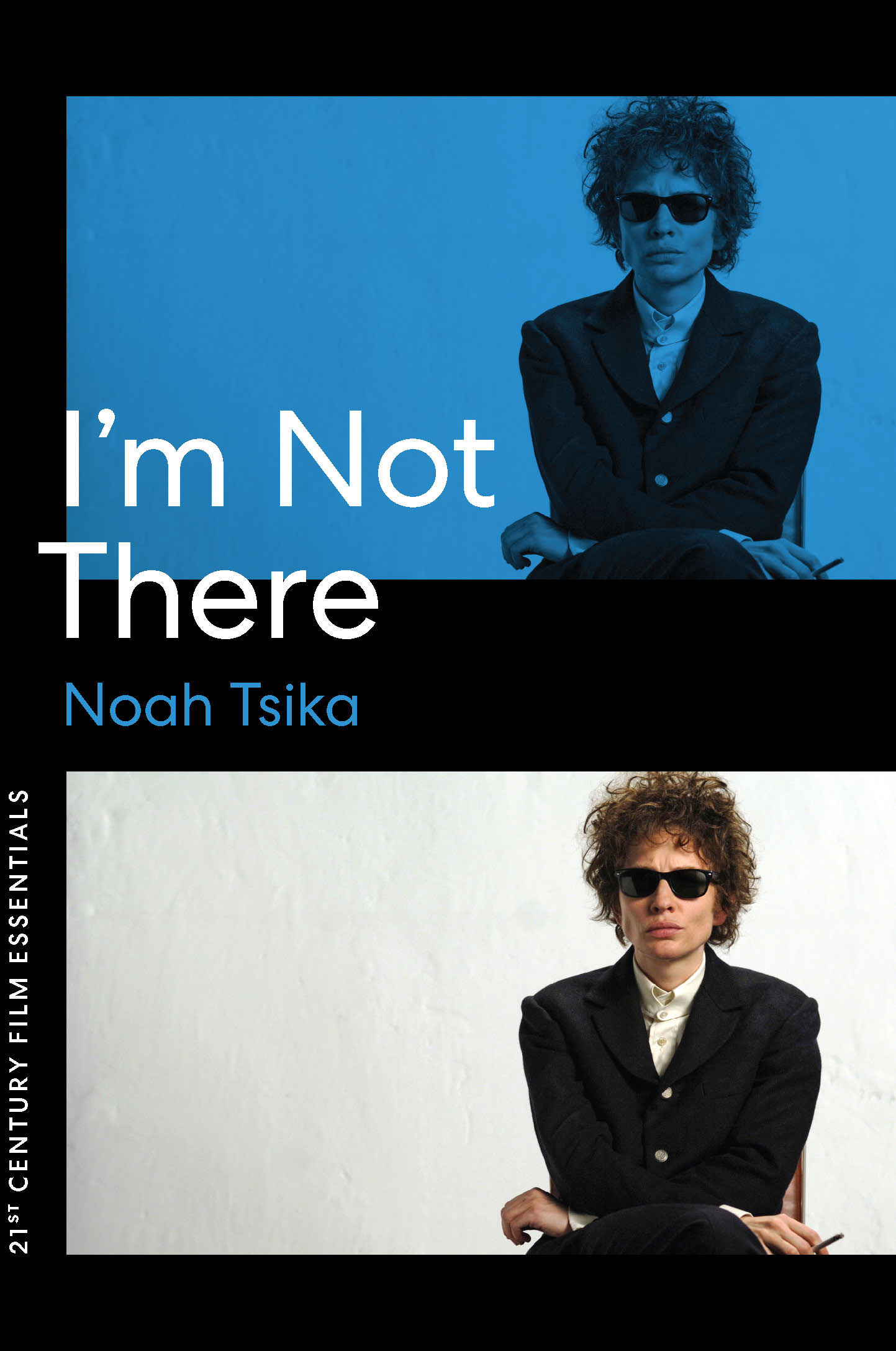
I'm Not There
An examination of director Todd Haynes and his Bob Dylan
biopic. As the first and only Bob Dylan \"biopic,\" I'm
Not There caused a stir when released in 2007. Offering a
surreal retelling of moments from Dylan's life and career, the film
is perhaps best known for its distinctive approach to casting,
including Cate Blanchett and Marcus Carl Franklin, a Black child
actor, as versions of Dylan though none of the characters bear his
name. Greenlit by Bob Dylan himself, the film uses Dylan's music as
a score, a triumph for famed queer filmmaker Todd Haynes after
encountering issues with copyright in previous projects.
Noah Tsika eloquently characterizes all the ways that Dylan and
Haynes harmonize in their methods and sensibilities, interpreting
the rule-breaking film as a biography that refuses chronology,
disdains factual accuracy, flirts with libel, and cannibalizes
Western cinema. Fitting the film's inspiration, creation, and
reception alongside its continuing afterlife, Tsika examines
Dylan's music in the film through the context of intellectual
property, raising questions about who owns artistic material and
artistic identities and how such material can be reused and
repurposed. Tsika's adventurous analysis touches on gender, race,
queerness, celebrity, popular culture, and the law, while offering
much to Haynes and Dylan fans alike.
eBook

Watching the World
Screen documentary has experienced a marked rise in visibility and popularity in recent years. What are the reasons for the so-called 'boom' in documentaries at the cinema? How has television documentary met the challenge of new formats? And how do audiences engage with documentaries on screen? Watching the world extends the reach of documentary studies by investigating recent instances of screen documentary and the uses made of them by audiences. The book focuses on the interfaces between textual mechanisms, promotional tactics, and audiences' viewing strategies. Key topics of inquiry are: film and televisual form, truth claims and issues of trust, the pleasures, politics and the ethics of documentary. Case studies include Capturing the Friedmans, Être et Avoir, Paradise Lost, Touching the Void, and wildlife documentaries on television. This compelling and accessible book will be of interest to both students and fans of documentary.
eBook
God + country
Looks at the implications of Christian Nationalism and how it distorts not only the constitutional republic, but Christianity itself.
Streaming Video

Five ways to increase the effectiveness of instructional video
This paper reviews five ways to increase the effectiveness of instructional video and one way not to use instructional video. People learn better from an instructional video when the onscreen instructor draws graphics on the board while lecturing (dynamic drawing principle), the onscreen instructor shifts eye gaze between the audience and the board while lecturing (gaze guidance principle), the lesson contains prompts to engage in summarizing or explaining the material (generative activity principle), a demonstration is filmed from a first-person perspective (perspective principle), or subtitles are added to a narrated video that contains speech in the learner’s second language (subtitle principle). People do not learn better from a multimedia lesson when interesting but extraneous video is added (seductive details principle). Additional work is needed to determine the conditions under which these principles apply and the underlying learning mechanisms.
Journal Article

Evaluating the impact of the documentary series Blue Planet II on viewers' plastic consumption behaviors
The global scale of the ocean plastics crisis demands a collective change in plastic consumption behaviors. The documentary series Blue Planet II has been praised for driving changes in consumer behaviors by raising awareness about this issue, yet there is little evidence that directly links the documentary to viewers' plastic consumption. We investigated the effectiveness of Blue Planet II as a behavior change intervention by conducting randomized control trials and used revealed preferences to measure plastic consumption behaviors. Although environmental knowledge was found to be positively influenced by Blue Planet II, this did not translate into a behavioral change among participants. Our results support the hypothesis that, due to the complexities of human behavior, exposure to a single documentary is unlikely to lead to a distinct increase in individual pro‐environmental actions. However, the potential for Blue Planet II to have an impact at a wider societal level, namely through influencing policy, remains unexplored.
Journal Article

The Official Picture
Mandated to foster a sense of national cohesion The National Film Board of Canada's Still Photography Division was the country's official photographer during the mid-twentieth century. Like the Farm Security Administration and other agencies in the US, the NFB used photographs to serve the nation. Division photographers shot everything from official state functions to images of the routine events of daily life, producing some of the most dynamic photographs of the time, seen by millions of Canadians - and international audiences - in newspapers, magazines, exhibitions, and filmstrips. In The Official Picture, Carol Payne argues that the Still Photography Division played a significant role in Canadian nation-building during WWII and the two decades that followed. Payne examines key images, themes, and periods in the Division's history - including the depiction of women munitions workers, landscape photography in the 1950s and 60s, and portraits of Canadians during the Centennial in 1967 - to demonstrate how abstract concepts of nationhood and citizenship, as well as attitudes toward gender, class, linguistic identity, and conceptions of race were reproduced in photographs. The Official Picture looks closely at the work of many Division photographers from staff members Chris Lund and Gar Lunney during the 1940s and 1950s to the expressive documentary photography of Michel Lambeth, Michael Semak, and Pierre Gaudard, in the 1960s and after. The Division also produced a substantial body of Northern imagery documenting Inuit and Native peoples. Payne details how Inuit groups have turned to the archive in recent years in an effort to reaffirm their own cultural identity. For decades, the Still Photography Division served as the country's image bank, producing a government-endorsed \"official picture\" of Canada. A rich archival study, The Official Picture brings the hisotry of the Division, long overshadowed by the Board's cinematic divisions, to light.
eBook