
Catalogue Search | MBRL


Are you sure you want to remove the book from the shelf?

{{itemTitle}}
36
result(s) for
"Domestic animals Folklore."
Sort by:

Margaret Hillert's Not I, not I
\"An easy format retelling of the classic fairytale Little Red Hen who looks for help with her crop. Original edition revised with new illustrations. Includes reading activities and a word list\"-- Provided by publisher.
Book

THE DOMESTICATION OF ANIMALS
Over the past 11,000 years humans have brought a wide variety of animals under domestication. Domestic animals belong to all Linnaean animal classes—mammals, birds, reptiles, amphibians, fish, insects, and even, arguably, bacteria. Raised for food, secondary products, labor, and companionship, domestic animals have become intricately woven into human economy, society, and religion. Animal domestication is an on-going process, as humans, with increasingly sophisticated technology for breeding and rearing animals in captivity, continue to bring more and more species under their control. Understanding the process of animal domestication and its reciprocal impacts on humans and animal domesticates requires a multidisciplinary approach. This paper brings together recent research in archaeology, genetics, and animal sciences in a discussion of the process of domestication, its impact on animal domesticates, and the various pathways humans and their animal partners have followed into domestication.
Journal Article

How dogs dream: Amazonian natures and the politics of transspecies engagement
Under the rubric of an \"anthropology of life,\" I call for expanding the reach of ethnography beyond the boundaries of the human. Drawing on research among the Upper Amazonian Runa and focusing, for heuristic purposes, on a particular ethnological conundrum concerning how to interpret the dreams dogs have, I examine the relationships, both intimate and fraught, that the Runa have with other lifeforms. Analytical frameworks that fashion their tools from what is unique to humans (language, culture, society, and history) or, alternatively, what humans are commonly supposed to share with animals are inadequate to this task. By contrast, I turn to an embodied and emergentist understanding of semiosis-one that treats sign processes as inherent to life and not just restricted to humans-as well as to an appreciation for Amazonian preoccupations with inhabiting the points of view of nonhuman selves, to move anthropology beyond \"the human,\" both as analytic and as bounded object of study.
Journal Article
The gift in the animal: The ontology of hunting and human-animal sociality
Many hunting peoples conceive of hunting as a process of reciprocal exchange between hunters and other-than-human persons, and anthropologists have tended to view such accounts as purely symbolic or metaphorical. To the extent that our theories deny the validity of northern hunters' conceptions of animals and the ontological assumptions on which they are based, however, we legitimize agents of the state when they dismiss the possibility that aboriginal knowledge and practices might serve as the factual basis for making wildlife management policy. In this article, I argue that our refusal to consider aboriginal accounts of hunting as perhaps literally as well as metaphorically valid has both contributed to the marginalization of aboriginal peoples and foreclosed important avenues of inquiry into hunting societies and the nature of human-animal relations. I focus on human-animal relations as a form of reciprocal exchange and argue that the development of a theoretical framework that can accommodate northern hunters' ontological assumptions is warranted theoretically as well as politically.
Journal Article
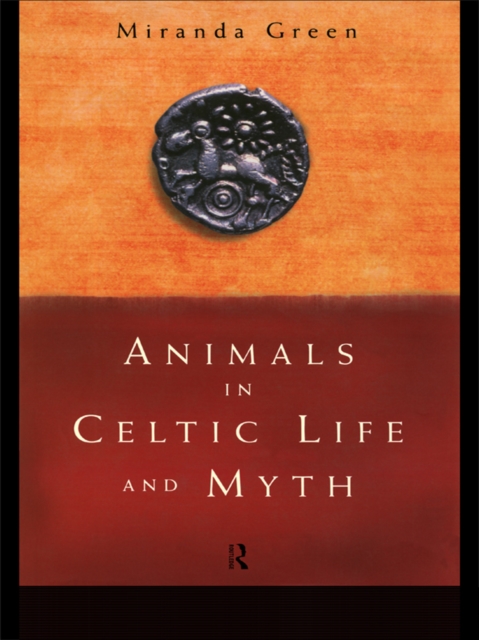
Animals in Celtic Life and Myth
Animals played a crucial role in many aspects of Celtic life: in the economy, hunting, warfare, art, literature and religion. Such was their importance to this society, that an intimate relationship between humans and animals developed, in which the Celts believed many animals to have divine powers. In Animals in Celtic Life and Myth, Miranda Green draws on evidence from early Celtic documents, archaeology and iconography to consider the manner in which animals formed the basis of elaborate rituals and beliefs. She reveals that animals were endowed with an extremely high status, considered by the Celts as worthy of respect and admiration.
eBook

How persons become things: economic and epistemological changes among Nayaka hunter-gatherers
The ontologies and epistemologies of hunter-gatherers have attracted growing attention in recent years as these people are undergoing changes. We examine these changes, focusing on one particular case based on our studies of the South Indian Nayaka; they have recently added cultivation and animal husbandry to their partially ongoing hunting and gathering life-style. Resisting analysis based on an assumed forest/domesticated dichotomy, we show that forest and domesticated animals and plants are both regarded as sentient co-dwellers in some cases, and as objects in others, depending not on what they are in essence, or where they are, but on when, by whom, and for what purpose they are approached. We argue that pockets of utilitarian framing emerge within the continuing relational epistemology of the Nayaka along with a growing departure from immediacy in the production-consumption nexus. In these pockets, the vivid presence of animals and plants is concealed, and they no longer appear as persons but as things. Alors que les peuples de chasseurs-cueilleurs subissent des mutations de grande ampleur, leurs ontologies et épistémologies font l'objet d'une attention de plus en plus soutenue depuis quelques années. Les auteurs examinent ces changements à partir d'un cas particulier, basé sur leurs recherches parmi les Nayaka du sud de l'Inde qui ont récemment adjoint l'agriculture et l'élevage au mode de vie basé sur la chasse et la cueillette qu'ils pratiquent encore partiellement. Sans céder à une supposée dichotomie entre forêt et domestication, ils montrent que les animaux et plantes de la forêt, d'une part, et domestiques d'autre part sont tous considérés comme des commensaux dotés d'un esprit dans certains cas ou comme des objets dans d'autres cas, et ce non pas en fonction de ce qu'ils sont par essence ni d' où ils sont, mais de quand, par qui et dans quel but ils sont approchés. Ils avancent que des poches de cadrage utilitaire se font jour dans l'épistémologie relationnelle traditionnelle des Nayaka, en même temps que ceux-ci s'écartent de l'immédiateté dans le complexe production-consommation. Dans ces poches, la présence vive des animaux et des plantes est dissimulée et ils n'apparaissent plus comme des personnes mais comme des choses.
Journal Article
Systematic quantitative analyses reveal the folk-zoological knowledge embedded in folktales
Researchers have argued that folktales have the pedagogical function of transmitting adaptive information about the environment. Folk-zoological knowledge, such as the predator-prey relationship among wild animals or the relationships between wild and domesticated animals, is important knowledge for foraging and pastoral societies. Here, we analysed the descriptions of the 382 animal folktales listed in a worldwide tale type index (Aarne-Thompson-Uther type index) using natural language processing (NLP) and descriptive statistics. Our analyses suggested that first, the predator-prey relationship frequently appeared in a co-occurrent animal pair within a folktale (e.g., cat and mouse or wolf and pig), and second, the motif of ‘deception’, describing the antagonistic behaviour among animals, appeared relatively higher in ‘wild and domestic animals’ and ‘wild animals’ than in other types. Furthermore, the motif of ‘deception’ appeared more frequently in pairs, corresponding to the predator-prey relationship. These results corresponded with the hypothesis that the combination of animal characters and what happens in stories represent relationships in the real world. This study makes a new contribution by demonstrating that using a combination of quantitative methods and qualitative data to study folktales broadens our understanding of the evolutionary aspects of human cultures.
Journal Article

If a Lion Eats Him
This article, starting from the analysis of the expression “if a lion kills/eats him” (i.e., a slave received on pledge), which appears in a limited number of surety contracts in the archive of the famous Balaĝunamḫe of Larsa (1829–1792 BC), gives a brief overview of the threat that lions posed not only to livestock but also to human beings in second-millennium Mesopotamia. Letters and administrative documents inform us of attacks on animals and, more rarely, even people. By contrast, collections of laws and legal principles seem to deal exclusively with problems arising from lions attacking domestic animals, without any mention of attacks on humans. In the light of this brief investigation, the author concludes that the expression “if a lion kills/eats him” must be considered a unicum, since it is not found in any other real-life or school contract. She assumes that the scribe decided to add this formula to the liability clause of Balaĝunamḫe’s surety contracts in order to cover as many scenarios as possible, including the chance of being eaten by a lion, clearly representing an event of force majeure.
Journal Article
EARLY DOGS AND ENDEMIC SOUTH AMERICAN CANIDS OF THE SPANISH MAIN
Although common and widespread today throughout the neotropical lowlands, the domestic dog (Canis lupus familiaris) may have been a relatively recent introduction into certain areas. Numerous early documents, however, implicate the precolumbian presence of tamed endemic South American canids, at least in lowland areas of northern South America and the adjacent Caribbean. These early and limited descriptions of small dogs that did not bark were eventually dismissed in the scholarly literature as simply domesticated dogs that were trained not to bark. A review of the earliest documentation of indigenous canids in the Spanish Main, and subsequent accounts of tamed endemic canids in various parts of the continent, suggests that native foxes or forest dogs could have been tamed. Varied sources written at different times and from different areas of lowland South America also mention interbreeding of endemic canids with domesticated dogs. The control of tamed endemic canids by indigenous populations could also have factored into the late appearance of the domestic dog, particularly in portions of the Amazon Basin.
Journal Article

Invisibility and Sexual Violence in Indo-European Mythology
The actual mechanism that works the magic does not really seem to matter; the range of magic objects that can make people invisible is surprisingly wide. People can see this in the Stith Thompson Motif-Index of Folk Literature, which lists, under the evocative rubric of \"D1361,\" subheaded \"Magic object renders invisible,\" in no particular order that the author can discern and with rich idiosyncrasies reminiscent of Borges' famous catalogue of Chinese animals ((1942) 1993), the things that make people invisible in folktales. Clearly the actual substance of the object is of little or no symbolic meaning; it is the way it is used that makes it magic. More precisely, it is the way it is used to do what the Shadow did to become invisible in the old radio plays: fog the minds of men (and women).
Journal Article