
Catalogue Search | MBRL


Are you sure you want to remove the book from the shelf?

{{itemTitle}}
17
result(s) for
"Domestic animals Infancy."
Sort by:


Developmental stage-specific A-to-I editing pattern in the postnatal pineal gland of pigs (Sus scrofa)
Background
RNA editing is a widespread post-transcriptional modification mechanism in mammalian genomes. Although many editing sites have been identified in domestic pigs (
Sus scrofa
), little is known about the characteristics and dynamic regulation of RNA editing in the pineal gland (PG), a small neuroendocrine gland that synthesizes and secretes melatonin, which is primarily responsible to modulate sleep patterns.
Results
This study analyzed the expression of adenosine-to-inosine (A-to-I) editing regulators and profiled the first dynamic A-to-I RNA editome during postnatal PG development. The results identified
ADAR1
as the most abundantly expressed ADAR enzyme, which was down-regulated during postnatal PG development. Furthermore, 47,284 high-confidence RNA editing sites were identified, the majority of which (93.6%) were of the canonical A-to-I editing type, followed by C-to-T editing. Analysis of its characteristics showed that the A-to-I editing sites mostly localized in SINE retrotransposons PRE-1/Pre0_SS. Moreover, a strong deficiency and preference for guanine nucleotides at positions of one base upstream or downstream were found, respectively. The overall editing level at the puberty stage was higher than at both infancy and adulthood stages. Additionally, genome-wide RNA editing was found to exhibit a dynamic stage-specific fashion (postnatally). Genes that underwent developmental changes in RNA editing were associated with catabolic processes as well as protein localization and transport functions, implying that RNA editing might be responsible for the molecular machineries of the postnatal developing PG. Remarkably, RNA editing in 3′-UTRs might regulate gene expression by influencing miRNA binding during PG development.
Conclusions
This study profiles the first comprehensive developmental RNA editome in the pig PG, which contributes to the understanding of the importance of post-transcriptionally mediated regulation during mammalian postnatal PG development. Moreover, this study widely extends RNA editome resources in mammals.
Journal Article

Foals
Carefully leveled text and vibrant photographs take emergent readers through a day in the life of a newborn foal. Includes tools for teachers, a table of contents, words to know, and an index. -- Provided by publisher.
Book
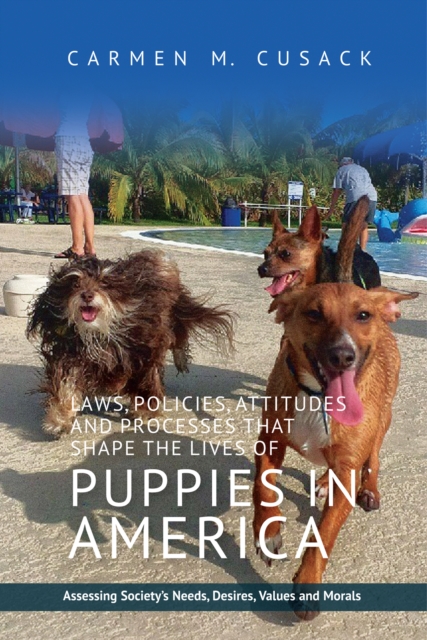
Laws, Policies, Attitudes and Processes That Shape the Lives of Puppies in America
Puppies -- nubile, tender, and pure -- have become endeared to U.S. society, and to some extent, the world. Puppies are the holy grail of animal companions to Americans. They are glorified above other animals and protected by numerous laws, yet they are systematically, lawfully, and illegally abused, tortured, and killed. A vast array of opinions, policies, protocols, rules, regulations, and laws govern treatment or mistreatment of puppies demonstrating that appreciation for puppies is neither ubiquitous, nor superseding. Puppies may be subjected to painful product testing in the U.S., but not in Europe, despite their glorified status above other animals. This book details the myriad of laws, policies, attitudes, misfortunes, and processes shaping puppies' lives in America. Specialized topics such as Bestiality, Child Grooming, Pornography, Film, Mythology, and Art are addressed to build an argument that overall, treatment of puppies in the U.S. reflects priorities, needs, values, and morals which are contextually based on human desires, capabilities, survival mechanisms, altruism, American family life, and the economy. The randomized yet selective treatment of puppies typifies American culture, and to some extent other cultures, at least in the American purview. The author analyzes physiological comparisons between humans and dogs to discover why Americans may be so interested in puppies. The foundations of this research are law, social and behavioral science, policies, history, politics, animal studies, animal welfare, criminal justice, sociology, anthropology, and current events.
eBook

Calves
\"[This book] introduces emergent readers to the world of a newborn calf while providing them with a supportive first nonfiction reading experience\"--Provided by publisher.
Book

HORSE SPECIES SYMPOSIUM: A novel approach to monitoring pathogen progression during uterine and placental infection in the mare using bioluminescence imaging technology and lux-modified bacteria
Uterine and placental infections are the leading cause of abortion, stillbirth, and preterm delivery in the mare. Whereas uterine and placental infections in women have been studied extensively, a comprehensive examination of the pathogenic processes leading to this unsatisfactory pregnancy outcome in the mare has yet to be completed. Most information in the literature relating to late-term pregnancy loss in mares is based on retrospective studies of clinical cases submitted for necropsy. Here we report the development and application of a novel approach, whereby transgenically modified bacteria transformed with lux genes of Xenorhabdus luminescens or Photorhabdus luminescens origin and biophotonic imaging are utilized to better understand pathogen-induced preterm birth in late-term pregnant mares. This technology uses highly sensitive bioluminescence imaging camera systems to localize and monitor pathogen progression during tissue invasion by measuring the bioluminescent signatures emitted by the lux-modified pathogens. This method has an important advantage in that it allows for the potential tracking of pathogens in vivo in real time and over time, which was hitherto impossible. Although the application of this technology in domestic animals is in its infancy, investigators were successful in identifying the fetal lungs, sinuses, nares, urinary, and gastrointestinal systems as primary tissues for pathogen invasion after experimental infection of pregnant mares with lux-modified Escherichia coli. It is important that pathogens were not detected in other vital organs, such as the liver, brain, and cardiac system. Such precision in localizing sites of pathogen invasion provides potential application for this novel approach in the development of more targeted therapeutic interventions for pathogen-related diseases in the equine and other domestic species.
Journal Article

Big egg
A mother hen wakes up one morning to find a gigantic egg among the others in her nest and goes in search of the egg's origin.
Book

Weaner Pig
Developed from a British Society of Animal Science meeting, held in September 2000, this book brings together the scientific disciplines involved in the pre- and post-weaning biology of the piglet. It concentrates on topics such as: growth/development, nutrition, immunology/health, ethology, and the physical environment.
eBook

Click, clack, peep!
All of the barnyard animals are excited about the arrival of a new duckling, until the noisy little one refuses to go to sleep.
Book
