
Catalogue Search | MBRL


Are you sure you want to remove the book from the shelf?

{{itemTitle}}
337,009
result(s) for
"Dramas"
Sort by:

Acting Up and Getting Down
One of the few books of its kind, Acting Up and Getting Down brings together seven African American literary voices that all have a connection to the Lone Star state. Covering Texas themes and universal ones, this collection showcases often-overlooked literary talents to bring to life inspiring facets of black theatre history. Capturing the intensity of racial violence in Texas, from the Battle of San Jacinto to a World War I–era riot at a Houston training ground, Celeste Bedford Walker’s Camp Logan and Ted Shine’s Ancestors provide fascinating narratives through the lens of history. Thomas Meloncon’s Johnny B. Goode and George Hawkins’s Br’er Rabbit explore the cultural legacies of blues music and folktales. Three unflinching dramas (Sterling Houston’s Driving Wheel, Eugene Lee’s Killingsworth, and Elizabeth Brown-Guillory’s When the Ancestors Call) examine homosexuality, a death in the family, and child abuse, bringing to light the private tensions of intersections between the individual and the community. Supplemented by a chronology of black literary milestones as well as a playwrights’ canon, Acting Up and Getting Down puts the spotlight on creative achievements that have for too long been excluded from Texas letters. The resulting anthology not only provides new insight into a regional experience but also completes the American story as told onstage.
eBook
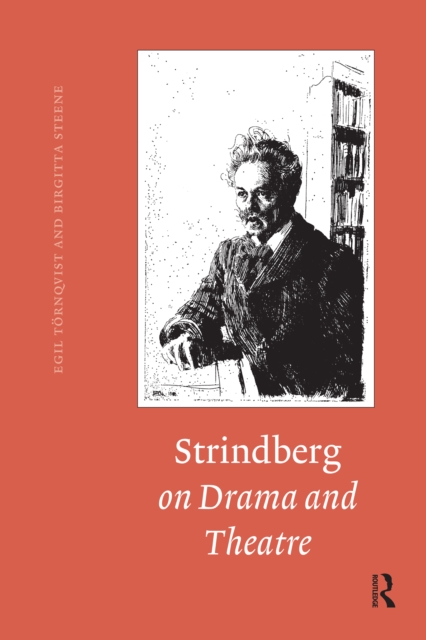
Strindberg on Drama and Theatre
This book presents the most important of these comments, chronologically assembled and annotated, many of them for the first time in an English translation. It is an invaluable resource for those interested in one of the most influential among modern European playwrights.
eBook

Antigone
One of the few surviving plays by Sophocles, and one of the most frequently performed of classical Greek dramas of all time, Antigone raises issues of law and morality that are just as relevant today as in ancient times.
eBook

The Columbia anthology of modern Japanese drama
This anthology is the first to survey the full range of modern Japanese drama and make available Japan's best and most representative twentieth- and early-twenty-first-century works in one volume. It opens with a comprehensive introduction to Meiji-period drama and follows with six chronological sections: \"The Age of Taisho Drama\"; The Tsukiji Little Theater and Its Aftermath\"; \"Wartime and Postwar Drama\"; \"The 1960s and Underground Theater\"; \"The 1980s and Beyond\"; and \"Popular Theater,\" providing a complete history of modern Japanese theater for students, scholars, instructors, and dramatists. The collection features a mix of original and previously published translations of works, among them plays by such writers as Masamune Hakucho (The Couple Next Door), Enchi Fumiko (Restless Night in Late Spring), Morimoto Kaoru (A Woman's Life), Abe Kobo (The Man Who Turned into a Stick), Kara Juro (Two Women), Terayama Shuji (Poison Boy), Noda Hideki (Poems for Sale), and Mishima Yukio (The Sardine Seller's Net of Love). Leading translators include Donald Keene, J. Thomas Rimer, M. Cody Poulton, John K. Gillespie, Mari Boyd, and Brian Powell. Each section features an introduction to the developments and character of the period, notes on the plays' productions, and photographs of their stage performances. The volume complements any study of modern Japanese literature and modern drama in China, Korea, or other Asian or contemporary Western nations.
eBook

Dark Matter
Dark Mattermaps the invisible dimension of theater whose effects are felt everywhere in performance. Examining phenomena such as hallucination, offstage character, offstage action, sexuality, masking, technology, and trauma, Andrew Sofer engagingly illuminates the invisible in different periods of postclassical western theater and drama. He reveals how the invisible continually structures and focuses an audience's theatrical experience, whether it's black magic inDoctor Faustus, offstage sex inA Midsummer Night's Dream, masked women inThe Rover, self-consuming bodies inSuddenly Last Summer, or surveillance technology inThe Archbishop's Ceiling. Each discussion pinpoints new and striking facets of drama and performance that escape sight. Taken together, Sofer's lively case studies illuminate how dark matter is woven into the very fabric of theatrical representation. Written in an accessible style and grounded in theater studies but interdisciplinary by design,Dark Matterwill appeal to theater and performance scholars, literary critics, students, and theater practitioners, particularly playwrights and directors.
eBook

Indigenous North American Drama
Responding to an increasing need for critical perspectives and
methodologies, this collection traces the historical dimensions of
Native North American drama through overviews of major
developments, individual playwrights' perspectives, and in-depth
critical analyses. Bringing together writers and scholars from the
United States, Canada, and Europe, Indigenous North American
Drama provides the first comprehensive outline of this vibrant
genre. It also acknowledges the wide diversity of styles and
perspectives that have helped shape contemporary Native North
American theater itself. This interdisciplinary introduction offers
a basis for new readings of Native American and First Nations
literature at large.
eBook

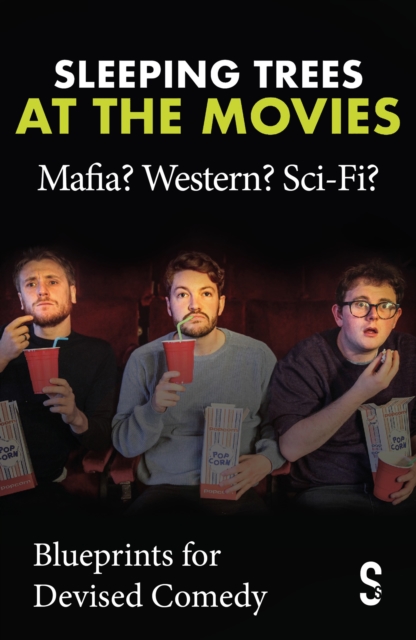
Sleeping Trees at the Movies: Mafia? Western? Sci-Fi?
From 2014 to 2018, character comedy trio Sleeping Trees challenged themselves to bring the big screen to the stage, paying homage and reinventing gangster, western and sci-fi movies for audiences across the country. This book recounts how these shows were made, stories from when they were on tour, the trio ' s unique approach to devising fringe comedy, as well as the original scripts of the three award-winning plays.
Mafia?
Sleeping Trees deliver their version of every gangster film they ' ve ever seen. Expect casinos, operas and bloodshed as the Banucci brothers find themselves in a situation stickier than most luxury cakes.
Western?
The Sleeping Trees find themselves slowly crisping under the sun of the Wild West, as gun-slinger Harry Sudds takes on bulls, scorpions and many other animals largely found in America.
Sci-Fi?
At a time where ancient planet Plutopia rules the galaxy, farmer Charlie Sprog is dragged from his quiet home planet and given one simple mission: SAVE THE UNIVERSE FROM TOTAL DESTRUCTION.
So sit back, relax, grab some popcorn, and enjoy. Obviously if you need to put the popcorn down to hold the book then do, maybe just put the popcorn to the side, or hold it between your thighs? The important thing is that you read the book.
eBook
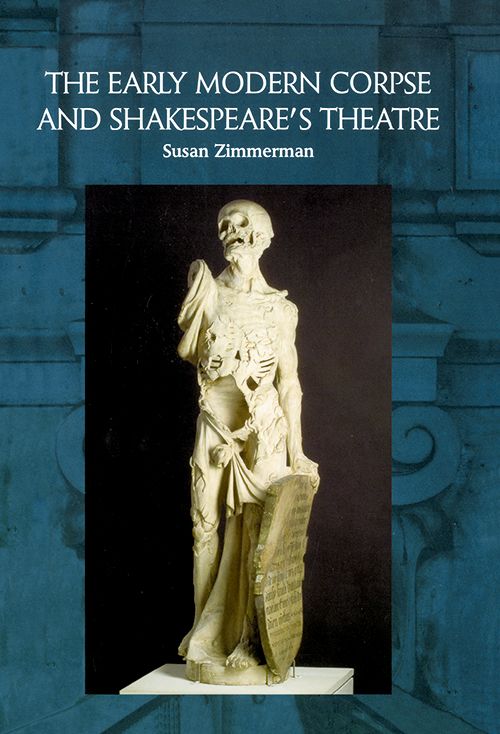
The Early Modern Corpse and Shakespeare's Theatre
Within a theoretical framework that makes use of history, psychoanalysis and anthropology, The Early Modern Corpse and Shakespeare's Theatre explores the relationship of the public theatre to the question of what constituted the 'dead' in early modern English culture.Susan Zimmerman argues that concepts of the corpse as a semi-animate, generative and indeterminate entity were deeply rooted in medieval religious culture. Such concepts ran counter to early modern discourses that sought to harden categorical distinctions between body/spirit, animate/inanimate - in particular, the attacks of Reformists on the materiality of 'dead' idols, and the rationale of the new anatomy for publicly dissecting 'dead' bodies. Zimmerman contends that within this context, theatrical representations of the corpse or corpse/revenant - as seen here in the tragedies of Shakespeare and his contemporaries - uniquely showcased the theatre's own ideological and performative agency. Features*Original in its conjunction of critical theory (Bataille, Kristeva, Lacan, Benjamin) with an historical account of the shifting status of the corpse in late medieval and early modern England.*The first study to demonstrate connections between the meanings attached to the material body in early modern Protestantism, the practice of anatomical dissection, and the English public theatre.*Strong market appeal to scholars and graduate students with interests in the theatre of Shakespeare and his contemporaries, early modern religion and science, and literary theory. *Relevant to advanced undergraduates taking widely taught courses in Shakespeare and in Renaissance drama.
eBook

“Light thickens; and the crow/Makes wing to the rooky wood”: Birds and the blurring of boundaries between real and metaphorical nature in Joel Coen’s Macbeth
This article discusses how the recent film adaptation of Macbeth directed by Joel Coen (2021) uses nature imagery – most prominently birds – to visualise ambiguities of literal and metaphorical meaning already inherent in the language of Shakespeare’s play, as well as Akira Kurosawa’s filmic adaptation Throne of Blood (1958). My arguments focus on the visual strategies used in Coen’s film to stylise the language of Shakespeare’s text for today’s cinematic audiences by drawing attention to the ways in which elements of nature are connected to specific characters, serving as harbingers of their emotional states and developments.
Journal Article