
Catalogue Search | MBRL


Are you sure you want to remove the book from the shelf?

{{itemTitle}}
412
result(s) for
"Dramatic production"
Sort by:


Shakespeare and the Force of Modern Performance
Shakespeare and the Force of Modern Performance asks a central theoretical question in the study of drama: what is the relationship between the dramatic text and the meanings of performance? Developing the notion of 'performativity' explored by J. L. Austin, Judith Butler, and others, Worthen argues that the text cannot govern the force of its performance. Instead the text becomes significant only as embodied in the changing conventions of its performance. Worthen explores this understanding of dramatic performativity by interrogating several contemporary sites of Shakespeare production. He analyses how Shakespeare is recreated in historical performance, exemplified by the Globe Theatre on Bankside; by international and intercultural performance; by film; and by the appearance of Shakespeare on the Internet. The book includes detailed discussions of recent film and stage productions, and sets Shakespeare performance alongside other works of contemporary drama and theatre.
eBook

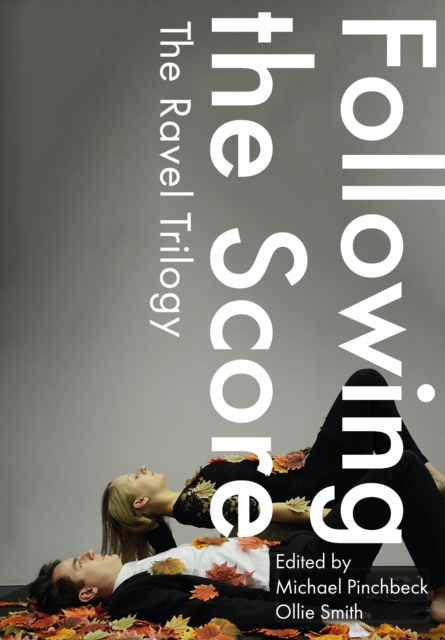
Following the Score
Based on a recent touring project, The Ravel Trilogy, this title comprises playtexts and essays that contextualise the themes and approaches of the devised work: Bolero (2014), Concerto (2016) and Solo (2018). The book takes an interdisciplinary critical enquiry into the working dramaturgy of performance 'scores' inspired by the music. The book frames the playtexts of the trilogy alongside a series of reflective essays and provocations on contemporary dramaturgy and musicology from academics and artists in drama, music, linguistics and fine art. It contextualises themes and approaches of the trilogy and serves as a critical companion to a body of devised work. It stimulates a debate about dramaturgy and composition and invites discussion about postdramatic theatre's relationship to music. This publication marks the culmination of the trilogy and its critical legacy and explores the work through the dual lenses of postdramatic theatre and research questions articulated and addressed by the practice-research undertaken by its co-creators. The dramaturgical context for The Ravel Trilogy and the reflective essays around it allow the editors to explore the relationship between theatre and music. It raises questions about practice-research and notions of creating playtexts from musical scores. Pinchbeck and Smith reflect on making and performing The Ravel Trilogy and the process of researching, devising and presenting work inspired by music where score becomes script and dynamics become stage directions.
eBook

New media dramaturgy : performance, media and new-materialism
\"This text illuminates the shift in approaches to the uses of theatre and performance technology in the past 25 years and develops an account of new media dramaturgy (NMD), an approach to theatre informed by what the technology itself seems to want to say. Born of the synthesis of new media and new dramaturgy, NMD is practiced and performed in the work of a range of important artists from dumb type and their 1989 analog-industrial machine performance pH, to more recent examples from the work of Kris Verdonck and his A Two Dogs Company.\"--Back cover.
Book
Talking to the Audience
This unique study investigates the ways in which the staging convention of direct address - talking to the audience - can construct selfhood, for Shakespeare's characters. By focusing specifically on the relationship between performer and audience, Talking to the Audience examines what happens when the audience are in the presence of a dramatic figure who knows they are there. It is a book concerned with theatrical illusion; with the pleasures and disturbances of seeing 'characters' produced in the moment of performance.Through analysis of contemporary productions Talking to the Audience serves to demonstrate how the study of recent performance helps us to understand both Shakespeare's cultural moment and our own. Its exploration of how theory and practice can inform each other make this essential reading for all those studying Shakespeare in either a literary or theatrical context.
eBook

Brecht on performance : Messingkauf and Modelbooks
\"A selection of Brecht's principal writings for directors and theatre practitioners\"--Page 4 of cover.
BOOK

Playwright, Space and Place in Early Modern Performance
Analyzing Elizabethan and Jacobean playtexts for their spatial implications, this innovative study discloses the extent to which the resources and constraints of public playhouse buildings affected the construction of the fictional worlds of early modern plays. The study argues that playwrights were writing with foresight, inscribing the constraints and resources of the stages into their texts. It goes further, to posit that Shakespeare and his playwright-contemporaries adhered to a set of generic conventions, rather than specific local company practices, about how space and place were to be related in performance: the playwrights constituted thus an overarching virtual 'company' producing playtexts that shared features across the acting companies and playhouses. By clarifying a sixteenth- to seventeenth-century conception of theatrical place, Tim Fitzpatrick adds a new layer of meaning to our understanding of the plays. His approach adds a new dimension to these particular documents which-though many of them are considered of great literary worth-were not originally generated for any other reason than to be performed within a specific performance context. The fact that the playwrights were aware of the features of this performance tradition makes their texts a potential mine of performance information, and casts light back on the texts themselves: if some of their meanings are 'spatial', these will have been missed by purely literary tools of analysis.
eBook

Directing Shakespeare in America : historical perspectives
This unique and comprehensive study reviews the practice of leading American directors of Shakespeare from the late nineteenth to the end of the twentieth century. Charles Ney examines rehearsal and production records, as well as evidence from diaries, letters, autobiographies, reviews and photographs to consider each director's point of view when approaching Shakespeare and the differing directorial tools and techniques employed in significant productions in their careers. Directors covered include Augustin Daly, David Belasco, Arthur Hopkins, Orson Welles, Margaret Webster, B. Iden Payne, Angus Bowmer, Craig Noel, Jack O'Brien, Tyronne Guthrie, John Houseman, Allen Fletcher, Michael Kahn, Gerald Freedman, Joseph Papp, Stuart Vaughan, A. J. Antoon, JoAnne Akalaitis, Paul Barry, Tina Packer, Barbara Gaines, William Ball, Liviu Ciulei, Garland Wright, Mark Lamos, Ellis Rabb and Julie Taymor. Directing Shakespeare in America: Historical Perspectives offers readers an understanding of the context from which contemporary practitioners operate, the aesthetic philosophies to which they subscribe and a description of their rehearsal methods.
Book

Shakespeare in the Theatre: Mark Rylance at the Globe
Each volume in the Shakespeare in the Theatre series focuses on a director or theatre company who has made a significant contribution to Shakespeare production, identifying the artistic and political/social contexts of their work. The series introduces readers to the work of significant theatre directors and companies whose Shakespeare productions have been transformative in our understanding of his plays in performance. Each volume examines a single figure or company, considering their key productions, rehearsal approaches and their work with other artists. Since its opening in the late 1990s, the reconstructed Shakespeare’s Globe Theatre has made an indelible impression on the contemporary British theatre scene. This book explores the theatre’s first decade of productions under the pioneering leadership of Sir Mark Rylance. Drawing upon an extensive range of material from the theatre’s archive, interviews with Globe practitioners, and Rylance’s own personal archive, this book argues that the Rylance era was a ground-breaking and important period of recent theatre history. It concludes with an in-depth interview with Rylance himself. The book gives a unique insight into Rylance’s practice and impact, and will be of interest to anyone studying Shakespeare in performance. Series Editors: Bridget Escolme, Queen Mary University of London, UK, Peter Holland, University of Notre Dame, USA and Farah Karim-Cooper, Shakespeare’s Globe, London, UK.
eBook