
Catalogue Search | MBRL


Are you sure you want to remove the book from the shelf?

{{itemTitle}}
1,297
result(s) for
"Dravidian"
Sort by:
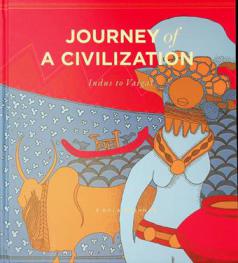

Languages and Nations
British rule of India brought together two very different traditions of scholarship about language, whose conjuncture led to several intellectual breakthroughs of lasting value. Two of these were especially important: the conceptualization of the Indo-European language family by Sir William Jones at Calcutta in 1786-proposing that Sanskrit is related to Persian and languages of Europe-and the conceptualization of the Dravidian language family of South India by F.W. Ellis at Madras in 1816-the \"Dravidian proof,\" showing that the languages of South India are related to one another but are not derived from Sanskrit. These concepts are valid still today, centuries later. This book continues the examination Thomas R. Trautmann began inAryans and British India(1997). While the previous book focused on Calcutta and Jones, the current volume examines these developments from the vantage of Madras, focusing on Ellis, Collector of Madras, and the Indian scholars with whom he worked at the College of Fort St. George, making use of the rich colonial record. Trautmann concludes by showing how elements of the Indian analysis of language have been folded into historical linguistics and continue in the present as unseen but nevertheless living elements of the modern.
eBook

Poverty Impedes Cognitive Function
The poor often behave in less capable ways, which can further perpetuate poverty. We hypothesize that poverty directly impedes cognitive function and present two studies that test this hypothesis. First, we experimentally induced thoughts about finances and found that this reduces cognitive performance among poor but not in well-off participants. Second, we examined the cognitive function of farmers over the planting cycle. We found that the same farmer shows diminished cognitive performance before harvest, when poor, as compared with after harvest, when rich. This cannot be explained by differences in time available, nutrition, or work effort. Nor can it be explained with stress: Although farmers do show more stress before harvest, that does not account for diminished cognitive performance. Instead, it appears that poverty itself reduces cognitive capacity. We suggest that this is because poverty-related concerns consume mental resources, leaving less for other tasks. These data provide a previously unexamined perspective and help explain a spectrum of behaviors among the poor. We discuss some implications for poverty policy.
Journal Article
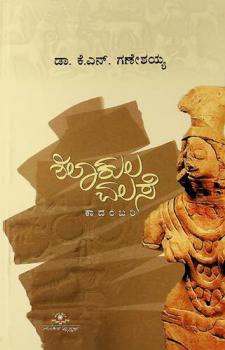
Śilākula valase : kādambari = Shilaakula valase : a novel
Novel chiefly on Arya-Dravidas with historical and scientific evidence.

Reliability and validity of a Kannada rate of reading test
Kannada, one of the Dravidian languages, is the official language of Karnataka state of India. There is a need for a test using Kannada words that can assess visual aspects of reading independently of syntactic and semantic knowledge. A test of reading rate in Kannada was developed following the design principles of the Wilkins Rate of Reading Test (RRT). Fifteen high-frequency bisyllabic Kannada words were selected. Children were recruited from state and private schools that used Kannada or English as the medium of instruction. A total of 799 children from Grade 2 to 9 participated in the study. Reading rate was measured using the English RRT and the Kannada version twice in immediate succession during the first session. In 85 children, measurements using the Kannada RRT were repeated after an interval of 15 days. Pearson product moment correlation between the two immediately successive tests was 0.95 for the Kannada RRT and 0.91 for the English RRT. The correlation for the tests separated by an interval of 15 days was 0.83. When Kannada was the medium of instruction, there was little difference between test scores for Kannada and English. When English was the medium of instruction, test scores were greater in English. Scores increased as expected with age (P < 0.0001), similarly for Kannada and English tests. The newly developed Kannada RRT is both reliable and valid and can be used as a tool for measuring the visual aspects of reading.
Journal Article

I can’t say ‘no’ to you – On the origin of zero negation in Dravidian
Various Dravidian languages show a crosslinguistically unique form of negation in which a verb stem is directly followed by a suffix marking person, number and gender (PNG), with no tense, aspect or mood (TAM) marking and no overt negative marking. As these forms contrast with affirmative finite verb forms in the same languages with a TAM marker between the stem and PNG, this construction is generally referred to as “zero negation”. In the present study we propose a development of zero negation in Dravidian which is both intuitively appealing but also compatible with the attested historical developments. Critically, we argue that the zero negative in Dravidian derives from a tenseless category which denotes a state or a habitual or iterative event, and that this construction was originally employed as a deferential avoidance strategy for negation.
Journal Article
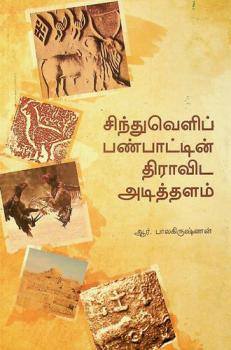
Cintuveḷip paṇpāṭṭin̲ Tirāviṭa aṭittaḷam
New insights which strengthen claims that inhabitants of Indus valley civilization are Dravidians.

DravidianCodeMix: sentiment analysis and offensive language identification dataset for Dravidian languages in code-mixed text
This paper describes the development of a multilingual, manually annotated dataset for three under-resourced Dravidian languages generated from social media comments. The dataset was annotated for sentiment analysis and offensive language identification for a total of more than 60,000 YouTube comments. The dataset consists of around 44,000 comments in Tamil-English, around 7000 comments in Kannada-English, and around 20,000 comments in Malayalam-English. The data was manually annotated by volunteer annotators and has a high inter-annotator agreement in Krippendorff’s alpha. The dataset contains all types of code-mixing phenomena since it comprises user-generated content from a multilingual country. We also present baseline experiments to establish benchmarks on the dataset using machine learning and deep learning methods. The dataset is available on Github and Zenodo.
Journal Article