
Catalogue Search | MBRL


Are you sure you want to remove the book from the shelf?

{{itemTitle}}
3
result(s) for
"Dravidians Origin"
Sort by:
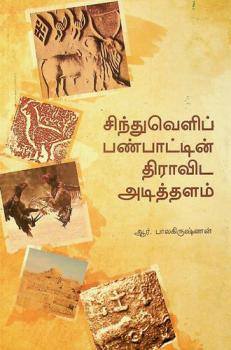
Cintuveḷip paṇpāṭṭin̲ Tirāviṭa aṭittaḷam
New insights which strengthen claims that inhabitants of Indus valley civilization are Dravidians.

Microsatellite Diversity among Three Endogamous Tamil Populations Suggests Their Origin from a Separate Dravidian Genetic Pool
The genetic profiles based on 15 autosomal microsatellite markers were analyzed among three socially distinct endogamous Dravidian populations: Tanjore Kallar, Vanniyar, and Pallar of Tamil Nadu, southern India, in order to understand their origin and the extent of genetic affinity and diversity among them. All loci were highly polymorphic and followed Hardy-Weinberg expectations except for loci D13S317 in Tanjore Kallars and D7S820 in Vanniyars. The SK² criterion test showed no evidence of association among the 15 loci in the studied populations. The extent of gene differentiation among the three populations was low (GST = 0.012), suggesting proximity between them. The phylogenetic dendrogram based on allele frequencies places them in a separate cluster, away from other compared Indo-European populations. The fit of the Harpending and Ward model of regression was found to be good and consistent with the extent of endogamy followed by the respective populations. These findings support a separate origin of the Dravidians and reveal an overall genetic unity among the studied Tamil populations belonging to different strata of the social hierarchy. The extent of diversity found among them probably resulted from the strict endogamous practices that they follow.
Journal Article
Cintuveḷip paṇpāṭṭin̲ Tirāviṭa aṭittaḷam
New insights which strengthen claims that inhabitants of Indus valley civilization are Dravidians.