
Catalogue Search | MBRL


Are you sure you want to remove the book from the shelf?

{{itemTitle}}
1,463
result(s) for
"Drawing Technique."
Sort by:

Botanical line drawing : 200 step-by-step flowers, leaves, cacti, succulents, and other items found in nature
Line Drawing is an easy art form featuring illustrative, doodle-like designs. It's used widely among artists of many types with both fine and bold lines, creating different variations. This book walks through drawing very simple doodles, into more elaborate, delicate illustrations, and is easy to follow for all skill levels.
Book
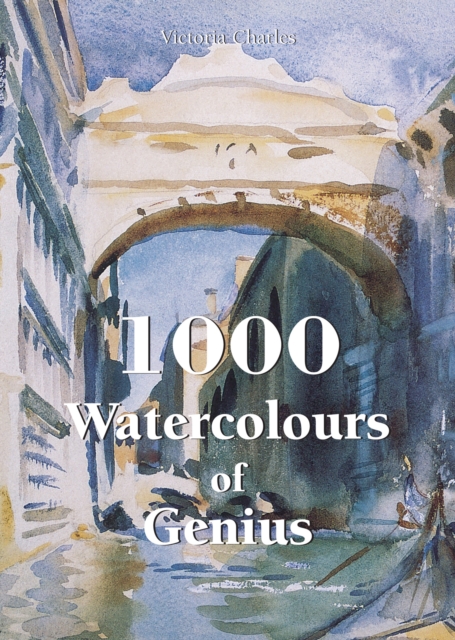
1000 watercolours of genius
The watercolour technique was for a long time the great companion to drawing. A mixture of water and pigments permitting great artistic freedom, it was often employed for preparatory sketches. Albrecht Dürer was one of the first to take advantage of all that watercolour offered. In the 18th century, English artists created of it an autonomous medium freed from academic constraints, an evolution which would have a considerable impact for following generations. Amongst the most famous artists to have produced watercolours, we find Turner, Whistler, Constable, Sargent, Van Gogh, Kandinsky, Klee, and Schiele.
eBook

How to improve at drawing
Provides a step-by-step text and photographs to teach beginners to draw.
Book

Flipping Out
Learn the full process of animating your own flip book! You'll learn techniques like storyboarding, using keyframes, and book binding.
eBook

Cut down to size at high noon : a math adventure
A showdown between two barbers in the frontier town of Cowlick leads them to realize new uses for scale drawing.
Book

Eleven Exercises in the Art of Architectural Drawing
This book deals with the critical nature and crucial role of architectural drawings. A manual which is essentially not a manual; it is an elucidation of an elegant manner for practising architecture.
Organized around eleven exercises, the book does not emphasize speed, nor incorporate many timesaving tricks typical of drawing books, but rather proposes a slow, meditative process for construing drawings and for drawing constructing thoughts.
This is an indispensable reference text and an effective textbook for students seeking to advance their appreciation of the nature and exercise of architectural drawings.
eBook

Art of 3D Drawing
Transform simple pencil sketches into jaw-dropping, photorealistic masterpieces with The Art of 3D Drawing. World-famous 3D artist Stefan Pabst shows you how to take your drawing and painting skills to the next level with techniques for creating lifelike three-dimensional art. Begin with an overview of tools and materials, color theory and color mixing, and drawing and painting techniques. Then follow along with 12 stunning, step-by-step demonstrations that teach fundamental principles of 3D art, such as perspective, shading, rendering textures, and building dimension. Also find tips on adding color with oil paints to add even greater dimension and realism to your artwork and complete your three-dimensional masterpieces. An inspiration gallery at the back offers even more ideas for creating 3D art. Whatever your skill level, you will learn something new as you draw and paint a range of subjects in realistic detail. The projects are: A cube that appears to pop up from the paper A floating sphere A hole that seems to dip below the surface of the paper A group of LEGO® blocks An airplane \"flying\" over the paper Planet Earth A glass of water A ladybug that looks like it might crawl off the page A shiny classic car The Mayan ruin of Chichen Itza The Leaning Tower of Pisa A child \"jumping\" off the page With The Art of 3D Drawing, friends and family won't believe their eyes as they admire your amazing photorealistic artwork.
eBook

How to draw
\"A children's step-by-step guide to drawing that is practical, inspirational, educational, and fun. Beginning with simple skill instruction and building to more challenging projects, it is packed with practical activities and techniques, including how to draw lines, shade, sketch, and trace. A cutout jacket even lets kids draw their own cover so the book really is their own unique piece of art. Once they've learned the basics, kids can follow the step-by-step instructions to draw their surroundings, people, animals, and more. With 16 pages of blank drawing space included, kids can try different approaches, such as illustrating stories and creating comic-book characters, and be inspired to explore and experiment with different styles. Supporting STEAM education initiatives, How to Draw encourages kids to pick up a pencil, crayon, or pen, use their imagination, and learn how to draw the things they love\"--www.bibz.com.
Book

The student attitudes towards digital and conventional drawing methods in environmental design studios and the impact of these techniques on academic achievement in the course
In recent years, technological advances had an impact on the field of education, and computer technologies were started to be used mainly in visual arts, architecture and planning departments in colleges. However, applications such as the use of conventional drawing tools and graphical techniques, sketching, drawing plans, sections, and elevations on paper and production of models are still prevalent in landscape architecture, architecture, interior design or planning departments. Digital technologies are also utilized as supplementary tools. The current article scrutinized student attitudes towards digital and conventional drawing methods in landscape architecture department environmental design studios and the impact of these techniques on the academic success in the course. The study was conducted with KTU Landscape Architecture Department students. Initially, an analysis of variance was conducted to determine whether there was a difference between student attitudes towards conventional and digital drawing techniques in environmental design studio. It was determined that there was a difference between the attitudes of the students between the items 3, 4, 5, 7, 8, 10, 12, 14, 15, 18, 20, 21, 22, 23 in the scale that contained statements (23 items) to measure student attitudes (p < .05), and no difference was observed between the student attitudes in remaining items (p > .05). The highest difference was found (F = 168.200) in item 23, followed by items 18 (F = 106,290), 10 (F = 104,533), and 14 (F = 103.292). In the second stage, to determine the effects of using digital or conventional drawing techniques in landscape design studio on the student achievement in the course, a quasi-experimental study was conducted with a pre-test post-test model with control group. It was determined that the pretest findings had a significant effect on both groups (p < .05). Digital and conventional drawing techniques that students learned in environmental design studio were correlated with their academic achievements and the difference between the groups was significant.
Journal Article