
Catalogue Search | MBRL


Are you sure you want to remove the book from the shelf?

{{itemTitle}}
4,220
result(s) for
"Dreams - psychology"
Sort by:


Induction of self awareness in dreams through frontal low current stimulation of gamma activity
Lucid dreaming, in which the sleeper is aware of the dream state, has been associated with increased neural activity around 40 Hz (lower gamma band), but their causal relationship remains unclear. The authors show that, during REM sleep, fronto-temporal transcranial stimulation in the lower gamma band can induce lucid dreaming.
Recent findings link fronto-temporal gamma electroencephalographic (EEG) activity to conscious awareness in dreams, but a causal relationship has not yet been established. We found that current stimulation in the lower gamma band during REM sleep influences ongoing brain activity and induces self-reflective awareness in dreams. Other stimulation frequencies were not effective, suggesting that higher order consciousness is indeed related to synchronous oscillations around 25 and 40 Hz.
Journal Article


Randomized Controlled Trial of Imagery Rehearsal for Posttraumatic Nightmares in Combat Veterans
Study Objectives:
To examine the efficacy of imagery rehearsal (IR) combined with cognitive behavioral therapy for insomnia (CBT-I) compared to CBT-I alone for treating recurrent nightmares in military veterans with posttraumatic stress disorder (PTSD).
Methods:
In this randomized controlled study, 108 male and female United States veterans of the Iraq and Afghanistan conflicts with current, severe PTSD and recurrent, deployment-related nightmares were randomized to six sessions of IR + CBT-I (n = 55) or CBT-I (n = 53). Primary outcomes were measured with the Nightmare Frequency Questionnaire (NFQ) and Nightmare Distress Questionnaire (NDQ).
Results:
Improvement with treatment was significant (29% with reduction in nightmare frequency and 22% with remission). Overall, IR + CBT-I was not superior to CBT-I (NFQ: −0.12; 95% confidence interval = −0.87 to 0.63; likelihood ratio chi square = 4.7(3),
P
= .2); NDQ: 1.5, 95% confidence interval = −1.4 to 4.4; likelihood ratio chi square = 7.3,
P
= .06).
Conclusions:
Combining IR with CBT-I conferred no advantage overall. Further research is essential to examine the possibly greater benefit of adding IR to CBT-I for some subgroups of veterans with PTSD.
Clinical Trial Registration:
Registry: ClinicalTrials.gov; Title: Cognitive Behavioral Therapy (CBT) for Nightmares in Operation Enduring Freedom/Operation Iraqi Freedom (OEF/OIF) Veterans; Identifier: NCT00691626; URL:
https://clinicaltrials.gov/ct2/show/NCT00691626
Citation:
Harb GC, Cook JM, Phelps AJ, Gehrman PR, Forbes D, Localio R, Harpaz-Rotem I, Gur RC, Ross RJ. Randomized controlled trial of imagery rehearsal for posttraumatic nightmares in combat veterans.
J Clin Sleep Med
2019;15(5):757–767.
Journal Article

Dreams and nightmares in art therapy : the dream of the jaguar
\"Dreams and Nightmares in Art Therapy draws on the author's extensive art psychotherapy practice and teaching to provide a wide range of creative writing and visual art methods for dreamwork Blending theories such as Gestalt therapy and Jungian psychology with clinical examples from Dr. Hamel's own clients and self-exploration with dreamwork, this unique book starts with an exploration of art therapy and other creative dreamwork methods. Methods cover a large variety of media such as mask making, clay, collage, sand-tray, the use of bodywork and of ritual, among others. The following chapters present a classification of types and functions of seven different types of nightmares, introduce a simple and efficient five-steps art therapy method for reducing their intensity and their frequency, and conclude with unique synthesis on 11 dreamwork methods to draw wisdom from dream journals accumulated over a long period of time. This book is ideal for anyone interested in developing a personal or professional practice using dream art therapy. The methods presented here will captivate readers with their originality and provide inspiration for all kinds of psychological, artistic and spiritual development\"-- Provided by publisher.
Book
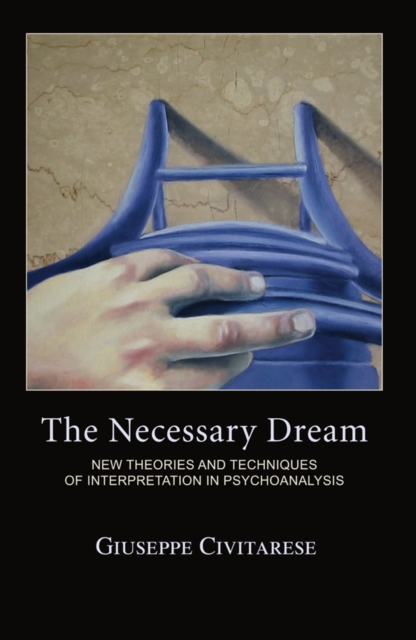
The Necessary Dream
After a hundred years of psychoanalysis what has the psychoanalytic interpretation of dreams become? Are what Simic calls the “films of our lives” still the royal road to the unconscious or do we now have a different concept both of dreams and of the unconscious? What is the meaning of dreams in the analytic dialogue? Do they still have a key role to play in clinical practice or not? These are just some of the questions that this book seeks to answer.
Nowadays, psychoanalysts and psychotherapists do not work so much on dreams as with dreams, preferring to emphasise their function of transformation and symbolic creation, rather than decipher their obscure messages. Dreaming is the way in which we give personal meaning to experience and expand our unconscious. As such, it is a necessary activity, which, as Bion says, takes place both in sleep and in waking. But the space of the dream is an inaccessible sanctuary, which can make this task quite frustrating. For this reason, the author weaves the dream discourse with that of cinema – according to a famous definition, a “dream factory” – and cites a number of films to evoke the magic of their images. In this way, he explores a new way of approaching the vibrant, exciting, intriguing, or distressing material of dreams.
eBook


Treating nightmares in post-traumatic stress disorder with the α-adrenergic agents clonidine and doxazosin: protocol for a phase II randomised, double-blind, placebo-controlled parallel-group study (ClonDoTrial)
IntroductionIntrusive nightmares are a hallmark symptom of post-traumatic stress disorder (PTSD), contributing significantly to psychiatric comorbidities, impaired physical health and diminished social functioning. Currently, no pharmacological treatments are specifically approved for managing PTSD-related nightmares. However, emerging evidence suggests that adrenoceptor-targeting agents may offer therapeutic potential. Notably, clonidine and doxazosin have demonstrated efficacy in reducing PTSD-associated nightmares, as indicated by findings from open-label studies and small randomised controlled trials.Methods and analysisThis study is a multicentre, double-blind, randomised (1:1:1), placebo-controlled, parallel-group interventional trial. A total of 189 eligible patients will be randomly assigned to receive clonidine, doxazosin or placebo, with a once-daily oral dose administered at bedtime for 10 weeks. The primary efficacy endpoint is the Clinician-Administered PTSD Scale B2 score at week 10, which measures the frequency and intensity of nightmares. Secondary efficacy endpoints include other PTSD-specific symptoms. Additionally, the safety of clonidine and doxazosin will be assessed.Ethics and disseminationThe study was approved by the Ethics Committee of the State of Berlin (Ethik-Kommission des Landes Berlin) (Reference: 21-683-Haupt-IV E 13), on 14 March 2022 and by the relevant federal authority, the Bundesinstitut für Arzneimittel und Medizinprodukte, reference 4044931. The study was conducted in accordance with the relevant guidelines and regulations. The study results will be published in peer-reviewed journals and presented at both national and international conferences.Trial registration numberNCT05360953, EudraCT 2021-000319-21.
Journal Article

Cognitive behavioral therapy for insomnia treatment attrition in patients with weekly nightmares
Study Objectives:
This study’s objective was to evaluate the effect of nightmares (NMs) on attrition and symptom change following cognitive behavioral therapy for insomnia (CBT-I) treatment using data from a successful CBT-I randomized controlled trial delivered to participants with recent interpersonal violence exposure.
Methods:
The study randomized 110 participants (107 women; mean age: 35.5 years) to CBT-I or to an attention-control group. Participants were assessed at 3 time periods: baseline, post–CBT-I (or attention control), and at time 3 (T3) post–cognitive processing therapy received by all participants. NM reports were extracted from the Fear of Sleep Inventory. Participants with weekly NMs were compared with those with fewer than weekly NMs on outcomes including attrition, insomnia, posttraumatic stress disorder, and depression. Change in NM frequency was examined.
Results:
Participants with weekly NMs (55%) were significantly more likely to be lost to follow-up post–CBT-I (37%) compared with participants with infrequent NMs (15.6%) and were less likely to complete T3 (43%) than patients with less frequent NMs (62.5%). NMs were unrelated to differential treatment response in insomnia, depression, or posttraumatic stress disorder. Treatment with CBT-I was not associated with reduced NM frequency; however, change in sleep-onset latency from post–CBT-I to T3 predicted fewer NMs at T3.
Conclusions:
Weekly NMs were associated with attrition but not a reduced change in insomnia symptoms following CBT-I. NM symptoms did not change as a function of CBT-I, but change in sleep-onset latency predicted lower NM frequency. CBT-I trials should screen for NMs and consider augmenting CBT-I to specifically address NMs.
Citation:
Hamilton NA, Russell JA, Youngren WA, et al. Cognitive behavioral therapy for insomnia treatment attrition in patients with weekly nightmares.
J Clin Sleep Med
. 2023;19(11):1913–1921.
Journal Article