
Catalogue Search | MBRL


Are you sure you want to remove the book from the shelf?

{{itemTitle}}
35,834
result(s) for
"Drinking (Alcoholic beverages)"
Sort by:

The science of drinking : how alcohol affects your body and mind /
Discusses healthy versus unhealthy alcohol consumption, describes the health benefits of consuming alcohol in moderation, and explains how alcohol influences the brain and body.
Book

Uncorking the past
In a lively tour around the world and through the millennia, Uncorking the Past tells the compelling story of humanity's ingenious, intoxicating quest for the perfect drink. Following a tantalizing trail of archaeological, chemical, artistic, and textual clues, Patrick E. McGovern, the leading authority on ancient alcoholic beverages, brings us up to date on what we now know about how humans created and enjoyed fermented beverages across cultures. Along the way, he explores a provocative hypothesis about the integral role such libations have played in human evolution. We discover, for example, that the cereal staples of the modern world were probably domesticated for their potential in making quantities of alcoholic beverages. These include the delectable rice wines of China and Japan, the corn beers of the Americas, and the millet and sorghum drinks of Africa. Humans also learned how to make mead from honey and wine from exotic fruits of all kinds-even from the sweet pulp of the cacao (chocolate) fruit in the New World. The perfect drink, it turns out-whether it be mind-altering, medicinal, a religious symbol, a social lubricant, or artistic inspiration-has not only been a profound force in history, but may be fundamental to the human condition itself.
eBook

Alcohol in early Java : its social and cultural significance
\"In Alcohol in Early Java: Its Social and Cultural Significance, Jiří Jákl offers an account of the production, trade, and consumption of alcohol in Java before 1500 CE, and discusses a whole array of meanings the Javanese have ascribed to its use. Though alcohol is extremely controversial in contemporary Islamic Java, it had multiple, often surprising, uses in the pre-Islamic society\"-- Provided by publisher.
Book

Alcohol
Whether as wine, beer, or spirits, alcohol has had a constant and often controversial role in social life. In his innovative book on the attitudes toward and consumption of alcohol, Rod Phillips surveys a 9,000-year cultural and economic history, uncovering the tensions between alcoholic drinks as healthy staples of daily diets and as objects of social, political, and religious anxiety. In the urban centers of Europe and America, where it was seen as healthier than untreated water, alcohol gained a foothold as the drink of choice, but it has been more regulated by governmental and religious authorities more than any other commodity. As a potential source of social disruption, alcohol created volatile boundaries of acceptable and unacceptable consumption and broke through barriers of class, race, and gender.Phillips follows the ever-changing cultural meanings of these potent potables and makes the surprising argument that some societies have entered \"post-alcohol\" phases. His is the first book to examine and explain the meanings and effects of alcohol in such depth, from global and long-term perspectives.
eBook
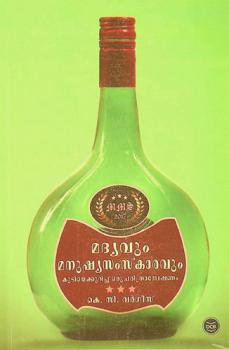
Madyavuṃ manuṣyasaṃskāravuṃ : kuṭiyekkur̲iccȧ oru caritrānvēṣaṇaṃ
Essays on alcoholism and alcoholics and its harmful effects in Kerala, India.

Alcohol in Latin America
Aguardente,chicha,pulque,vino-no matter whether it's distilled or fermented, alcohol either brings people together or pulls them apart.Alcohol in Latin Americais a sweeping examination of the deep reasons why. This book takes an in-depth look at the social and cultural history of alcohol and its connection to larger processes in Latin America. Using a painting depicting a tavern as a metaphor, the authors explore the disparate groups and individuals imbibing as an introduction to their study. In so doing, they reveal how alcohol production, consumption, and regulation have been intertwined with the history of Latin America since the pre-Columbian era.Alcohol in Latin Americais the first interdisciplinary study to examine the historic role of alcohol across Latin America and over a broad time span. Six locations-the Andean region, Argentina, Brazil, Chile, Guatemala, and Mexico-are seen through the disciplines of anthropology, archaeology, art history, ethnohistory, history, and literature. Organized chronologically beginning with the colonial era, it features five chapters on Mesoamerica and five on South America, each focusing on various aspects of a dozen different kinds of beverages.An in-depth look at how alcohol use in Latin America can serve as a lens through which race, class, gender, and state-building, among other topics, can be better understood,Alcohol in Latin Americashows the historic influence of alcohol production and consumption in the region and how it is intimately connected to the larger forces of history.
eBook


Impact on wine sales of removing the largest serving size by the glass: An A-B-A reversal trial in 21 pubs, bars, and restaurants in England
Interventions that alter aspects of the physical environments in which unhealthy behaviours occur have the potential to change behaviour at scale, i.e., across populations, and thereby decrease the risk of several diseases. One set of such interventions involves reducing serving sizes, which could reduce alcohol consumption. The effect of modifying the available range of serving sizes of wine in a real-world setting is unknown. We aimed to assess the impact on the volume of wine sold of removing the largest serving size by the glass from the options available in licensed premises.
The study was conducted between September 2021 and May 2022 in 21 licensed premises in England that sold wine by the glass in serving sizes greater than 125 ml (i.e., 175 ml or 250 ml) and used an electronic point of sale till system. It used an A-B-A reversal design, set over 3 four-weekly periods. \"A\" represented the nonintervention periods during which standard serving sizes were served and \"B\" the intervention period when the largest serving size for a glass of wine was removed from the existing range in each establishment: 250 ml (18 premises) or 175 ml (3 premises). The primary outcome was the daily volume of wine sold, extracted from sales data. Twenty-one premises completed the study, 20 of which did so per protocol and were included in the primary analysis. After adjusting for prespecified covariates, the intervention resulted in -420·8 millilitres (ml) (95% confidence intervals (CIs) -681·4 to -160·2 p = 0·002) or -7·6% (95% CI -12·3%, -2·9%) less wine being sold per day. There was no evidence that sales of beer and cider or total daily revenues changed but the study was not powered to detect differences in these outcomes. The main study limitation is that we were unable to assess the sales of other alcoholic drinks apart from wine, beer, and cider, estimated to comprise approximately 30% of alcoholic drinks sold in participating premises.
Removing the largest serving size of wine by the glass from those available reduced the volume of wine sold. This promising intervention for decreasing alcohol consumption across populations merits consideration as part of alcohol licensing regulations.
ISRCTN https://doi.org/10.1186/ISRCTN33169631; OSF https://osf.io/xkgdb.
Journal Article

The prohibition era
Describes the events leading up to the Prohibition Era, the illegal activities surrounding it, and the lessons learned afterwards.
Book
Heavy and binge alcohol drinking and parenting status in the United States from 2006 to 2018: An analysis of nationally representative cross-sectional surveys
Binge and heavy drinking are preventable causes of mortality and morbidity. Alcohol consumption by women who parent is damaging to child health, and it is concerning that women in the United States in their reproductive years have experienced increased drinking over the past decade. Although media attention has focused on the drinking status of women who are child-rearing, it remains unclear whether binge and heavy drinking vary by parenting status and sex.
We examined national trends in binge drinking, defined as 5 or more drinks in a single day for men and 4 or more drinks for women, and heavy drinking, defined as 60 or more days with binge episodes in a year. We used survey-weighted logistic regression from the 2006-2018 waves of the cross-sectional National Health Interview Survey (NHIS, N = 239,944 eligible respondents) to study time trends in drinking outcomes by sex, age, and parenting status. Binge drinking increased for both sexes in nearly all age groups, with the largest increase among women ages 30-44 without children (from 21% reporting binge drinking in 2006 to 42% in 2018); the exception was young men (ages 18-29) with children, among whom binge drinking declined. By 2012, the prevalence of binge drinking among young men with children (38.5%) declined to below that of young women without children (39.2%) and stayed lower thereafter. Despite widespread increases in binge drinking, heavy drinking declined or remained stable for all groups except older women (ages 45-55) without children (odds ratio [OR] for heavy drinking each year = 1.06, 95% CI 1.02-1.10) and women ages 30-44, regardless of parenting status. For binge drinking outcomes only, we saw evidence of interaction in drinking trends by parenting status, but this was shown to be confounded by sex and age. Men and women with children reported consistently lower levels of drinking than those without children. Rates of abstention mirrored trends in binge outcomes for both sexes, limiting concerns about invariance. Study limitations include self-reported data and measurement invariance in binge drinking cutoffs across study years.
This study demonstrated that trends in binge and heavy drinking over time were not differential by parenting status for women; rather, declines and increases over time were mainly attributable to sex and age. Women both with and without children are increasing binge and heavy drinking; men, regardless of parenting status, and women without children consumed more alcohol than women with children. Regardless of impact on child health, increased drinking rates in the past decade are concerning for adult morbidity and mortality: binge drinking has increased among both sexes, and heavy drinking has increased among older women. Men and women of all ages and parenting status should be screened for heavy alcohol use and referred to specialty care as appropriate.
Journal Article