
Catalogue Search | MBRL


Are you sure you want to remove the book from the shelf?

{{itemTitle}}
33,700
result(s) for
"Drinking establishment"
Sort by:
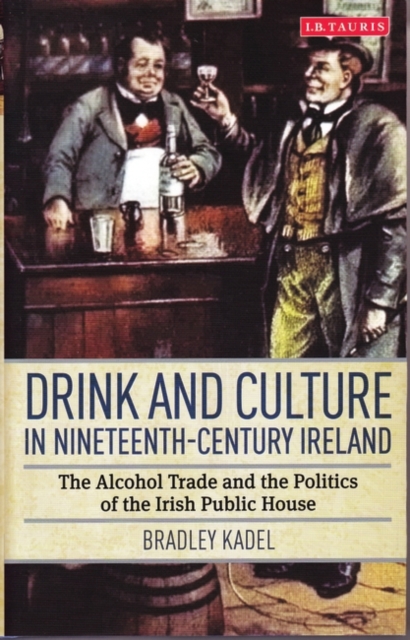
Drink and Culture in Nineteenth-Century Ireland
The vibrant Irish public house of the nineteenth century hosted broad networks of social power, enabling publicans and patrons to disseminate tremendous influence across Ireland and beyond. During the period, affluent publicans coalesced into one of the most powerful and sophisticated forces in Irish parliamentary politics. Among the leading figures of public life, they commanded an unmatched economic route to middle-class prosperity, inserted themselves into the centre of crucial legislative debates, and took part in fomenting the issues of class, gender, and national identity which continue to be contested today. From the other side of the bar, regular patrons relied on this social institution to construct, manage and spread their various social and political causes. From Daniel O'Connell to the Guinness dynasty, from the Acts of Union to the Great Famine, and from Christmas boxes to Fenianism; Bradley Kadel offers a first and much-needed scholarly examination of the ‘incendiary politics of the pub’ in nineteenth-century Ireland.
eBook

Houses of Ill Repute
The study of ancient Greek urbanism has moved from examining the evidence for town planning and the organization of the city-state, or polis, to considerations of \"everyday life.\" That is, it has moved from studying the public (fortifications, marketplaces, council houses, gymnasiums, temples, theaters, fountain houses) to studying the private (the physical remains of Greek houses). But what of those buildings that housed activities neither public nor private-brothels, taverns, and other homes of illicit activity? Can they be distinguished from houses? Were businesses like these run from homes? Classical Athenian writers attest to a diverse urban landscape that included tenement houses (sunoikiai), inns (diaitai,pandokeia), factories (ergasteria), taverns (kapelia), gambling dens (skirapheia), training schools (didaskaleia), and brothels (porneia), yet, despite our knowledge of specific terms, associating them with actual physical remains has not been easy. One such writer, Isaeus, mentions tenement houses that hosted prostitutes and wine sellers, while his contemporary Aeschines refers to doctors, smiths, fullers, carpenters, and pimps renting space. Were tenement houses not simply multi-inhabitant spaces but also multipurpose ones?
Houses of Ill Reputeis the first book to focus on the difficulties of distinguishing private and semiprivate spaces. While others have studied houses or brothels, this volume looks at both together. The chapters, by leading scholars in the field, address such questions as \"What is a house?\" and \"Did the business of prostitution leave behind a unique archaeological record?\" Presenting several approaches to identifying and studying distinctions between domestic residences and houses of ill repute, and drawing on the fields of literature, history, and art history and theory, the volume's contributors provide a way forward for the study of domestic and entertainment spaces in the Hellenic world.
Contributors:Bradley A. Ault, Allison Glazebrook, Mark L. Lawall, Kathleen M. Lynch, David Scahill, Amy C. Smith, Monika Trümper, Barbara Tsakirgis.
eBook

Every home a distillery : alcohol, gender, and technology in the colonial Chesapeake
In this original examination of alcohol production in early America, Sarah Hand Meacham uncovers the crucial role women played in cidering and distilling in the colonial Chesapeake. Her fascinating story is one defined by gender, class, technology, and changing patterns of production.
Alcohol was essential to colonial life; the region's water was foul, milk was generally unavailable, and tea and coffee were far too expensive for all but the very wealthy. Colonists used alcohol to drink, in cooking, as a cleaning agent, in beauty products, and as medicine. Meacham finds that the distillation and brewing of alcohol for these purposes traditionally fell to women. Advice and recipes in such guidebooks as The Accomplisht Ladys Delight demonstrate that women were the main producers of alcohol until the middle of the 18th century. Men, mostly small planters, then supplanted women, using new and cheaper technologies to make the region's cider, ale, and whiskey.
Meacham compares alcohol production in the Chesapeake with that in New England, the middle colonies, and Europe, finding the Chesapeake to be far more isolated than even the other American colonies. She explains how home brewers used new technologies, such as small alembic stills and inexpensive cider pressing machines, in their alcoholic enterprises. She links the importation of coffee and tea in America to the temperance movement, showing how the wealthy became concerned with alcohol consumption only after they found something less inebriating to drink.
Taking a few pages from contemporary guidebooks, Every Home a Distillery includes samples of historic recipes and instructions on how to make alcoholic beverages. American historians will find this study both enlightening and surprising.
eBook
Alcohol : a social and cultural history
Why are we so ambivalent about alcohol? Are we torn between our love of a drink and the need to restrict, or even prohibit, alcohol? How did saloon culture arise in the United States? Why did wine become such a ubiquitous part of French culture? Alcohol: A Social and Cultural History examines these questions and many more as it considers how drink has evolved in its functions and uses from the late Middle Ages to the present day in the West. Alcohol has long played an important role in societies throughout history, and understanding its consumption can reveal a great deal about a culture. This book discusses a range of issues, including domestic versus recreational use, the history of alcoholism, and the relationship between alcohol and violence, religion, sexuality, and medicine. It looks at how certain forms of alcohol speak about class, gender and place.Drawing on examples from Europe, North America and Australia, this book provides an overview of the many roles alcohol has played over the past five centuries.
eBook

Race Talk in a Mexican Cantina
People avoid speaking about race in the presence of another racial group for fear of saying something wrong and creating friction. This was not the situation at JB’s, a small Mexican cantina located in one of Houston’s oldest Mexican barrios. Mexicans made up most of the regular patrons, but a small number of whites also visited the bar on a regular basis. This situation created the circumstances for race talk in which the Mexican patrons needled and criticized the white patrons because of their whiteness. The white patrons likewise criticized the Mexican patrons, but their remarks were not as strident in comparison to those they received. When Tatcho Mindiola visited the bar and heard the race talk, he realized that it was a unique situation. He thus became a regular patron, and over a three-year period kept notes on the racial exchanges he observed and heard, which form the basis of this insightful volume.
eBook
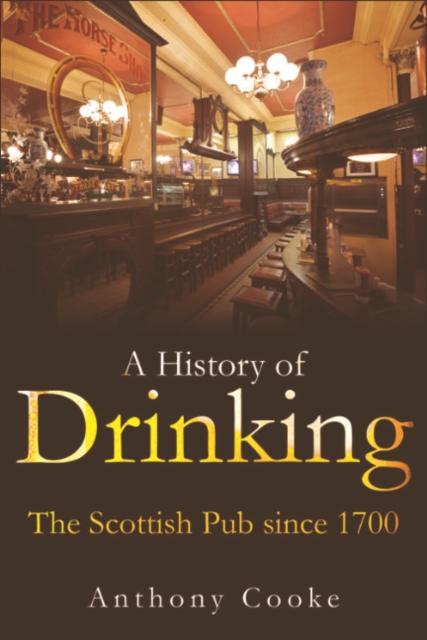
A History of Drinking
A social history of Scottish drinking and drinking establishmentsPoets and writers from Robert Burns and Walter Scott to Ian Rankin and Irvine Welsh have left vivid descriptions of the pleasures and pains of Scottish drinking places. Pubs also provided public spaces for occupational groups to meet, for commercial transactions, for literary and cultural activities and for everyday life and work rituals such as births, marriages and deaths and events linked with the agricultural year.Considering Scottish drinking places in an anthropological context,this bookexamines their role in everyday life, community and work rituals.
eBook

The Broken Spoke
When James and Annetta White opened the Broken Spoke in 1964, their location was a mile south of the Austin city limits, under a massive live oak beside what would eventually become South Lamar Boulevard. White built the place himself, beginning construction on the day he received his honorable discharge from the US Army. And for more than fifty years, the Broken Spoke has served up, in the words of White’s well-worn opening speech, “ . . . cold beer, good whiskey, the best chicken fried steak in town . . . and good country music.” White paid $32 to his first opening act, D. G. Burrows and the Western Melodies, back in 1964. Since then, the stage at the Spoke has hosted the likes of Bob Wills, Ernest Tubb, Ray Price, Roy Acuff, Kris Kristoffersen, George Strait, Willie Nelson, Jerry Jeff Walker, and Asleep at the Wheel. But it hasn’t always been easy; through the years, the Whites and the Spoke have withstood their share of hardship, including a breast cancer diagnosis, a chronically leaky roof, heart trouble, and a tour bus driven through the back wall. Today, however, the original rustic, barn-style building, surrounded by sleek, high-rise apartment buildings, still sits on South Lamar, a tribute and remembrance to an Austin that has almost vanished. Housing fifty years of country music memorabilia and about a thousand lifetimes of memories, the Broken Spoke is still doing what Ernest Tubb, years ago, urged James White to do: “keeping it country.”
eBook
Business development in licensed retailing
'Business Development in Licensed Retailing: a unit manager's guide' details the indispensable skills and techniques needed to manage units within licensed retail organisations in a flexible and entrepreneurial manner. This book:
· Forms the basis of a complete course for a unit manager's development.
·Provides an overview of the range of skills needed for effective unit management.
· Supports the development of techniques with examples from existing best practice and case examples from companies such as JD Wetherspoon's, TGI Fridays and McDonald's amongst others
Business Development in Licensed Retailing considers the functional management techniques required at unit management level, covering recruitment, human resource management, operations, service quality and customer relations, financial measurement and analysis, promotions and strategic planning. The analysis systematically provides all the practical know-how you need to produce of a comprehensive business plan for your unit. Ending with a comprehensive case study that demonstrates all the aspects of business development working in a real-life scenario, the text is ideally suited for lecturers and management development personnel to use as a learning resource through which readers can apply the principles and techniques outlined.
eBook

Sit Down and Drink Your Beer
Campbell argues that the regulation of the environment of the classic beer parlour, rather than being an example of social control, is best understood as moral regulation and part of a process of normalization.
eBook
America walks into a bar : a spirited history of taverns and saloons, speakeasies, and grog shops
In America Walks into a Bar, Christine Sismondo recounts the rich and fascinating history of an institution often reviled, yet always central to American life. She traces the tavern from England to New England, showing how even the Puritans valued \"a good Beere.\" With fast-paced narration and lively characters, she carries the story through the twentieth century and beyond, from repeated struggles over licensing and Sunday liquor sales, from the Whiskey Rebellion to the temperance movement, from attempts to ban \"treating\" to Prohibition and repeal.
eBook