
Catalogue Search | MBRL


Are you sure you want to remove the book from the shelf?

{{itemTitle}}
32
result(s) for
"Drinking of alcoholic beverages United States History 20th century."
Sort by:

The prohibition era
Describes the events leading up to the Prohibition Era, the illegal activities surrounding it, and the lessons learned afterwards.
Book
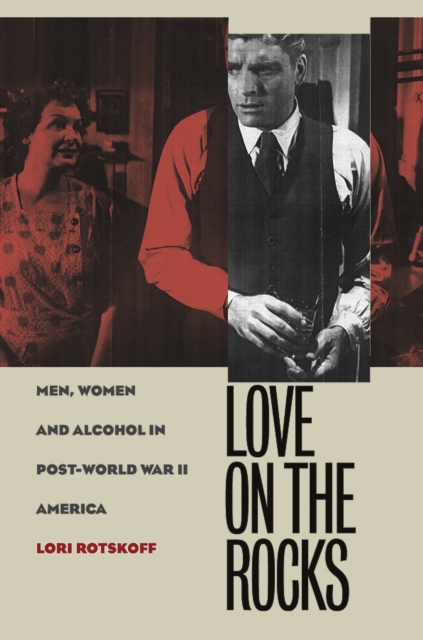
Love on the rocks : men, women, and alcohol in post-World War II America
In this fascinating history of alcohol in postwar American culture, Lori Rotskoff draws on short stories, advertisements, medical writings, and Hollywood films to investigate how gender norms and ideologies of marriage intersected with scientific and popular ideas about drinking and alcoholism. After the repeal of Prohibition in 1933, recreational drinking became increasingly accepted among white, suburban, middle-class men and women. But excessive or habitual drinking plagued many families. How did people view the \"problem drinkers\" in their midst? How did husbands and wives learn to cope within an \"alcoholic marriage\"? And how was drinking linked to broader social concerns during the Great Depression, World War II, and the Cold War era?By the 1950s, Rotskoff explains, mental health experts, movie producers, and members of self-help groups like Alcoholics Anonymous and Al-Anon helped bring about a shift in the public perception of alcoholism from \"sin\" to \"sickness.\" Yet alcoholism was also viewed as a family problem that expressed gender-role failure for both women and men. On the silver screen (in movies such as The Lost Weekend and The Best Years of Our Lives) and on the printed page (in stories by such writers as John Cheever), in hospitals and at Twelve Step meetings, chronic drunkenness became one of the most pressing public health issues of the day.Scene from Come Back, Little Sheba (1952). Wisconsin Center for Film and Theater Research, WCFTR-3057.-->.
eBook

Bootleg : murder, moonshine, and the lawless years of prohibition
This is a story of 14 years in American history, the story of prohibition.
Book

Jews and Booze
·\"A provocative study.\" -Publishers Weekly
·\"A fascinating, nuanced social history.\" -Kirkus
·\"Lively, well-researched, and comprehensive.\" - Jonathan D. Sarna, author ofAmerican Judaism
·\"Imaginatively conceived, fiercely researched, beautifully written.\" - Stephen J. Whitfield, authorIn Search of American Jewish Culture
·\"Groundbreaking study… deftly blends social and cultural history.\" - Tony Michels, author ofA Fire in Their Hearts
·\"Engrossing and well-written.\" -Jewish Book Council
·\"Thoughtful, instructive, and often insightful.\" -The New York Times Book Review
·\"A comprehensive look at a little-discussed historical subject.\" - Jenny Hendrix,Forward
·\"Fascinating, academically sophisticated, and superbly written.\" -TabletMagazine
·\"Informative and entertaining.\" - Glen C. Altschuler,San Francisco Chronicle
·\"Touches on a most important topic… fascinating work.\" - David Geffen,International Jerusalem Post
·\"Interesting, anecdotes, facts and figures… charming history to make the reader thirsty for another round.\" - Evan Rail,Times Literary Supplement
\"An excellent book… A complex and sophisticated narrative.\" -Journal of American History
eBook

Alcoholism in America : from reconstruction to prohibition
Despite the lack of medical consensus regarding alcoholism as a disease, many people readily accept the concept of addiction as a clinical as well as a social disorder. An alcoholic is a victim of social circumstance and genetic destiny. Although one might imagine that this dual approach is a reflection of today's enlightened and sympathetic society, historian Sarah Tracy discovers that efforts to medicalize alcoholism are anything but new. Alcoholism in America tells the story of physicians, politicians, court officials, and families struggling to address the danger of excessive alcohol consumption at the turn of the century. Beginning with the formation of the American Association for the Cure of Inebriates in 1870 and concluding with the enactment of Prohibition in 1920, this study examines the effect of the disease concept on individual drinkers and their families and friends, as well as the ongoing battle between policymakers and the professional medical community for jurisdiction over alcohol problems. Tracy captures the complexity of the political, professional, and social negotiations that have characterized the alcoholism field both yesterday and today. Tracy weaves American medical history, social history, and the sociology of knowledge into a narrative that probes the connections among reform movements, social welfare policy, the specialization of medicine, and the social construction of disease. Her insights will engage all those interested in America's historic and current battles with addiction.
eBook

The Prohibition Hangover
Spirits are all the rage today. Two-thirds of Americans drink, whether they enjoy higher priced call brands or more moderately priced favorites. From fine dining and piano bars to baseball games and backyard barbeques, drinks are part of every social occasion.
InThe Prohibition Hangover,Garrett Peck explores the often-contradictory social history of alcohol in America, from the end of Prohibition in 1933 to the twenty-first century. For Peck, Repeal left American society wondering whether alcohol was a consumer product or a controlled substance, an accepted staple of social culture or a danger to society. Today the legal drinking age, binge drinking, the neoprohibitionist movement led by Mothers Against Drunk Driving, the 2005 Supreme Court decision inGranholm v. Healdthat rejected discriminatory curbs on wine sales, the health benefits of red wine, advertising, and other issues remain highly contested.
Based on primary research, including hundreds of interviews with those on all sidesùclergy, bar and restaurant owners, public health advocates, citizen crusaders, industry representatives, and moreùas well as secondary sources, The Prohibition Hangover provides a panoramic assessment of alcohol in American culture. Traveling through the California wine country, the beer barrel backroads of New England and Pennsylvania, and the blue hills of Kentucky's bourbon trail, Peck places the concerns surrounding alcohol use within the broader context of American history, religious traditions, and governance.
Society is constantly evolving, and so are our drinking habits. Cutting through the froth and discarding the maraschino cherries, TheProhibition Hangoverexamines the modern American temperament toward drink amid the $189-billion-dollar-a-year industry that defines itself by the production, distribution, marketing, and consumption of alcoholic beverages.
eBook

Group Threat and Policy Change: The Spatial Dynamics of Prohibition Politics, 1890–1919
The authors argue that group threat is a key driver of the adoption of new and controversial policies. Conceptualizing threat in spatial terms, they argue that group threat is activated through the joint occurrence of (1) proximity to threatening groups and (2) the population density of threatened groups. By analyzing the adoption of county and state \"dry laws\" banning alcohol from 1890 to 1919, they first show that prohibition victories were driven by the relative strength of supportive constituencies such as native whites and rural residents, vis-à-vis opponents such as Irish, Italian, or German immigrants or Catholics. Second, they show that threat contributed to prohibition victories: counties bordering large immigrant or urban populations, which did not themselves contain similar populations, were more likely to adopt dry laws. Threat arises primarily from interactions between spatially proximate units at the local level, and therefore higher-level policy change is not reducible to the variables driving local policy.
Journal Article

Joe Camel in a Bottle: Diageo, the Smirnoff Brand, and the Transformation of the Youth Alcohol Market
I have documented the shift in youth alcoholic beverage preference from beer to distilled spirits between 2001 and 2009. I have assessed the role of distilled spirits industry marketing strategies to promote this shift using the Smirnoff brand marketing campaign as a case example. I conclude with a discussion of the similarities in corporate tactics across consumer products with adverse public health impacts, the importance of studying corporate marketing and public relations practices, and the implications of those practices for public health.
Journal Article

One for the road : drunk driving since 1900
Don't drink and drive. It's a deceptively simple rule, but one that is all too often ignored. And while efforts to eliminate drunk driving have been around as long as automobiles, every movement to keep drunks from driving has hit some alarming bumps in the road. Barron H. Lerner narrates the two strong—and vocal—sides to this debate in the United States: those who argue vehemently against drunk driving, and those who believe the problem is exaggerated and overregulated. A public health professor and historian of medicine, Lerner asks why these opposing views exist, examining drunk driving in the context of American beliefs about alcoholism, driving, individualism, and civil liberties. Angry and bereaved activist leaders and advocacy groups like Mothers Against Drunk Driving campaign passionately for education and legislation, but even as people continue to be killed, many Americans remain unwilling to take stronger steps to address the problem. Lerner attributes this attitude to Americans' love of drinking and love of driving, an inadequate public transportation system, the strength of the alcohol lobby, and the enduring backlash against Prohibition. The stories of people killed and maimed by drunk drivers are heartrending, and the country's routine rejection of reasonable strategies for ending drunk driving is frustratingly inexplicable. This book is a fascinating study of the culture of drunk driving, grassroots and professional efforts to stop it, and a public that has consistently challenged and tested the limits of individual freedom. Why, despite decades and decades of warnings, do people still choose to drive while intoxicated? One for the Road provides crucial historical lessons for understanding the old epidemic of drunk driving and the new epidemic of distracted driving.
eBook

Southern Prohibition
Southern Prohibitionexamines political culture and reform through the evolving temperance and prohibition movements in Middle Florida. Scholars have long held that liquor reform was largely a northern and mid-Atlantic phenomenon before the Civil War. Lee L. Willis takes a close look at the Florida plantation belt to reveal that the campaign against alcohol had a dramatic impact on public life in this portion of the South as early as the 1840s.
Race, class, and gender mores shaped and were shaped by the temperance movement. White racial fears inspired prohibition for slaves and free blacks. Stringent licensing shut down grog shops that were the haunts of common and poor whites, which accelerated gentrification and stratified public drinking along class lines. Restricting blacks' access to alcohol was a theme that ran through temperance and prohibition campaigns in Florida, but more affluent African Americans also supported prohibition, indicating that the issue was not driven solely by white desires for social control. Women in the plantation belt played a marginal role in comparison to other locales and were denied greater political influence as a result.
Beyond alcohol, Willis also takes a broader look at psychoactive substances to show the veritable pharmacopeia available to Floridians in the nineteenth century. Unlike the campaign against alcohol, however, the tightening regulations on narcotics and cocaine in the early twentieth century elicited little public discussion or concern-a quiet beginning to the state's war on drugs
eBook