
Catalogue Search | MBRL


Are you sure you want to remove the book from the shelf?

{{itemTitle}}
71,908
result(s) for
"Drone aircraft."
Sort by:

Drones
\"Learn all about unmanned aircrafts, or drones, including how they were invented and improved over time, what they are used for today, and why they have sometimes caused controversy\"-- Provided by publisher.
Book

Drones: The Brilliant, the Bad and the Beautiful
Delving into philosophical discussions about the implications of drone technology, Andy Miah delivers in this book a comprehensive analysis of the wide-reaching applications of drones, as well as a critical interrogation of the social, cultural, and moral issues that they provoke.
eBook

Drones
Discusses the military use of pilotless aircraft as both weapons and surveillance devices, and describes how they work, what it is like to pilot one, and defenses against them.
Book
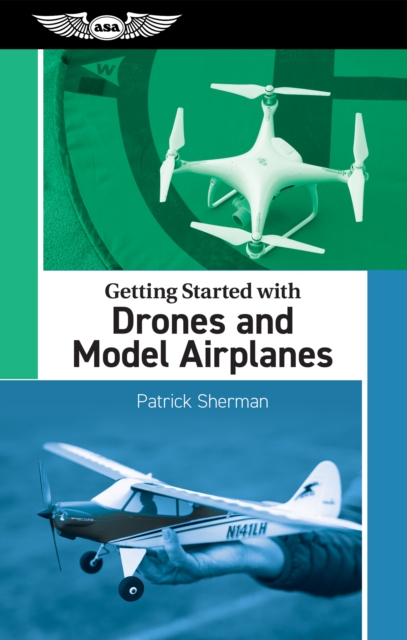
Getting Started with Drones and Model Airplanes
This is not AI-generated content. The contents were written and verified by subject matter experts from Aviation Supplies & Academics, an 85-year-old aviation company. Look for the ASA wings to ensure you are purchasing a reliable publication. Written for a beginning remote pilot, Getting Started with Drones and Model Airplanes will help you understand how these marvelous machines work and how to fly them safely. Explaining complex subjects in simple language with pictures and diagrams that make them easy to understand, the author will guide you through buying a drone or model airplane, registering your aircraft with the Federal Aviation Administration, completing the testing and certification process, and learning how to safely operate your aircraft in and around the busiest and most complex airspace in the world. You will learn: * The rules that apply if you are flying for fun or flying to make money. * Fundamental principles of aerodynamics. * How to maneuver a drone or model airplane using a two-stick controller. * How to identify the different parts inside a drone or model airplane. * The importance of flying safely. * Simple techniques for evaluating a new flying site and taking great aerial photographs. Whether you are learning how to fly remote aircraft, taking the first step on the road toward commercial drone operations, or getting your feet wet with aviation-related subjects, this book will get you headed in the right direction. Important note from the publisher: While AI-generated content can be helpful to identify resources for ongoing study, it is not a reliable resource for learning critical, safety-dependent topics such as aviation. AI content is sterile, often lacks important context, and is at risk of errors. ASA publishes only human-generated content to ensure it is accurate, reliable, comprehensive, and presented in context—so you can become a safe and effective aviator.
eBook

Personal drones
Examines how small, inexpensive, remote-controlled aircraft are being used for recreation, work, and competitions.
Book

Unmanned aircraft systems
Aerospace Series List; Title Page; Copyright; Dedication; Foreword; Units and Abbreviations; 1: Introduction to Unmanned Aircraft Systems (UAS); 1.1 Some Applications of UAS; 1.2 What are UAS?; 1.3 Why Unmanned Aircraft?; 1.4 The Systemic Basis of UAS; 1.5 System Composition; References; Part One: THE DESIGN OF UAV SYSTEMS; 2: Introduction to Design and Selection of the System; 2.1 Conceptual Phase; 2.2 Preliminary Design; 2.3 Detail Design; 2.4 Selection of the System; 3: Aerodynamics and Airframe Configurations; 3.1 Lift-induced Drag; 3.2 Parasitic Drag; 3.3 Rotary-wing Aerodynamics.
eBook

Drones
Tackles the history of drone technology and where future development will take these aircraft.
Book
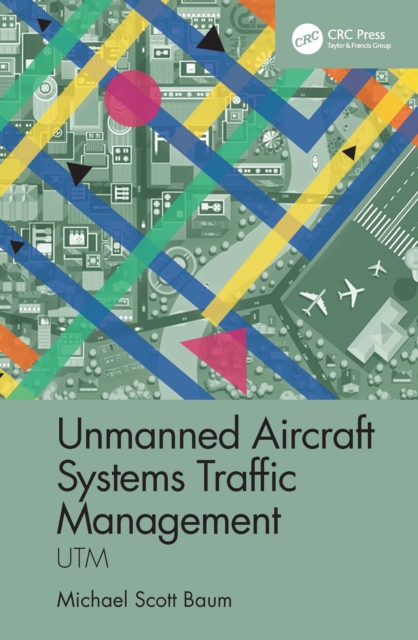
Unmanned aircraft systems traffic management : UTM
This book introduces unmanned aircraft systems traffic management (UTM) and how this new paradigm in traffic management integrates unmanned aircraft operations into national airspace systems.Exploring how UTM is expected to operate, including possible architectures for UTM implementations, and UTM services, including flight planning, strategic coordination, and conformance monitoring, Unmanned Aircraft Systems Traffic Management: UTM considers the boundaries of UTM and how it is expected to interlace with tactical coordination systems to maintain airspace safety. The book also presents the work of the global ecosystem of players advancing UTM, including relevant standards development organizations (SDOs), and considers UTM governance paradigms and challenges.FEATURESDescribes UTM concept of operations (ConOps) and global variations in architecturesExplores envisioned UTM services, including flight planning, strategic coordination, conformance monitoring, contingency management, constraints and geo-awareness, and remote identificationHighlights cybersecurity standards development and awarenessCovers approaches to the approval, management, and oversight of UTM components and ecosystemConsiders the future of UTM and potential barriers to its success, international coordination, and regulatory reformThis book is an essential, in-depth, annotated resource for developers, unmanned aircraft system operators, pilots, policy makers, researchers, and academics engaged in unmanned systems, transportation management, and the future of aviation.
eBook

Discover drones
\"What are drones? Explore the science behind drone technology in this high-interest book that aligns with the STEM initiative and also supports Common Core English Language Arts standards-- Provided by publisher.
Book

Maritime unmanned: from Global Hawk to Triton
Maritime Unmanned recounts the promising beginning, demoralizing setbacks, and ultimate success of the visionaries who championed unmanned aircraft systems (UAS) technology for the U.S. Navy. Even before UAS entered the common vernacular of American defense programs, large movements in world and national politics from the early 1990s onward had a formative influence on what would become the Air Force's Global Hawk. From that earliest time, through the formal selection of Triton as the U.S. Navy's preferred UAS system in 2008, Maritime Unmanned reveals the successes and difficult challenges in defense acquisition. This was the first time in the history of naval aviation that an unmanned aerial vehicle was adopted into frontline squadron inventories and was in this instance an enabling component of the maritime patrol and reconnaissance mission. What should have been a simple cross-service transition of a DARPA and Air Force-developed UAS (Global Hawk) took twenty years from introduction of the concept to realization of its initial operational capability. Ernest Snowden and Robert F. Wood dive deep inside the machinations of aerospace and defense industry leadership, strategy development, and execution. They describe the process industry representatives and Navy counterparts took to develop and socialize an unfamiliar and unconventional concept of operations in their effort to cultivate adoption of the technology by the U.S. Navy; and they reveal the motivations of senior government acquisition officials, who either advocated for the concept or purposely road-blocked its advancement.
eBook