
Catalogue Search | MBRL


Are you sure you want to remove the book from the shelf?

{{itemTitle}}
2,617
result(s) for
"Droughts History."
Sort by:


Warming accelerates global drought severity
Drought is one of the most common and complex natural hazards affecting the environment, economies and populations globally
1
,
2
,
3
–
4
. However, there are significant uncertainties in global drought trends
4
,
5
–
6
, and a limited understanding of the extent to which a key driver, atmospheric evaporative demand (AED), impacts the recent evolution of the magnitude, frequency, duration and areal extent of droughts. Here, by developing an ensemble of high-resolution global drought datasets for 1901–2022, we find an increasing trend in drought severity worldwide. Our findings suggest that AED has increased drought severity by an average of 40% globally. Not only are typically dry regions becoming drier but also wet areas are experiencing drying trends. During the past 5 years (2018–2022), the areas in drought have expanded by 74% on average compared with 1981–2017, with AED contributing to 58% of this increase. The year 2022 was record-breaking, with 30% of the global land area affected by moderate and extreme droughts, 42% of which was attributed to increased AED. Our findings indicate that AED has an increasingly important role in driving severe droughts and that this tendency will likely continue under future warming scenarios.
Increased atmospheric evaporative demand in recent years has increased drought severity by an average of 40% globally across both dry and wet regions, and the trend is likely to continue under future warming scenarios.
Journal Article

Sick soil : the Dust Bowl
Discusses the story of the devastating dust storms that swept across the Midwest in the 1930's as a result of over-farming and drought.
Book

Large contribution from anthropogenic warming to an emerging North American megadrought
Severe and persistent 21st-century drought in southwestern North America (SWNA) motivates comparisons to medieval megadroughts and questions about the role of anthropogenic climate change. We use hydrological modeling and new 1200-year tree-ring reconstructions of summer soil moisture to demonstrate that the 2000–2018 SWNA drought was the second driest 19-year period since 800 CE, exceeded only by a late-1500s megadrought. The megadrought-like trajectory of 2000–2018 soil moisture was driven by natural variability superimposed on drying due to anthropogenic warming. Anthropogenic trends in temperature, relative humidity, and precipitation estimated from 31 climate models account for 47% (model interquartiles of 35 to 105%) of the 2000–2018 drought severity, pushing an otherwise moderate drought onto a trajectory comparable to the worst SWNA megadroughts since 800 CE.
Journal Article

A primary source history of the Dust Bowl
\"Uses primary sources to tell the story of the Dust Bowl\"-- Provided by publisher.
Book
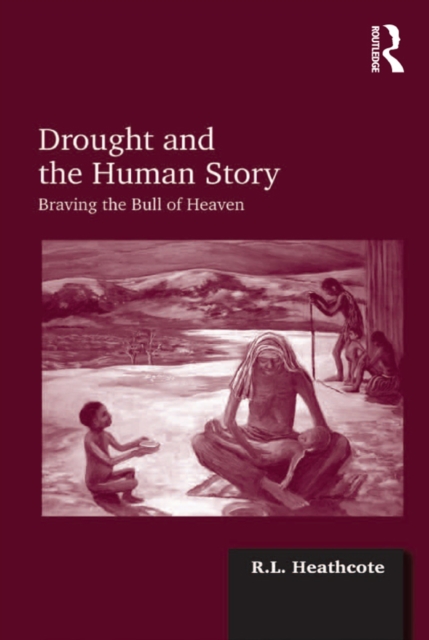
Drought and the Human Story
Drought has been a long companion in the human story. Mythologised as the devastating Bull of Heaven in one of the earliest heroic legends to come out of Mesapotamia, drought has continued to wreak havoc upon societies, in many cases playing a significant role in their final demise. For societies in the 21st Century drought hovers on all horizons, the ultimate drought-proofing of society - long sought - remains elusive. This study of the human conceptualization of drought in a global setting examines the historical record from early human society through to present day concerns to explore how and why attitudes to drought have changed and why the mitigation of its impacts has become more difficult. To offer a more lasting strategy for protection against drought, the author argues that physical scientists need to combine their skills in understanding global ecology and their technological expertise with the social scientists' awareness of the socio-economic, political and cultural contexts in which modern societies operate. Both will have to ensure that their cooperative strategies for drought management will be understood and supported by the public. If this cooperation can be achieved, the future rampages of the Bull of Heaven may be contained.
eBook

The Dust Bowl
Describes the economic and environmental conditions that led to the Great Depression and the horrific dust storms that drove people from their homes westward during the 1930s.
Book
Jet stream controls on European climate and agriculture since 1300 ce
The jet stream is an important dynamic driver of climate variability in the Northern Hemisphere mid-latitudes
1
–
3
. Modern variability in the position of summer jet stream latitude in the North Atlantic–European sector (EU JSL) promotes dipole patterns in air pressure, temperature, precipitation and drought between northwestern and southeastern Europe. EU JSL variability and its impacts on regional climatic extremes and societal events are poorly understood, particularly before anthropogenic warming. Based on three temperature-sensitive European tree-ring records, we develop a reconstruction of interannual summer EU JSL variability over the period 1300–2004
ce
(
R
2
= 38.5%) and compare it to independent historical documented climatic and societal records, such as grape harvest, grain prices, plagues and human mortality. Here we show contrasting summer climate extremes associated with EU JSL variability back to 1300
ce
as well as biophysical, economic and human demographic impacts, including wildfires and epidemics. In light of projections for altered jet stream behaviour and intensified climate extremes, our findings underscore the importance of considering EU JSL variability when evaluating amplified future climate risk.
Tree-ring records used to reconstruct the variability of the European jet stream from 1300 to 2004
ce
show modulation of extreme regional climate events and extensive impacts on agriculture and human well-being.
Journal Article

Earth, wind, fire, and rain : real tales of temperamental elements
Examines \"five of America's deadliest natural disasters that were made worse by human error, ignorance, and greed\"--Back cover.
Book

Resolving the Dust Bowl paradox of grassland responses to extreme drought
During the 1930s Dust Bowl drought in the central United States, species with the C₃ photosynthetic pathway expanded throughout C₄-dominated grasslands. This widespread increase in C₃ grasses during a decade of low rainfall and high temperatures is inconsistent with well-known traits of C₃ vs. C₄ pathways. Indeed, water use efficiency is generally lower, and photosynthesis is more sensitive to high temperatures in C₃ than C₄ species, consistent with the predominant distribution of C₃ grasslands in cooler environments and at higher latitudes globally. We experimentally imposed extreme drought for 4 y in mixed C₃/C₄ grasslands in Kansas and Wyoming and, similar to Dust Bowl observations, also documented three- to fivefold increases in C₃/C₄ biomass ratios. To explain these paradoxical responses, we first analyzed long-term climate records to show that under nominal conditions in the central United States, C₄ grasses dominate where precipitation and air temperature are strongly related (warmest months are wettest months). In contrast, C₃ grasses flourish where precipitation inputs are less strongly coupled to warm temperatures. We then show that during extreme drought years, precipitation–temperature relationships weaken, and the proportion of precipitation falling during cooler months increases. This shift in precipitation seasonality provides a mechanism for C₃ grasses to respond positively to multiyear drought, resolving the Dust Bowl paradox. Grasslands are globally important biomes and increasingly vulnerable to direct effects of climate extremes. Our findings highlight how extreme drought can indirectly alter precipitation seasonality and shift ecosystem phenology, affecting function in ways not predictable from key traits of C₃ and C₄ species.
Journal Article