
Catalogue Search | MBRL


Are you sure you want to remove the book from the shelf?

{{itemTitle}}
6,896
result(s) for
"Drug accessibility."
Sort by:


Building a Sailboat in a Storm
In the first half of 2021, COVID-19 vaccine doses from the COVAX Facility were in short supply, and the plan to mass produce COVAX vaccines through the Serum Institute of India (SII) faltered as the pandemic surged in India in March 2021.Due to COVAX's shift in approach towards convincing richer nations to redistribute their excess doses, the second half of 2021 saw increases in the frequency and volume of its shipments. Donors were however able to \"earmark\" their dose donations and identify their intended recipients.The six Southeast Asian countries which qualified for free COVAX shots--Cambodia, Indonesia, Laos, the Philippines, Timor-Leste and Vietnam (the AMC6)--received 16 million doses in the first half of 2021. In the second half, they received 128 million doses from COVAX, 80.9 per cent of which were earmarked donations.Despite making up 7 per cent of the world population, the AMC6 collectively accounted for 24.3 per cent of all earmarked dose donations (and 25 per cent of the United States' total dose donations) to COVAX in 2021.The AMC6 greatly benefitted from COVAX's pivot to dose donations. This demonstrated the region's strategic salience to Washington and its allies, but came at the expense of vaccine equity, which the region has prudential reasons to care about.The execution of COVAX hammers home the hard truth that multilateral governance is a difficult act to pull off even with the best intentions and is not impervious to the geopolitical interests and agendas of the major powers.
eBook

Of medicines and markets : intellectual property and human rights in the free trade era
Central American countries have long defined health as a human right. But in recent years regional trade agreements have ushered in aggressive intellectual property reforms, undermining this conception. Questions of IP and health provisions are pivotal to both human rights advocacy and \"free\" trade policy, and as this book chronicles, complex political battles have developed across the region.
Looking at events in Costa Rica, El Salvador, and Guatemala, Angelina Godoy argues that human rights advocates need to approach intellectual property law as more than simply a roster of regulations. IP represents the cutting edge of a global tendency to value all things in market terms: Life forms—from plants to human genetic sequences—are rendered commodities, and substances necessary to sustain life—medicines—are restricted to insure corporate profits. If we argue only over the terms of IP protection without confronting the underlying logic governing our trade agreements, then human rights advocates will lose even when they win.
eBook

Law and the Regulation of Medicines
The principal purpose of this book is to tell the story of a medicine’s journey through the regulatory system in the UK, from defining what counts as a medicine, through clinical trials, licensing, pharmacovigilance, marketing and funding. The question of global access to medicines is addressed because of its political importance, and because it offers a particularly stark illustration of the consequences of classifying medicines as a private rather than a public good. Two further specific challenges to the future of medicine’s regulation are examined separately: first, pharmacogenetics, or the genetic targeting of medicines to subgroups of patients, and second, the possibility of using medicines to enhance well-being or performance, rather than treat disease. Throughout, the emphasis is on the role of regulation in shaping and influencing the operation of the medicines industry, an issue that is of central importance to the promotion of public health and the fair and equitable distribution of healthcare resources.
eBook
PBS newshour. How the prescription drug supply chain is killing local pharmacies
The supply chain that brings pharmaceutical drugs from the factory to the pharmacy is long, complex and unclear. Congress and several state legislatures have proposed or enacted laws to bring more transparency and curb soaring drug prices. As special correspondent Fred de Sam Lazaro reports, many small or independent pharmacies complain the system also hurts them.
Streaming Video
The Compatibility of the Access to Essential Generic Medicines with Human Rights: An Analysis of the In-Transit Seizure of Essential Generic Medicines from India by the European Union
The Covid-19 pandemic has sensitised the global community on theimportance of the access to essential medicines. The nations of the world have engaged in a fierce battle over the lifesaving Covid-19 vaccines, in which developed nations have come out successfully. The access to essential medicines has long been promoted by the United Nations (UN) and other international human rights organisations. In this context, India seems to have done its bit and has emerged as the pharmacy of the developing world and further has been providing the global poor with the advantage of access to essential as well as generic drugs.
eBook
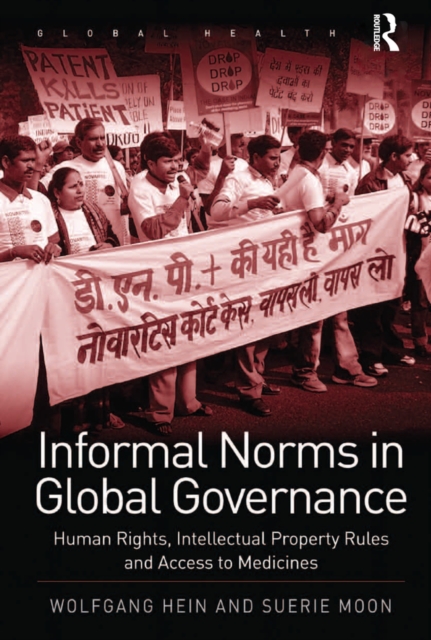
Informal Norms in Global Governance
Hein and Moon take up a serious problem of contemporary global governance: what can be done when international trade rules prevent the realization of basic human rights? This book recounts the remarkable story of the access to medicines movement and offers an explanation for how the 'access norm' emerged against long odds. It also explores the stability and scope of the norm with respect to other diseases and emerging economies. Finally, in light of the high barriers to changing formal global trade rules, the book considers the potential and limitations of informal norms for protecting human rights, and when renewed focus on changing formal norms may be warranted.
eBook