
Catalogue Search | MBRL


Are you sure you want to remove the book from the shelf?

{{itemTitle}}
76,450
result(s) for
"Drug traffic."
Sort by:


Living with Insecurity in a Brazilian Favela
The residents of Caxambu, a squatter neighborhood in Rio de Janeiro, live in a state of insecurity as they face urban violence. Living with Insecurity in a Brazilian Favela examines how inequality, racism, drug trafficking, police brutality, and gang activities affect the daily lives of the people of Caxambu. Some Brazilians see these communities, known as favelas, as centers of drug trafficking that exist beyond the control of the state and threaten the rest of the city. For other Brazilians, favelas are symbols of economic inequality and racial exclusion. Ben Penglase’s ethnography goes beyond these perspectives to look at how the people of Caxambu themselves experience violence. Although the favela is often seen as a war zone, the residents are linked to each other through bonds of kinship and friendship. In addition, residents often take pride in homes and public spaces that they have built and used over generations. Penglase notes that despite poverty, their lives are not completely defined by illegal violence or deprivation. He argues that urban violence and a larger context of inequality create a social world that is deeply contradictory and ambivalent. The unpredictability and instability of daily experiences result in disagreements and tensions, but the residents also experience their neighborhood as a place of social intimacy. As a result, the social world of the neighborhood is both a place of danger and safety.
eBook

Triple crossing : a novel
\"Valentine Pescatore is a rookie Border Patrol agent on the edge. He gets in trouble and finds himself recruited by U.S. agent Isabel Puente and Leo Méndez, chief of an elite Tijuana police unit. They are targeting a ruthless Mexican crime family and the operation needs a man on the inside. Soon Pescatore is in a drug lord's crew, drawn into a world of smuggling, corruption, and murder. The outlaw code of the gangsters is seductive-but so is Pescatore's own code, and his growing love for Isabel Puente. As violence escalates, all three plunge into the deadly no-man's-land of South America's Triple Border, where a bloody showdown will test their loyalties and beliefs.\"--amazon.com
Book

Opium’s Orphans
Opium's Orphans is the first full history of drug prohibition and the 'war on drugs'. A no-holds-barred but balanced account, it shows that drug suppression was born of historical accident, not rational design. The war on drugs did not originate in Europe or the USA, and even less with President Nixon, but in China. Two Opium Wars, followed by Western attempts to atone for them, gave birth to an anti-narcotics order that has come to span the globe. But has the war on drugs succeeded? As opioid deaths and cartel violence run rampant, contestation becomes more vocal and marijuana is slated for legalization in many places, Opium's Orphans proposes that it is time to go back to the drawing board.
eBook


Shooting Up: Counterinsurgency and the War on Drugs
Most policymakers see counterinsurgency and counternarcotics policy as two sides of the same coin. Stop the flow of drug money, the logic goes, and the insurgency will wither away. But the conventional wisdom is dangerously wrongheaded, as Vanda Felbab-Brown argues in Shooting Up.
eBook

The war on drugs in the Americas
\"The War on Drugs in the Americas brings together the history of the War on Drugs in the US and Latin America to reveal how, since 1914, when the US first criminalized the non-medical use of narcotics, the trade and violence associated with drugs has developed throughout the hemisphere. This concise and accessible book provides an overview of geographic, historical, economic, and social dimensions of the War on Drugs throughout the past century. Notable figures, popular drugs, competing theories, and significant historical events take center stage, as the story moves between macro analysis and micro details. Aside from infamous cartel leaders like Colombia's Pablo Escobar and Mexico's El Chapo Guzman, the reader learns about equally-important but lesser-known Latin American and US traffickers. In addition to counter-narcotics giants, readers learn about the Law Enforcement Against Prohibition (LEAP), DEA agents working to fight pharmaceutical companies and distributors, cutting-edge researchers and politicians that have pushed for and against the war. The War on Drugs in the Americas is essential reading for students studying Latin American History, International Studies or Politics through its clear and objective narrative of the origins, impact, and debates behind the War on Drugs in the US and Latin America\"-- Provided by publisher.
Book

The world heroin market : can supply be cut?
Heroin is universally considered the world's most harmful illegal drug. This is due not only to the damaging effects of the drug itself, but also to the spread of AIDS tied to its use. Burgeoning illegal mass consumption in the 1960s and 1970s has given rise to a global market for heroin and other opiates of nearly 16 million users. The production and trafficking of opiates have caused crime, disease, and social distress throughout the world, leading many nations to invest billions of dollars trying to suppress the industry. The failure of their efforts has become a central policy concern. Can the world heroin supply actually be cut, and with what consequences? The result of a five-year-long research project involving extensive fieldwork in six Asian countries, Colombia, and Turkey, this book presents a systematic analysis of the contemporary world heroin market, delving into its development and structure, its participants, and its socio-economic impact. It provides a sound and comprehensive empirical base for concluding that there is little opportunity to shrink the global supply of heroin in the long term, and explains why production is concentrated in a handful of countries—and is likely to remain that way. On the basis of these findings, the chapters identify a key set of policy opportunities, largely local, and make suggestions for leveraging them. This book also offers new insights into market conditions in India, Tajikistan, and other countries that have been greatly harmed by the production and trafficking of illegal opiates.
eBook

Every man a menace
\"San Francisco is about to receive the biggest delivery of MDMA to hit the West Coast in years. Raymond Gaspar, just out of prison, is sent to the city to check in on the increasingly erratic dealer expected to take care of distribution. In Miami, the man responsible for getting the drugs across the Pacific has just met the girl of his dreams--a woman who can't seem to keep her story straight. And thousands of miles away in Bangkok, someone farther up the supply chain is about to make a phone call that will put all their lives at risk. Stretching from the Golden Triangle of Southeast Asia to the Golden Gate of San Francisco.\"--Jacket.
Book
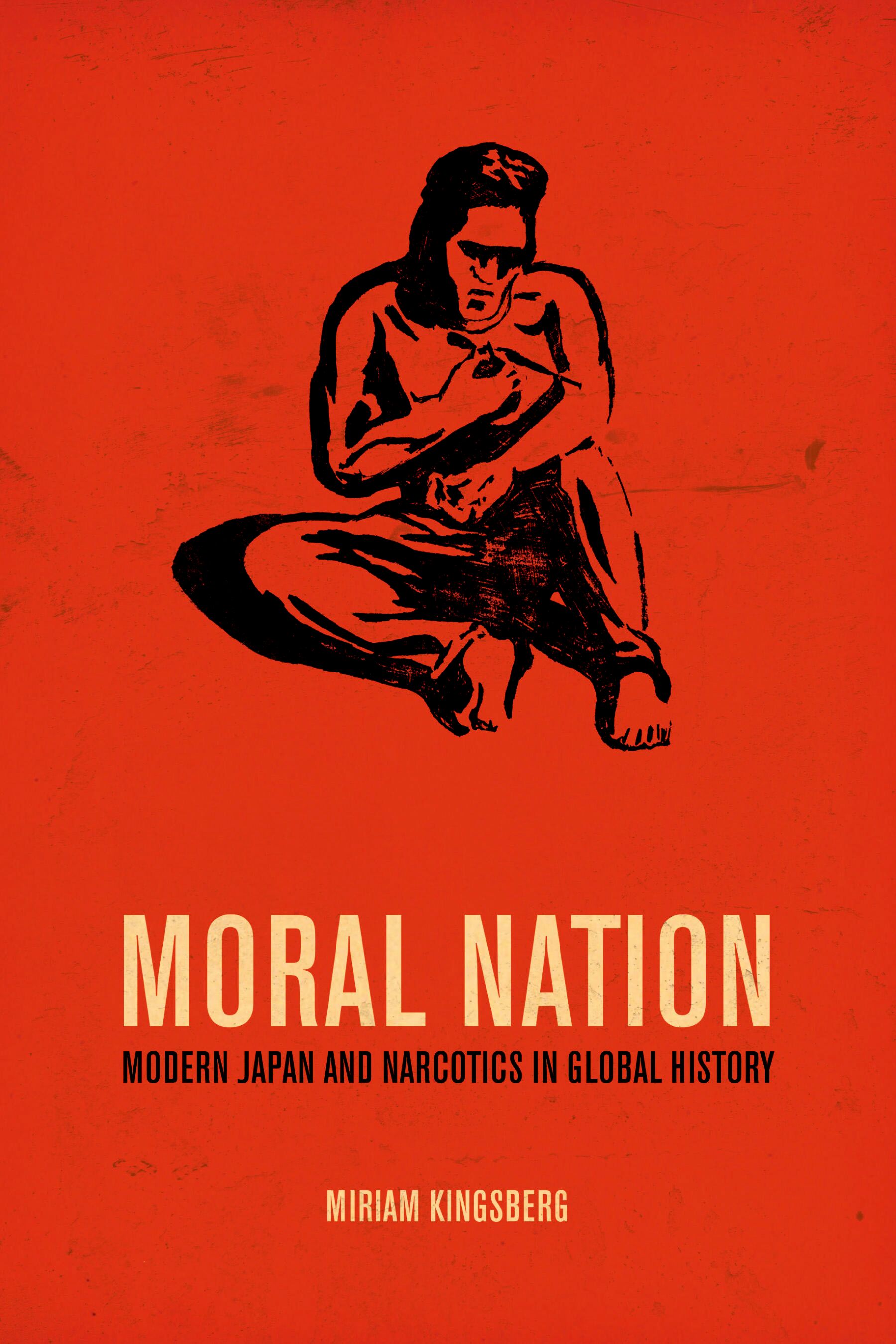
Moral nation
This trailblazing study examines the history of narcotics in Japan to explain the development of global criteria for political legitimacy in nations and empires in the nineteenth and twentieth centuries. Japan underwent three distinct crises of sovereignty in its modern history: in the 1890s, during the interwar period, and in the 1950s. Each crisis provoked successively escalating crusades against opium and other drugs, in which moral entrepreneurs--bureaucrats, cultural producers, merchants, law enforcement, scientists, and doctors, among others--focused on drug use as a means of distinguishing between populations fit and unfit for self-rule. Moral Nation traces the instrumental role of ideologies about narcotics in the country's efforts to reestablish its legitimacy as a nation and empire. As Kingsberg demonstrates, Japan's growing status as an Asian power and a \"moral nation\" expanded the notion of \"civilization\" from an exclusively Western value to a universal one. Scholars and students of Japanese history, Asian studies, world history, and global studies will gain an in-depth understanding of how Japan's experience with narcotics influenced global standards for sovereignty and shifted the aim of nation building, making it no longer a strictly political activity but also a moral obligation to society.
eBook