
Catalogue Search | MBRL


Are you sure you want to remove the book from the shelf?

{{itemTitle}}
380
result(s) for
"Dutch East Indies"
Sort by:

The operations of the Navy in the Dutch East Indies and the Bay of Bengal
Between 1966 and 1980, the War History Office of the National Defense College of Japan (now the Center for Military History of the National Institute for Defense Studies) published the 102-volume 'Senshi Sosho' ('War History Series'). These volumes give a detailed account of the operations of the Imperial Japanese Army and Imperial Japanese Navy during the Second World War. The present volume, 'The Operations of the Navy in the Dutch East Indies and the Bay of Bengal', volume 26 of the series, describes the Japanese Navy's role in the campaign to gain control over the Indonesian archipelago - at that time the largest transoceanic landing operation in the military history of the world. It includes, among others, the first complete Japanese analysis of the Battle of the Java Sea, a much-debated battle that ended disastrously for the Allies and opened the way to Java for the Japanese. Willem Remmelink was the executive director of the Japan-Netherlands Institute in Tokyo for more than twenty-five years. He is a specialist in Japanese and Indonesian history.
Book

Emerging Memory
This incisive volume brings together postcolonial studies, visual culture and cultural memory studies to explain how the Netherlands continues to rediscover its history of violence in colonial Indonesia. Dutch commentators have frequently claimed that the colonial past and especially the violence associated with it has been 'forgotten' in the Netherlands. Uncovering 'lost' photographs and other documents of violence has thereby become a recurring feature aimed at unmasking a hidden truth. The author argues that, rather than absent, such images have been consistently present in the Dutch public sphere and have been widely available in print, on television and now on the internet. Emerging Memory: Photographs of Colonial Atrocity in Dutch Cultural Remembrance shows that between memory and forgetting there is a haunted zone from which pasts that do not fit the stories nations live by keep on emerging and submerging while retaining their disturbing presence.
eBook

Electrifying Indonesia
Electrifying Indonesia tells the story of the entanglement
of politics and technology during Indonesia's rapid post-World War
II development. As a central part of its nation-building project,
the Indonesian state sought to supply electricity to the entire
country, bringing transformative socioeconomic benefits across its
heterogeneous territories and populations. While this project was
driven by nationalistic impulses, it was also motivated by a
genuine interest in social justice. The entanglement of these two
ideologies-nation-building and equity-shaped how electrification
was carried out, including how the state chose the technologies it
did. Private companies and electric cooperatives vied with the
hegemonic state power company to participate in a monumental
undertaking that would transform daily life for all Indonesians,
especially rural citizens. In this innovative volume, Anto Mohsin
brings Indonesian studies together with science and technology
studies to understand a crucial period in modern Indonesian
history. He shows that attempts to illuminate the country were
inseparable from the effort to maintain the new nation-state, chart
its path to independence, and legitimize ruling regimes. In
exchange for an often dramatically improved standard of living,
people gave their votes, and their acquiescence, to the ruling
government.
eBook
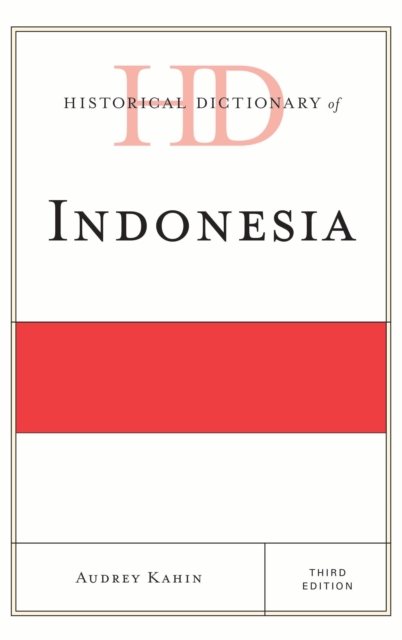
Historical dictionary of Indonesia
A wide-flung archipelago lying between the Pacific and Indian Oceans, Indonesia is the world's most populous Islamic country. For over two thousand years it was a crossroads on the major trading route between China and India, but it was not brought together into a single entity until the Dutch extended their rule throughout the Netherlands East Indies in the early part of the 20th century. Declaring its independence from the Dutch in 1945, the Republic of Indonesia was ruled by only two regimes over the next half century Throughout the years the country has continued to be dogged by an inefficient bureaucracy and by perpetual problems of corruption. However, since 2004 Indonesia has successfully carried out four direct elections for president, together with an equal number of elections for legislative bodies at all levels of government, and has finally in 2014 elected a president with no ties to either the military or to the previous authoritarian power structure.
This third edition of Historical Dictionary of Indonesia contains a chronology, an introductory essay, appendixes, and an extensive bibliography. The dictionary section has over 900 cross-referenced entries on important personalities, politics, economy, foreign relations, religion, and culture. This book is an excellent access point for students, researchers, and anyone wanting to know more about Indonesia.
eBook

Ecology of a Tool
New Guinea, and especially Papua New Guinea, is the last country in the world where ethnologists were able to closely observe, film and photograph the whole manufacturing chaînes opératoires of polished stone felling tools, from quarry extraction to finished tool use. Research on the polished blades of PNG has evolved over the years, following changing philosophies and research agendas. While it is clear that an exceptional sum of information has been gathered, it remains centered on that small part of the Highlands where conditions for field research were more pleasant than elsewhere. This presentation of Irian Jaya axes therefore tackles a topic that remains mostly unexplored. Until now, stone tool research in New Guinea has followed an anthropocentric approach, in which tools are seen more as vectors for social exchanges than as means of acting on the environment. This monograph takes a different approach. Here, polished stone blades are placed at the center of the world, between, on one side, the transformed natural environment, and, on the other, the social and economic environment. This approach allows for a suggestion of new avenues of inference in archaeology, as well as to test and abandon existing ones. In this volume, the stone blade is considered as a living being, existing in balance within its biotope. This idea is not far removed from the beliefs of Irian Jaya farmers, for whom life animates certain objects of their material culture. Following a brief presentation of Irian Jaya, the function of polished stone blades in Irian Jaya societies and the distribution of hafting styles is described, defined and studied along with the quarrying zones and the areas of diffusion and use of their production. The different trends in each area of polished blade production and exchanges are also noted. Finally, it concludes with a discussion of the ethnoarchaeological potential of these contemporary observations.
eBook
Style and Intersubjectivity in Youth Interaction
This book examines how style and intersubjective meanings emerge through language use. While numerous studies on youth language focus on face-to-face interaction, this book draws data from conversation, e-forums, teen fiction, and comics to offer an integrated account of language change in a community in flux.
eBook

Christianity, Islam, and Nationalism in Indonesia
Although over eighty percent of the country is Muslim, Indonesia is marked by an extraordinary diversity in language, ancestry, culture, religion and ways of life. This book focuses on the Christian Dani of West Papua, providing a social and ethnographic history of the most important indigenous population in the troubled province. It presents a fascinating overview of the Dani’s conversion to Christianity, examining the social, religious and political uses to which they have put their new religion. Based on independent research carried out over many years among the Dani people, the book provides an abundance of new material on religious and political events in West Papua. Underlining the heart of Christian-Muslim rivalries, the book questions the fate of religion in late-modern times.
eBook
Early childhood education and development in Indonesia
Since the early 2000s, Indonesia has taken a number of steps to prioritize early childhood development – ranging from the inclusion of Early Childhood Development (ECD) in the National Education System Law No. 20 in 2003 to a Presidential Declaration on Holistic and Integrated ECD and the launch of the country's first ever ECD Census in 2011. These policy milestones have occurred in parallel with sustained progress on outcomes included in the Millennium Development Goals, including for child malnutrition, child mortality and universal basic education. Additional progress could be achieved by strengthening ECD policies further. This report presents findings from an assessment of ECD policies and programs in Indonesia based on two World Bank tools: the ECD module of the Systems Approach for Better Education Results (SABER) and a guide on essential interventions for investing in young children. Results from the application of both tools to Indonesia are used to suggest a number of policy options for consideration.
eBook

Parenting Education in Indonesia
There is a dynamic and growing energy in Indonesia focusing on parenting education, particularly for low-SES families. However, little is known about parenting styles and related outcomes, much less the coverage and effectiveness of various parenting education approaches. In 2013, the Government of Indonesia commissioned the World Bank to review existing programs and make recommendations to strengthen its parenting education system. This report synthesizes international research while providing detailed information on the seven agencies currently providing parenting education programs in Indonesia, collected from interviews, reports, and data presentations in 2013 and early 2014. Four government ministries and three non-governmental organizations currently offer programming: Ministry of Health, Ministry of Education and Culture, Ministry of Social Affairs, Family Planning Board, Plan, Save the Children, and World Vision. The report notes the commonalities in current program structures and approaches, then articulates recommendations to create a more cohesive and effective system with adequate coverage. In terms of content, authors recommend that providers choose a narrow and meaningful set of messages for respective programs, and enhance content for particularly vulnerable families, such as those with children with disabilities or dealing with chronic illness, natural disaster, conflict, and so forth. To strengthen program design and delivery, eight recommendations emerge, such as articulating measurable goals, ensuring active learning, encourage in-session practice, improving training and compensation for facilitators, and increasing the use of technology. The report includes a matrix of short-term (1-2 years) and medium-term (3-5 years) steps to build a coordinated system of parenting education that involves four areas of action: (1) create the framework; (2) develop an enabling environment; (3) conduct the research; and (4) implement and refine programming. Steps are both simultaneous and sequential and should lead to increased coverage and quality of programs within 5 years.
eBook

The Indisch Tijdschrift van het Recht, 1915–1947
This article discusses the structure and argumentative style of the Indisch Tijdschrift van het Recht (hereafter ITR or Tijdschrift) (1915–1947), one of the primary sources for scholarly investigations of late colonial law in the Dutch East Indies. I argue that a ‘reading along the grain’ and problematization of its peculiar types of knowledge-making can help give texture to academic analyses of colonial law. This article zooms in on the structure of the Tijdschrift’s case-reporting and legal commentaries to contextualize it within historical debates of law and investigate the role it played in reorganizing the colonial economy. I argue that the Tijdschrift allowed colonial scholars, judges, and administrators to portray law as an objective, neutral framework for the containment of everyday life and local adat. However, detailed analysis also highlights the epistemic anxieties of Dutch colonial legalists about the efficiency of legal methods. Both these issues should be considered when referencing the Tijdschrift as a scholarly source.
Journal Article