
Catalogue Search | MBRL


Are you sure you want to remove the book from the shelf?

{{itemTitle}}
28
result(s) for
"Dynamics Problems, exercises, etc"
Sort by:


Diffusion, segregation and solid-state phase transformations
This book contains a set of solved problems on the thermodynamics of phase transformations, diffusion and kinetics in alloys. These problems, preceded by a reminder of the course, are completed by answers detailing each stage of the calculations.
eBook

Vehicle dynamics : theory and application
This intermediate textbook is appropriate for students in vehicle dynamics courses, in their last year of undergraduate study or their first year of graduate study. It is also appropriate for mechanical engineers, automotive engineers, and researchers in the area of vehicle dynamics for continuing education or as a reference. It addresses fundamental and advanced topics, and a basic knowledge of kinematics and dynamics, as well as numerical methods, is expected.
Book
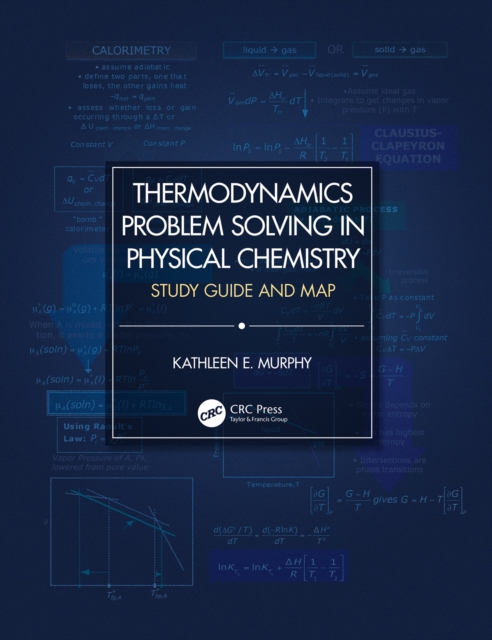
Thermodynamics Problem Solving in Physical Chemistry
Thermodynamics Problem-Solving in Physical Chemistry: Study Guide and Map is an innovative and unique workbook that guides physical chemistry students through the decision-making process to assess a problem situation, create appropriate solutions, and gain confidence through practice in solving physical chemistry problems.
The workbook includes six major sections with 20-30 solved problems in each section that span from easy, single-objective questions to difficult, multistep analysis problems. Each section of the workbook contains key points that highlight major features of the topic, to remind students of what they need to apply to solve problems in the topic area.
Key Features:
Includes a visual map that shows how all the \"equations\" used in thermodynamics are connected and how they are derived from the three major energy laws.
Acts as a guide in deriving the correct solution to a problem.
Illustrates the questions students should ask themselves about the critical features of the concepts to solve problems in physical chemistry
Can be used as a stand-alone product for review of thermodynamics questions for major tests.
eBook

Engineering dynamics : fundamentals and applications
\"This textbook is intended for the first course of engineering dynamics for undergraduate students. Engineering dynamics is a rigorous topic that typically involves the intensive use of vector mathematics and calculus. This book, however, uses plain language with less vector mathematics and calculus to introduce these topics of mathematics to students with a high school physics background. Numerous practical examples are provided with their step-by-step worked out solutions, as well as case studies to reflect the interests of new engineering and applied engineering students. The topics covered in the Fundamentals of Engineering (FE) examination are presented throughout the text. It also includes roadway dynamics to incorporate engineering dynamics and the transportation engineering for civil engineering. Features: Discusses theory using easy-to-understand language with less vector mathematics and calculus Includes practical case studies and numerous realistic step-by-step solved examples Includes exercise problems for students' practice Provides numerous sample examples related to the Fundamentals of Engineering (FE) exam Includes a solutions manual and PowerPoint slides for adopting instructors Engineering Dynamics: Fundamentals and Applications serves as a useful resource for students across several engineering degree programs, such as civil, mechanical, aerospace, automotive, chemical, and electrical engineering. It is also appropriate for engineering technology and applied science students as well\"-- Provided by publisher.
Book

Problems & Solutions to Mechanical Engineering
About the Book: The present book is mainly meant for the students of first year ? all branches of U.P. Technical University. This book is in the form of Questions and Answers. However, there is no need of any textbook from the concept point of view. This book gives you all the concepts step by step in the form of Theoretical Questions and then numericals based on theory. At the end of chapters, some tutorial sheets are given for practice. Lab manuals are also given at the end of book. Contents: Part A: Thermodynamics Part B: Engineering Mechanics Part C: Strength of Materials.
eBook

Worked Examples in Turbomachinery
Worked Examples in Turbomachinery (Fluid Mechanics and Thermodynamics) is a publication designed to supplement the materials in Fluid Mechanics, Thermodynamics of Turbomachinery, Second Edition.The title provides detailed solution for the unanswered problems from the main textbook.
eBook

An Introduction to Elementary Particle Phenomenology (Second Edition)
The book covers all aspects of laboratory elementary particle phenomenology, dealing with the two main interactions as described by the electroweak theory and quantum chromodynamics.It outlines the historical development of the theoretical framework, including the experimental motivations and discoveries of the last and present centuries.
eBook
An Introduction to Ocean Turbulence
This textbook provides an introduction to turbulent motion occurring naturally in the ocean on scales ranging from millimetres to hundreds of kilometres. It describes turbulence in the mixed boundary layers at the sea surface and seabed, turbulent motion in the density-stratified water between, and the energy sources that support and sustain ocean mixing. Little prior knowledge of physical oceanography is assumed. The text is supported by numerous figures, extensive further reading lists, and more than 50 exercises that are graded in difficulty. Detailed solutions to the exercises are available to instructors online at www.cambridge.org/9780521859486. This textbook is intended for undergraduate courses in physical oceanography, and all students interested in multidisciplinary aspects of how the ocean works, from the shoreline to the deep abyssal plains. It also forms a useful lead-in to the author's more advanced graduate textbook, The Turbulent Ocean (Cambridge University Press, 2005).
eBook
Integrated project management sourcebook : a technical guide to project scheduling, risk and control
This handbook is a unique,comprehensive resource for professional project managers and students inproject management courses that focuses on the integration between baselinescheduling, schedule risk analysis and project control, also known as DynamicScheduling or Integrated Project Management and Control. It contains a set ofmore than 70 articles. Each individual article focuses on one particular topic andfeatures links to other articles in this book, where appropriate. Almost allarticles are accompanied with a set of questions, the answers to which are providedat the end of the book.Thisbook is accompanied by and is based on the Project Management KnowledgeCenter (www.pmknowledgecenter.com), an online learning platform for IntegratedProject Management.
eBook