
Catalogue Search | MBRL


Are you sure you want to remove the book from the shelf?

{{itemTitle}}
67,847
result(s) for
"EDUCATION OPPORTUNITIES"
Sort by:
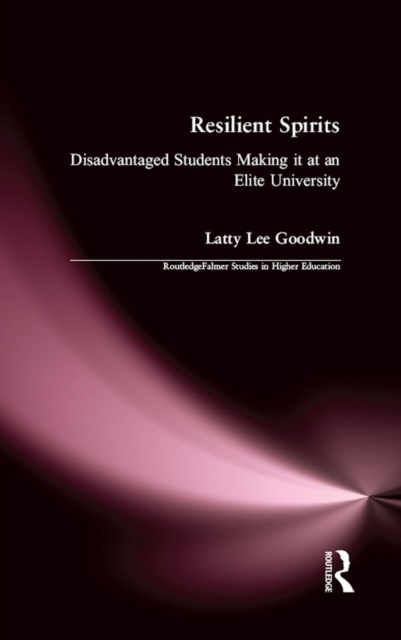
Resilient Spirits
This study explores the identity construction of socioeconomically and educationally disadvantaged students who enter an elite university. This critical ethnography gathered qualitative data about the twenty-three participants through non-participant observation, in-depth interviews, and focus groups. Faculty, staff, and administrators were also interviewed.
eBook

How does family background affect children’s educational achievement? Evidence from Contemporary China
Education is a lasting process. Academic performance in primary education plays a crucial role in obtaining further educational opportunities. Thus, it is necessary to examine how family background affects children’s academic achievement at an early stage. Through analysis of data from the Chinese Family Panel Study in 2010(CFPS2010), this paper proposes two pathways through which family influences children’s academic performance. Firstly, parents compete for high-quality educational opportunities for their children and better educational opportunities lead to better academic performance. Secondly, parenting behavior and educational support for their children could cultivate children’s learning habits and affect academic performance. We also find urban students’ academic performance are more heavily affected by their families’ socioeconomic status compared with rural students. These findings bear important implications for how to reduce the class difference in students’ academic performance and promote educational equity in contemporary China.
Journal Article

Developing a master of science in health research ethics program in Northern Nigeria: a needs assessment
Background
Nigeria is an emerging hub of biomedical research, requiring additional trained bioethicists for ethical oversight of research studies. There are currently two graduate-level health research ethics programs in Nigeria. However, both are in the southern part of the country and no such training programs exist in the north. Strengthening the health research ethics skills and knowledge of Nigerian researchers across the country is necessary given the growing genetics research infrastructure.
Methods
To inform the creation of a Master of Science in Health Research Ethics program in northern Nigeria, we conducted a needs assessment comprised of semi-structured interviews with nine Nigerian bioethics experts. We used the Interpretative Phenomenological Analysis (IPA) method to analyze interview transcriptions. Two authors independently read and coded each respondent’s transcript to identify emergent themes that represented each respondent’s answers. Within these overarching themes, the data points were grouped into subthemes.
Results
Four primary themes emerged with ten subthemes. Respondents believed that the program can fill a gap and strengthen capacity in health research ethics. They emphasized that the curriculum should be developed with an interdisciplinary lens and locally contextualized, and that students should be taught how to think critically through ethical scenarios. Respondents stressed that program leaders should recruit faculty and students locally who have the bandwidth to participate in the program. Finally, respondents noted the program should have university support to be sustainable.
Conclusion
Our findings will guide the creation of a master’s degree program that aims to build capacity in health research ethics in northern Nigeria and enhance the country’s growing prominence in global biomedical research. Through our needs assessment, we identified structural and content factors that can guide us in leveraging the strengths of the local institution and leaders in health research ethics while mitigating challenges in establishing this program.
Journal Article

Scale Evolution of Higher Vocational Education and Measurement of Education Opportunity Difference Based on the Expansion Effect
Scale expansion of higher vocational education requires scientific instructions, therefore figuring out the spatial and temporal evolution laws of higher education is a meaningful work for realizing the scale expansion of quality-oriented higher vocational education. However, existing studies have neither discussed the effect of such instructions on the rewards of higher vocational education, nor considered the comprehensive influence of the promotive and instructive effect of market-oriented and society-oriented employment of high vocational education on its heterogeneous rewards. To fill in these research blanks, this paper studied the evolution of the scale of higher vocational education and the difference in educational opportunities based on the expansion effect. At first, this paper constructed a scale expansion effect model of higher vocational education to explore the reward mechanism of scale expansion of higher vocational education in the labor market. Then, the paper distinguished the different levels of higher vocational education, and analyzed the evolution mechanism of the unfairness degree of students or workers acquiring different-level higher vocational education opportunities during the scale expansion process of higher vocational education. At last, the experimental results and analysis results were given.
Journal Article

The perceptions of South African dietetic and nutrition professionals on sponsorship and funding of scientific education opportunities by Big Food
Objective: To determine the perceptions of South African dietetic and nutrition professionals on sponsorship and funding of scientific education opportunities by Big Food.Setting: South Africa.Subjects and methods: Members of the Association for Dietetics in South Africa (ADSA), the Nutrition Society of South Africa (NSSA), and the Dietetics-Nutrition is a Profession (DIP) groups (excluding students) were invited to participate in an online survey using census and snowball sampling (n = 118). The survey used a Likert scale to record responses to experience and perception questions and included a brief demographic section. Additionally, dietetic/nutrition professionals were recruited for semi-structured interviews (n = 10) using purposive sampling. An interview guide with open-ended and probing questions, where necessary, was used.Results: Perceptions of dietetic and nutrition professionals regarding Big Food sponsorship of scientific education opportunities varied. The majority (88%; n = 104) felt collaboration should be encouraged, particularly to improve the nutritional content of unhealthy products. Others expressed hesitance and strong disagreement, citing real or perceived conflict of interest (COI) and concerns regarding the scientific credibility of research presented. There was consensus from 90% of participants (n = 106) on the need for clear guidelines defining acceptable sponsorship and funding, including transparency and disclosure. Upholding and adhering to professional ethical standards should also remain a priority for dietetic and nutrition professionals, as emphasised by participants during the semi-structured interviews.Conclusion: The research indicates diverse perceptions among South African dietetic and nutrition professionals on the sponsorship and funding of scientific education opportunities by Big Food, emphasising the complex nature of interactions with multinationals. The importance of establishing consensus guidelines on collaborations that adhere to professional ethical standards was underscored.
Journal Article

Higher Education Opportunities of Elite Family Students in Economic and Cultural Highlands of a Confucian Heritage Society
This study focuses on the (in)equality of higher education in mainland China by exploring whether students from elite families in culturally/educationally and economically more developed regions have significant advantages in accessing (elite) higher education institutions. It considers how regional features related to educational resources and the social class structure influence their (elite) higher education opportunities. It further discusses how an examination-based system in a Confucian heritage society limits the advantage of the elite class. Data analysis reveals that their advantages may be insignificant while the understanding of the (in)equality of higher education opportunities in China may need to be revised.
Journal Article

Concerns About Inequality in Health, Education and Income Jointly Predict Collective Actions
Introduction: Income inequality is often tolerated and justified, but when it brings about disparities in other domains of life (e.g., health or education), it may be seen with different eyes. In this research, we aimed to explore concerns regarding economic inequality in health, education, and income, and its relationship to supporting collective actions to reduce inequality. Method: We used survey data (N = 20,204, 18 countries) from the Latinobarometer 2020. We conducted descriptive analyses, latent class analyses, and analyses of multilevel linear regression to test our hypothesis. Results: We found that people were more concerned about health access and education opportunities than income inequality. We also identified two classes of people: one class concerned about education and health and the other unconcerned about inequality in any domain. In addition, results showed that all concerns and class membership predicted greater support of collective actions to reduce inequality. Conclusions: These preliminary findings suggest that concerns about education and health disparities may serve to increase awareness of overall inequality and mobilise the public.
Journal Article

Simulation Exercises in Police Education, Why and How? A Teacher's Perspective
Context: This study is about the teaching method of simulation exercises and is set in a police education context. Simulation exercises are a central part of Swedish police education, and therefore it is of interest to explore how they are used, and for what purpose, by investigating police teachers' perceptions of this teaching and learning method. Police teachers are police officers who work as teachers at a police education unit on contracts lasting a few years, but which can be extended, and they usually lack any formal pedagogical training. Approach: In this study, the exploration of the use of simulation exercises was conducted through an inductive approach which included semi-structured interviews with 12 police teachers. The analysis was carried out in several steps. To promote impartiality in the initial data analysis the researcher first stayed close to the data and connection with the findings of previous studies was only considered in the latter stages of this analytic process. Findings: The findings show that the police teachers perceive that the overall purpose of simulation exercises is for students to apply specific content taught in courses, both physical techniques and methods, and more theoretical knowledge, in the fluid context of scenarios relevant to police work. The results also show that the teachers are aware that the purpose of the exercises is stated in the planning documents, but because they inherit the designs from previous teachers, they may not be aware of the underlying details of it or what is to be achieved in the scenario. The findings also demonstrate that the teachers learn the craft of designing and performing simulation exercises and develop their roles as teachers through an informal workplace learning process that involves tacit knowledge developed through working together, and by talking to and observing each other. Conclusion: The paper contributes to the field of simulation exercises in vocational (higher) education in that the findings can provide educated arguments for the need for scholarly discussions on simulation exercises as a pedagogical tool that supports student learning, as well as arguments for why formal pedagogically-oriented continuing education on the design and implementation of simulation exercises where learning is in the foreground may be needed to support police teachers' professional development.
Journal Article

Sustaining educational and economic momentum in Africa
The conference brought together 44 African ministers of finance and of education from 28 African countries for a structured dialogue on sustaining Africa's economic and educational progress in the current context of a global economic slowdown. African countries have achieved laudable progress during the last decade towards the Education for All (EFA) goals for 2015 that were agreed in Dakar in 2000, particularly with regard to Universal Primary Education (UPE). This progress reflects the combined impact of several factors, notably courageous education reforms, substantially increased public financing of education made possible largely by sustained economic growth and increased political priority for education-and greater inflows of external aid for education. The momentum may be jeopardized, however, by the current worldwide economic downturn. Tightening domestic budgets and external aid could increase the difficulty of sustaining policy reform and strategic investments, thereby putting at risk the hard won gains of the last ten years. They could also undermine Africa's efforts to develop post basic education and training and delay achievement of key goals of the African Union's Second Decade for Education in Africa. The result would be to frustrate the aspirations of the increasing numbers of African youth who seek to go beyond primary education and to deny their prospective employers the skilled workforce that could help boost business competitiveness and economic growth. The emerging global economic circumstances provided a key rationale for the Conference. Its purpose was to stimulate dialogue among senior policy makers on policy options to achieve a mutually reinforcing relation between education and the economy.
eBook