
Catalogue Search | MBRL


Are you sure you want to remove the book from the shelf?

{{itemTitle}}
34,144
result(s) for
"EDUCATIONAL COSTS"
Sort by:

Productivity in Higher Education
\"This book provides a comprehensive treatment, with chapters that examine the returns to undergrad education, how costs differ by major, the productivity of for-profit schools, the productivity of various types of faculty, how online education has affected the market, and more. This work addresses the five challenges to assessing productivity in higher ed: multiple outcomes, the \"multi-product\" nature of institutions, selection, attribution, and the public nature of some benefits\"-- Provided by publisher.
Book
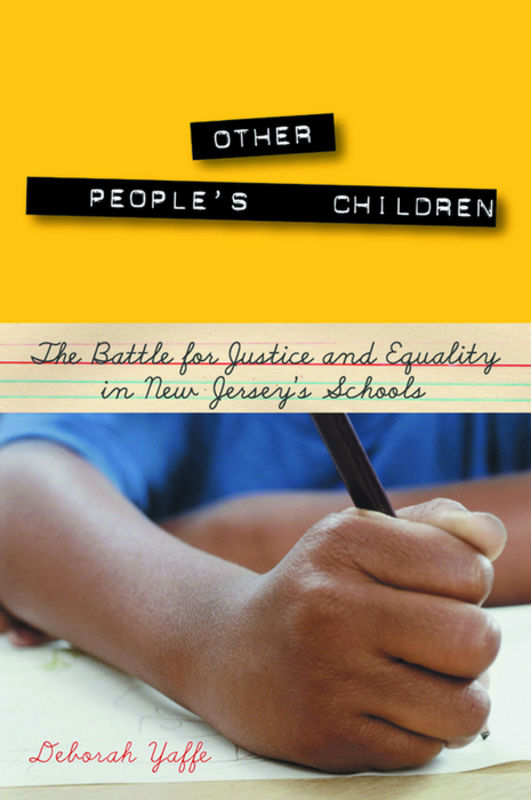
Other People's Children
Winner of the 2008 NJ Studies Academic Alliance author's award for an outstanding non-fiction work about New Jersey In 1981, when Raymond Abbott was a twelve-year-old sixth-grader in Camden, New Jersey, poor city school districts like his spent 25 percent less per student than the state’s wealthy suburbs did. That year, Abbott became the lead plaintiff in a landmark class-action lawsuit demanding that the state provide equal funding for rich and poor schools. Over the next twenty-five years, as the non-profit law firm representing the plaintiffs won ruling after ruling from the New Jersey Supreme Court, Abbott dropped out of school, fought a cocaine addiction, and spent time in prison before turning his life around. Raymond Abbott’s is just one of the many human stories that have too often been forgotten in the policy battles New Jersey has waged for two generations over equal funding for rich and poor schools. Other People’s Children, the first book to tell the story of this decades-long school funding battle, interweaves the public story—an account of legal and political wrangling over laws and money—with the private stories of the inner-city children who were named plaintiffs in the state’s two school funding lawsuits, Robinson v. Cahill and Abbott v. Burke. Although these cases have shaped New Jersey’s fiscal and political landscape since the 1970s, most recently in legislative arguments over tax reform, the debate has often been too abstract and technical for most citizens to understand. Written in an accessible style and based on dozens of interviews with lawyers, politicians, and the plaintiffs themselves, Other People’s Children crystallizes the arguments and clarifies the issues for general readers. Beyond its implications for New Jersey, this book is an important contribution to the conversations taking place in all states about the nation’s responsibility for its poor, and the role of public schools in providing equal opportunities and promising upward mobility for hard-working citizens, regardless of race or class.
eBook


The Future of Higher Education: Identifying Current Educational Problems and Proposed Solutions
It is widely acknowledged that higher education is failing to meet the needs of students and employers, while educational costs and student debt are rapidly increasing. Our aim was to address these issues in an innovative fashion through a structured review combined with recommendations for best practices. Specifically, we aimed to identify and systemize failings of higher ed based on current scholarship, propose solutions, and identify institutions of higher education (IHEs) that have begun to successfully put these solutions in practice. Based on our literature review, this is the first time such a study has been conducted. We performed a structured literature review and identified four key failings in higher education: quality, relevance, access, and cost. From the reviewed literature we extracted a rubric to identify and evaluate twelve IHEs that are effectively applying new and innovative models that address these four problems. We conclude by recommending best practices for the successful redesign of IHEs. The overarching problem we identified was lack of student preparedness to succeed in a highly complex, competitive, and increasingly global, digital world—curricula lack relevance. IHEs are failing to teach the skills and tools needed for sustained success in the workplace: critical and creative thinking, problem-solving, co-operation, tolerance, and collaboration (which incidentally align with the skills and tools needed for effective citizenship) and when they do, they are not using evidence-based pedagogical strategies drawn from research on the science of learning. Additionally, IHEs are failing to provide accessible, high-quality, affordable postsecondary education. Financial and geographic inaccessibility, opaque admissions processes, attrition, poor attention to student health and well-being, lack of Indigenous inclusion, weak utilization of technology, and outmoded teaching methods and content contribute to the barriers to student success. The twelve IHEs we identified are geographically, economically, and pedagogically diverse, each serving as a model for the future of higher education. The novel contributions offered here are (i) a systematic review of higher education’s failings as they impact students and employers, (ii) identification of specific programs and initiatives that can ameliorate these failings, and (iii) identification of IHEs that are engaging in best practices with respect to (i) and (ii).
Journal Article


Educational impact and cost efficiency of AI-enhanced videos in pediatric surgery training: a quasi-experimental study
Pediatric surgery training is challenged by declining clinical exposure and limited access to high-quality educational resources. Advances in generative artificial intelligence (AI) allow enhancement of educational videos without professional studio infrastructure, but evidence supporting their educational value remains limited. To evaluate the educational impact and cost efficiency of locally deployed AI-enhanced lecture videos compared with standard faculty-recorded videos in pediatric surgery training. A quasi-experimental, non-randomized, post-test-only study conducted at Al-Azhar University, Cairo, Egypt between December 2024 and September 2025. Medical students and pediatric surgery residents viewed standardized lecture videos on five core pediatric surgery topics. Identical scripts and narration were used in both groups; the intervention differed only by AI-based background enhancement using open-source, locally deployed tools. Primary outcomes were perceived educational clarity (five-point Likert scale) and knowledge acquisition assessed by a 40-item multiple-choice examination. Secondary outcomes included visual comfort, perceived professionalism, and willingness to recommend the format. Between-group comparisons and effect sizes were calculated. A cost analysis compared AI-enhanced production with traditional studio-based methods. A total of 240 participants were included (120 per group). AI-enhanced videos were associated with higher educational clarity scores (mean 4.52 vs. 3.88; p < 0.001) and higher knowledge scores (76.8% vs. 69.5%; p < 0.001). Secondary outcomes consistently favored AI-enhanced videos, including visual comfort and perceived professionalism. Locally deployed AI production reduced per-video costs by 72–94% compared with traditional studio production. Locally deployed AI-enhanced videos improved short-term educational outcomes and substantially reduced production costs while preserving presenter authenticity. This approach represents a practical, scalable strategy for enhancing pediatric surgery education, particularly in resource-limited settings. Further studies are needed to assess long-term retention and clinical impact.
Journal Article

Making college work : pathways to success b eyond high school
\"Practical solutions for improving higher education opportunities for disadvantaged students Too many disadvantaged college students in America do not complete their coursework or receive any college credential, while others earn degrees or certificates with little labor market value. Large numbers of these students also struggle to pay for college, and some incur debts that they have difficulty repaying. The authors provide a new review of the causes of these problems and offer promising policy solutions. The circumstances affecting disadvantaged students stem both from issues on the individual side, such as weak academic preparation and financial pressures, and from institutional failures. Low-income students disproportionately attend schools that are underfunded and have weak performance incentives, contributing to unsatisfactory outcomes for many students. Some solutions, including better financial aid or academic supports, target individual students. Other solutions, such as stronger linkages between coursework and the labor market and more structured paths through the curriculum, are aimed at institutional reforms. All students, and particularly those from disadvantaged backgrounds, also need better and varied pathways both to college and directly to the job market, beginning in high school. We can improve college outcomes, but must also acknowledge that we must make hard choices and face difficult tradeoffs in the process. While no single policy is guaranteed to greatly improve college and career outcomes, implementing a number of evidence-based policies and programs together has the potential to improve these outcomes substantially\"-- Provided by publisher.
Book
Cost Analysis in Online Teaching Using an Activity Map
Virtual education has been associated, on some occasions, with economic models of scale that strengthen the mercantilist vision of teaching, thereby raising questions on the quality of the service. Some studies on educational costs associated with this modality simplify the analysis based on individual elements, such as the production of courses or the technological infrastructure, offering an incomplete and biased perspective. This study proposes to carry out a complete analysis of the costs of a virtual university using an Activity-Based Costing (ABC) model to determine the percentage of the budget consumed by each of the activities involved in the training process. The results show the significant influence that instructional design and teaching activities have on virtual modalities (62.5% of the set of activities), thus highlighting the importance of human resources in maintaining educational modalities mediated by technology. Understanding the importance of human capital and its contribution to offering a quality and innovative educational service is fundamental to consolidate a model that can improve access to education for populations with major difficulties.
Journal Article

The role of poverty measurements in achieving educational equity through school finance reform
In this paper, we estimate a series of stochastic frontier cost functions for elementary schools, using a short panel of Texas data that allows us to account for student characteristics, input prices, environmental factors and student outcomes. Texas currently uses information about the share of students participating into the Free and Reduced Price Lunch (FRL) program to determine compensatory funding to provide to schools. The FRL measure has been criticized as a relatively poor measure of need. We consider a new, recently developed, measure of poverty, the Spatially Interpolated Demographic and Economic (SIDE) measure, as a possible complement or alternative to the FRL measure. SIDE uses the income of the neighborhood in which the school resides as the basis to assess need and poverty. We find that using both poverty metrics highlights the additional costs associated with serving high poverty populations in high poverty locations, i.e., neighborhood locations matter.
Journal Article

The Effect of Children’s Innovative Education Courses Based on Fractional Differential Equations
Fractional differential equations are one of the important contents of advanced mathematics courses. The article uses fractional differential equations to describe the effects of children’s innovative education courses. Through the qualitative analysis of the basic model, several conditions to ensure the effect of children’s innovative education courses are obtained. At the same time, combined with practical experience, the teaching curriculum case design analyzes the specific application of the fractional differential equation in the effect of children’s innovative education curriculum. Research has found that the fractional differential equation algorithm improves the efficiency of innovation.
Journal Article