
Catalogue Search | MBRL


Are you sure you want to remove the book from the shelf?

{{itemTitle}}
4,837,790
result(s) for
"ENVIRONMENTAL"
Sort by:

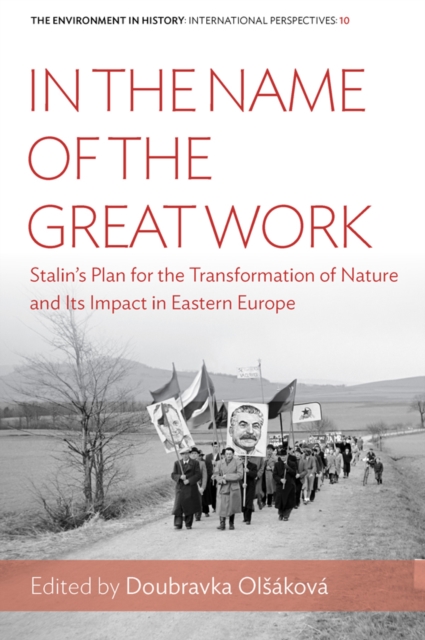
In the name of the great work
Beginning in 1948, the Soviet Union launched a series of wildly ambitious projects to implement Joseph Stalin's vision of a total \"transformation of nature.\" Intended to increase agricultural yields dramatically, this utopian impulse quickly spread to the newly communist states of Eastern Europe, captivating political elites and war-fatigued publics alike. By the time of Stalin's death, however, these attempts at \"transformation\"-which relied upon ideologically corrupted and pseudoscientific theories-had proven a spectacular failure. This richly detailed volume follows the history of such projects in three communist states-Poland, Hungary, and Czechoslovakia-and explores their varied, but largely disastrous, consequences.
eBook

Green intelligence : creating environments that protect human health
John Wargo explains how society suffers from a profound misunderstanding of everyday chemical hazards & proposes practical steps towards the development of a 'green intelligence'.
Book

Public participation in environmental assessment and decision making
Federal agencies have taken steps to include the public in a wide range of environmental decisions. Although some form of public participation is often required by law, agencies usually have broad discretion about the extent of that involvement. Approaches vary widely, from holding public information-gathering meetings to forming advisory groups to actively including citizens in making and implementing decisions.
Proponents of public participation argue that those who must live with the outcome of an environmental decision should have some influence on it. Critics maintain that public participation slows decision making and can lower its quality by including people unfamiliar with the science involved.
This book concludes that, when done correctly, public participation improves the quality of federal agencies' decisions about the environment. Well-managed public involvement also increases the legitimacy of decisions in the eyes of those affected by them, which makes it more likely that the decisions will be implemented effectively. This book recommends that agencies recognize public participation as valuable to their objectives, not just as a formality required by the law. It details principles and approaches agencies can use to successfully involve the public.
eBook


Rethinking Private Authority
Rethinking Private Authorityexamines the role of non-state actors in global environmental politics, arguing that a fuller understanding of their role requires a new way of conceptualizing private authority. Jessica Green identifies two distinct forms of private authority--one in which states delegate authority to private actors, and another in which entrepreneurial actors generate their own rules, persuading others to adopt them.
Drawing on a wealth of empirical evidence spanning a century of environmental rule making, Green shows how the delegation of authority to private actors has played a small but consistent role in multilateral environmental agreements over the past fifty years, largely in the area of treaty implementation. This contrasts with entrepreneurial authority, where most private environmental rules have been created in the past two decades. Green traces how this dynamic and fast-growing form of private authority is becoming increasingly common in areas ranging from organic food to green building practices to sustainable tourism. She persuasively argues that the configuration of state preferences and the existing institutional landscape are paramount to explaining why private authority emerges and assumes the form that it does. In-depth cases on climate change provide evidence for her arguments.
Groundbreaking in scope,Rethinking Private Authoritydemonstrates that authority in world politics is diffused across multiple levels and diverse actors, and it offers a more complete picture of how private actors are helping to shape our response to today's most pressing environmental problems
eBook


Tainted Earth
Smelting is an industrial process involving the extraction of metal from ore. During this process, impurities in ore-including arsenic, lead, and cadmium-may be released from smoke stacks, contaminating air, water, and soil with toxic-heavy metals.
The problem of public health harm from smelter emissions received little official attention for much for the twentieth century. Though people living near smelters periodically complained that their health was impaired by both sulfur dioxide and heavy metals, for much of the century there was strong deference to industry claims that smelter operations were a nuisance and not a serious threat to health. It was only when the majority of children living near the El Paso, Texas, smelter were discovered to be lead-exposed in the early 1970s that systematic, independent investigation of exposure to heavy metals in smelting communities began. Following El Paso, an even more serious led poisoning epidemic was discovered around the Bunker Hill smelter in northern Idaho. In Tacoma, Washington, a copper smelter exposed children to arsenic-a carcinogenic threat.
Thoroughly grounded in extensive archival research,Tainted Earthtraces the rise of public health concerns about nonferrous smelting in the western United States, focusing on three major facilities: Tacoma, Washington; El Paso, Texas; and Bunker Hill, Idaho. Marianne Sullivan documents the response from community residents, public health scientists, the industry, and the government to pollution from smelters as well as the long road to protecting public health and the environment. Placing the environmental and public health aspects of smelting in historical context, the book connects local incidents to national stories on the regulation of airborne toxic metals.
The nonferrous smelting industry has left a toxic legacy in the United States and around the world. Unless these toxic metals are cleaned up, they will persist in the environment and may sicken people-children in particular-for generations to come. The twentieth-century struggle to control smelter pollution shares many similarities with public health battles with such industries as tobacco and asbestos where industry supported science created doubt about harm, and reluctant government regulators did not take decisive action to protect the public's health.
eBook


Mercury, Mining, and Empire
On the basis of an examination of the colonial mercury and
silver production processes and related labor systems, Mercury,
Mining, and Empire explores the effects of mercury pollution in
colonial Huancavelica, Peru, and Potosí, in present-day Bolivia.
The book presents a multifaceted and interwoven tale of what
colonial exploitation of indigenous peoples and resources left in
its wake. It is a socio-ecological history that explores the toxic
interrelationships between mercury and silver production, urban
environments, and the people who lived and worked in them. Nicholas
A. Robins tells the story of how native peoples in the region were
conscripted into the noxious ranks of foot soldiers of
proto-globalism, and how their fate, and that of their communities,
was-and still is-chained to it.
eBook