
Catalogue Search | MBRL


Are you sure you want to remove the book from the shelf?

{{itemTitle}}
39
result(s) for
"ENVIRONMENTALSCIENCEnetBASE"
Sort by:
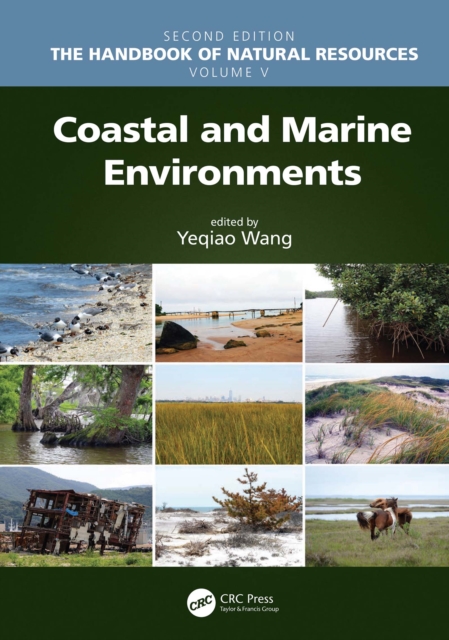
Coastal and Marine Environments
Authored by world-class scientists and scholars, the Handbook of Natural Resources, Second Edition, is an excellent reference for understanding the consequences of changing natural resources to the degradation of ecological integrity and the sustainability of life. Based on the content of the bestselling and CHOICE-awarded Encyclopedia of Natural Resources, this new edition demonstrates the major challenges that the society is facing for the sustainability of all well-being on Planet Earth. The experience, evidence, methods, and models used in studying natural resources are presented in six stand-alone volumes, arranged along the main systems: land, water, and air. It reviews state-of-the-art knowledge, highlights advances made in different areas, and provides guidance for the appropriate use of remote sensing and geospatial data with field-based measurements in the study of natural resources on a global scale.
Volume 5, Coastal and Marine Environments, discusses marine and coastal ecosystems, their biodiversity, conservation, and integrated marine management plans. It provides fundamental information on coastal and estuarine systems and includes discussions on coastal erosion and shoreline change, natural disasters, evaporation and energy balance, fisheries and marine resource management, and more. New in this edition are discussions on sea level rise, renewable energy, coral reef restoration, fishery resource economics, and costal remote sensing. This volume demonstrates the key processes, methods, and models used through many case studies from around the world.
Written in an easy-to-reference manner, the Handbook of Natural Resources, Second Edition, as individual volumes or as a complete set, is an essential reading for anyone looking for a deeper understanding of the science and management of natural resources. Public and private libraries, educational and research institutions, scientists, scholars, and resource managers will benefit enormously from this set. Individual volumes and chapters can also be used in a wide variety of both graduate and undergraduate courses in environmental science and natural science courses at different levels and disciplines, such as biology, geography, earth system science, and ecology, etc.
eBook

Traditional Mexican Agriculture
This long-needed book highlights how traditional Mexican agriculture has changed according to environmental, climatic, geographical, social, and cultural conditions. Grounded in archaeological-historical data from interrelated research of various scientific disciplines, the book also draws on studies made by anthropologists of varied small-scale agricultural groups.
Traditional Mexican Agriculture is the result of a holistic study of Mexican agriculture. It offers the reader a perspective of traditional agriculture in Mexico from social, cultural, and ecological anthropology, ethnology, regional and environmental history, and agroecology to help obtain sustainable agroecology where human societies obtain better ways of life and a healthy and nutritious food system. The book further aims to recover ideas, management, and components of local knowledge of small-scale farmers.
Pitched at university students and academics, as well as researchers and developers of agricultural matters, this book will be ideal reading at agrarian universities and related institutions. It provides a basis for future studies in sustainable agricultural systems in this region.
eBook
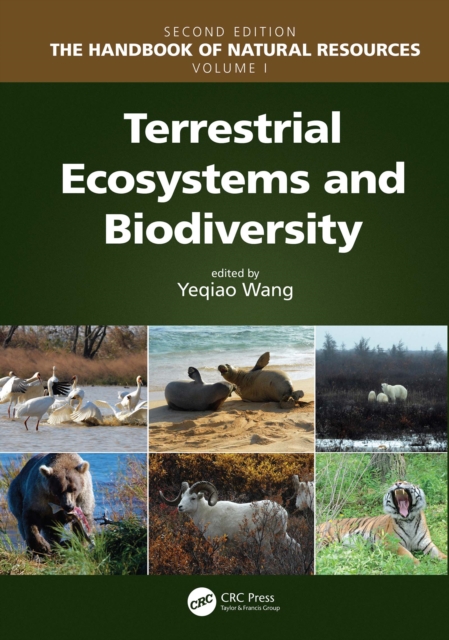
Terrestrial Ecosystems and Biodiversity
Authored by world-class scientists and scholars, the Handbook of Natural Resources, Second Edition, is an excellent reference for understanding the consequences of changing natural resources to the degradation of ecological integrity and the sustainability of life. Based on the content of the bestselling and CHOICE-awarded Encyclopedia of Natural Resources, this new edition demonstrates the major challenges that the society is facing for the sustainability of all well-being on the planet Earth. The experience, evidence, methods, and models used in studying natural resources are presented in six stand-alone volumes, arranged along the main systems of land, water, and air. It reviews state-of-the-art knowledge, highlights advances made in different areas, and provides guidance for the appropriate use of remote sensing and geospatial data with field-based measurements in the study of natural resources.
Volume 1, Terrestrial Ecosystems and Biodiversity, provides fundamental information on terrestrial ecosystems, approaches to monitoring, and impacts of climate change on natural vegetation and forests. New to this edition are discussions on biodiversity conservation, gross and net primary production, soil microbiology, land surface phenology, and decision support systems. This volume demonstrates the key processes, methods, and models used through many case studies from around the world.
Written in an easy-to-reference manner, the Handbook of Natural Resources, Second Edition, as individual volumes or as a complete set, is an essential reading for anyone looking for a deeper understanding of the science and management of natural resources. Public and private libraries, educational and research institutions, scientists, scholars, and resource managers will benefit enormously from this set. Individual volumes and chapters can also be used in a wide variety of both graduate and undergraduate courses in environmental science and natural science at different levels and disciplines, such as biology, geography, earth system science, and ecology.
eBook

Practical Handbook of Marine Science
The CRC Marine Science Series is dedicated to providing state-of-the-art coverage of important topics in marine biology, marine chemistry, marine geology, and physical oceanography. The series includes volumes that focus on the synthesis of recent advances in marine science.
eBook

Unmanned Aerial Remote Sensing
Unmanned Aircraft Systems (UASs) are a rapidly evolving technology with an expanding array of diverse applications. In response to the continuing evolution of this technology, this book discusses unmanned aerial vehicles (UAVs) and similar systems, platforms, and sensors, as well as exploring some of their environmental applications. It explains how they can be used for mapping, monitoring, and modelling a wide variety of different environmental aspects and, at the same time, addresses some of the current constraints placed on realising the potential use of the technology such as flight duration and distance, safety, and the invasion of privacy.
Features:
Provides necessary theoretical foundations for pertinent subject matter areas
Introduces the role and value of UAVs for geographical data acquisition and the ways to acquire and process the data
Provides a synthesis of ongoing research and a focus on the use of technology for small-scale image and spatial data acquisition in an environmental context
Written by experts of the technology who bring together UAS tools and resources for environmental specialists.
Unmanned Aerial Remote Sensing: UAS for Environmental Applications is an excellent resource for any practitioner utilising remote sensing and other geospatial technologies for environmental applications, such as conservation, research, and planning. Students and academics in information science, environment and natural resources, geosciences, and geography will likewise find this comprehensive book a useful and informative resource.
eBook

Fresh Water and Watersheds
Authored by world-class scientists and scholars, the
Handbook of Natural Resources, Second Edition
, is an excellent reference for understanding the consequences of changing natural resources to the degradation of ecological integrity and the sustainability of life. Based on the content of the bestselling and CHOICE awarded Encyclopedia of Natural Resources, this new edition demonstrates the major challenges that the society is facing for the sustainability of all well-being on Planet Earth. The experience, evidence, methods, and models used in studying natural resources are presented in six stand-alone volumes, arranged along the main systems: land, water, and air. It reviews state-of-the-art knowledge, highlights advances made in different areas, and provides guidance for the appropriate use of remote sensing data in the study of natural resources on a global scale.
Volume 4, Fresh Water and Watersheds, covers fresh water and watersheds, their health and conservation, protection, and management. Organized for ease of reference, it provides fundamental information on groundwater storage, water quality, supply and balance, and water resource vulnerability. New in this edition are discussions on water footprint assessment, water surface dynamics, and water management on a global scale. Understanding the conditions of watersheds is crucial for restoring areas with degraded water quality as well as protecting healthy waters from emerging problems. This volume demonstrates the key processes, methods, and models used through several practical case studies from around the world.
Written in an easy-to-reference manner, the Handbook of Natural Resources, Second Edition, as individual volumes or as a complete set, is essential for anyone looking for a deeper understanding of the science and management of natural resources. Public and private libraries, educational and research institutions, scientists, scholars, and resource managers will benefit enormously from this set. Individual volumes and chapters can also be used in a wide variety of both graduate and undergraduate courses in environmental science and natural science courses at different levels and disciplines, such as biology, geography, earth system science, ecology, etc.
eBook

Modern Fisheries Engineering
Modern Fisheries Engineering: Realizing a Healthy and Sustainable Marine Ecosystem is a compendium of the latest and most cutting-edge information on the diversity of technical aspects associated with Fisheries Engineering. Expanding on presentations given at the International Conference on Fisheries Engineering (ICFE) held in Nagasaki in 2019, it aims to encourage and inspire future generations of young researchers in the field. Topics include artificial reefs, ocean ranching, fishing gear developments, modern monitoring technologies, and other subjects related to the latest practices for conducting efficient, sustainable fishing.
This volume brings together world authorities to address a critically important topic, with a fresh and modern approach that includes the latest development in environmental and fisheries science.
eBook
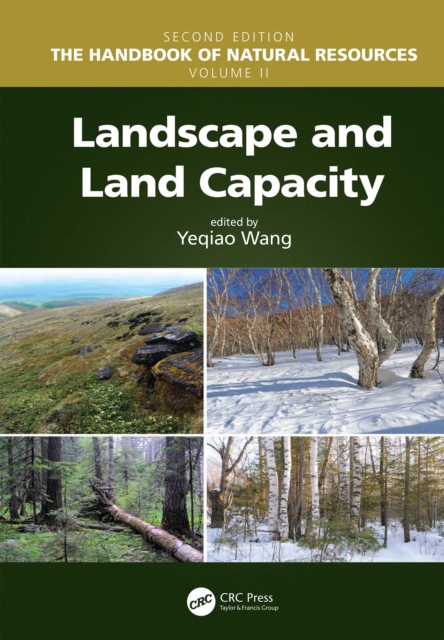
Landscape and Land Capacity
Authored by world-class scientists and scholars, the
Handbook of Natural Resources, Second Edition
, is an excellent reference for understanding the consequences of changing natural resources to the degradation of ecological integrity and the sustainability of life. Based on the content of the bestselling and CHOICE awarded Encyclopedia of Natural Resources, this new edition demonstrates the major challenges that the society is facing for the sustainability of all well-being on Planet Earth. The experience, evidence, methods, and models used in studying natural resources are presented in six stand-alone volumes, arranged along the main systems: land, water, and air. It reviews state-of-the-art knowledge, highlights advances made in different areas, and provides guidance for the appropriate use of remote sensing data in the study of natural resources on a global scale.
Volume 2, Landscape and Land Capacity, covers soils and landscape issues, their diversity and importance, and how soils are related to the landscapes in which they form. It includes discussions on land conservation, land-use and land-cover changes, urban environments, and unravels the complex bond between humans and soils. New in this edition are discussions on habitat conservation and planning, landscape epidemiology and vector-borne disease, and landscape patterns and changes. This volume demonstrates the key processes, methods, and models used through several practical case studies from around the world.
Written in an easy-to-reference manner, the Handbook of Natural Resources, Second Edition, as individual volumes or as a complete set, is essential for anyone looking for a deeper understanding of the science and management of natural resources. Public and private libraries, educational and research institutions, scientists, scholars, and resource managers will benefit enormously from this set. Individual volumes and chapters can also be used in a wide variety of both graduate and undergraduate courses in environmental science and natural science courses at different levels and disciplines, such as biology, geography, earth system science, ecology, etc.
eBook
Biometry for Forestry and Environmental Data
Biometry for Forestry and Environmental Data with Examples in R
focuses on statistical methods that are widely applicable in forestry and environmental sciences, but it also includes material that is of wider interest.
Features:
Describes the theory and applications of selected statistical methods and illustrates their use and basic concepts through examples with forestry and environmental data in R.
Rigorous but easily accessible presentation of the linear, nonlinear, generalized linear and multivariate models, and their mixed-effects counterparts. Chapters on tree size, tree taper, measurement errors, and forest experiments are also included.
Necessary statistical theory about random variables, estimation and prediction is included. The wide applicability of the linear prediction theory is emphasized.
The hands-on examples with implementations using R make it easier for non-statisticians to understand the concepts and apply the methods with their own data. Lot of additional material is available at www.biombook.org.
The book is aimed at students and researchers in forestry and environmental studies, but it will also be of interest to statisticians and researchers in other fields as well.
eBook
International Environmental Risk Management
Based on the first edition with extensive analysis of practical applications of environmental risk management and compliance management systems, this second edition of International Environmental Risk Management reflects updates made in the understanding and application of risk management best practices and makes available a frame of reference and systematic approach to environmental and social governance (ESG). It provides a pathway for readers to implement environmental management strategies that can be integrated with core operations and other risk management efforts, including supporting sustainability and corporate social responsibility initiatives associated with climate change, the circular economy or supply chain conditions, as well as enterprise risk management; anti-bribery, and other compliance management systems. This book provides in-depth discussions of ways to use global environmental management standards.
New features in this edition:
Combines EMS standards with discussion of specific principles, other authors’ research, and guidelines on management practices.
Provides guidelines on how to prepare for, anticipate, and resolve environmental issues.
Includes easily understandable information for all readers and is not simply aimed toward individuals who are knowledgeable about this topic.
Provides in-depth discussions on using global environmental management standards to manage risk and promote resilience, as well as legal strategies and voluntary initiatives that companies can utilize to minimize risk.
Accounts for the substantive revisions in ISO 14001:2015.
As a growing and rapidly changing field, it is necessary to address new issues, guidelines, and regulations to assist businesses, academia, students, consultants, lawyers, and environmental managers with a pragmatic resolution to environmental risk management issues. This second edition gives a broad and detailed analysis of the changes made to international standards and practices and serves as an excellent guide to managing environmental risk.
eBook