
Catalogue Search | MBRL


Are you sure you want to remove the book from the shelf?

{{itemTitle}}
17,968
result(s) for
"EPICS"
Sort by:

The War Trumpet
The epic poems written during the rise of Portugal and Spain on the global stage often dealt with topics quite unimaginable to the likes of Virgil or Homer. These poems reveal the astounding opportunities for upward social mobility and self-promotion afforded by broader access to print and the vast amount of knowledge and material wealth accrued through maritime exploration. Iberian poets of the period were quite cognizant of their ventures into uncharted territory, and that awareness informed their literary journeys.
The War Trumpet features nine substantial essays that expand our understanding of Iberian Renaissance epic poetry by posing questions seldom raised in relation to poems such as La Araucana , Os Lusíadas , Carlo famoso , El Bernardo , Arauco Domado, Espejo de paciencia , and Felicissima Victoria , among others. Particularly compelling are questions concerned with early modern understandings of the natural world, the practice of poetic imitation, the discipline of cartography, or the reception of Petrarchism in the newly established viceroyalties of the New World. Fostering a greater appreciation of the intersection between poetry, war, and exploration, The War Trumpet sheds light on the transformative changes that took place during the period of Iberian expansion.
eBook
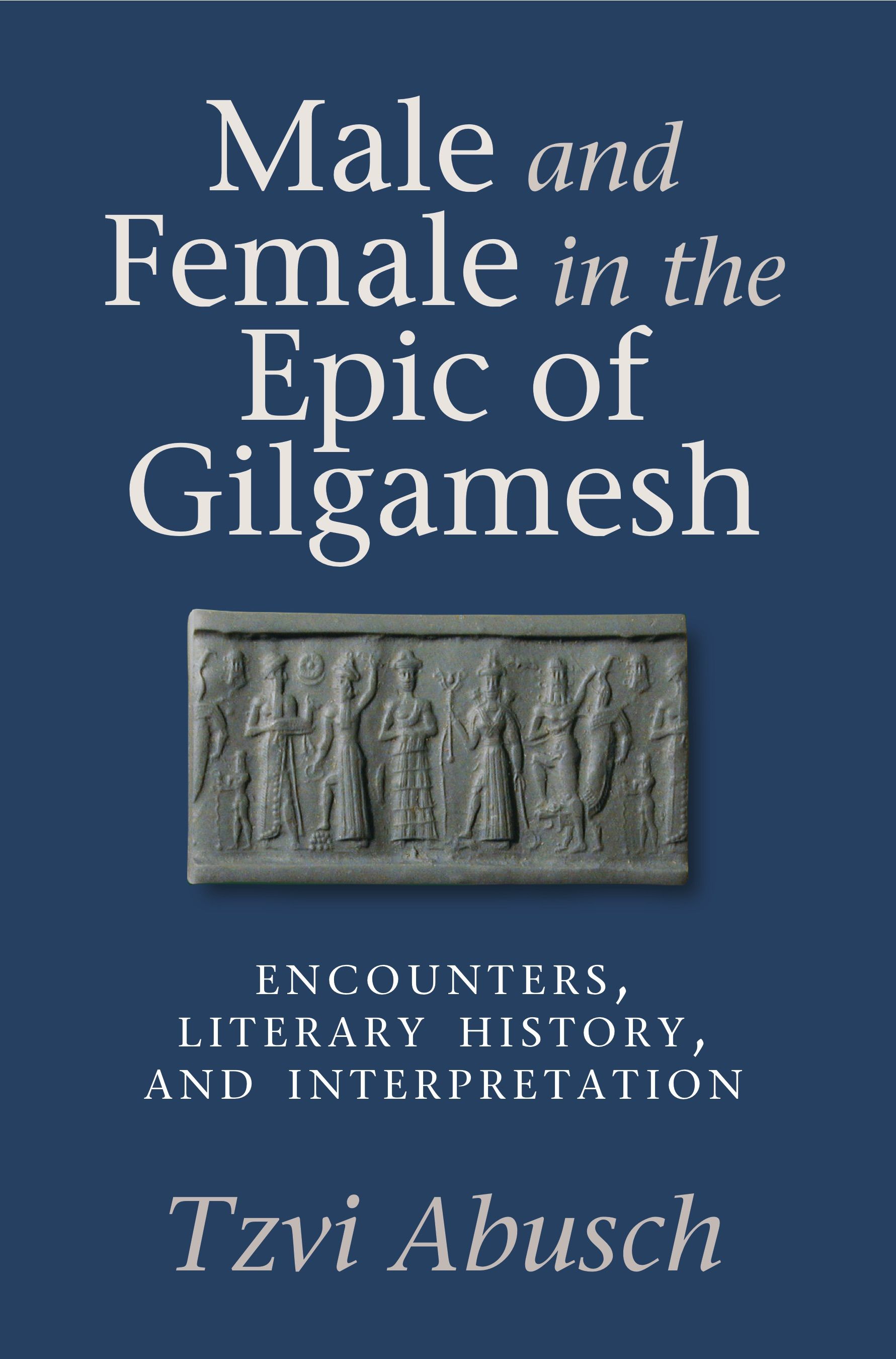
Male and female in the epic of Gilgamesh : encounters, literary history, and interpretation
The deeds and struggles of Gilgamesh, legendary king of the city-state Uruk in the land of Sumer, have fascinated readers for millennia. They are preserved primarily in the Epic of Gilgamesh, one of the most well-known pieces of Mesopotamian literature. Studying the text draws us into an orbit that is engaging and thrilling, for it is a work of fantasy and legend that addresses some of the very existential issues with which contemporary readers still grapple. We experience the excitement of trying to penetrate the mind-set of another civilization, an ancient one—in this instance, a civilization that ultimately gave rise to our own. The studies gathered here all demonstrate Tzvi Abusch's approach to ancient literature: to make use of the tools of literary, structural, and critical analysis in service of exploring the personal and psychological dimensions of the narration. The author focuses especially on the encounters between males and females in the story. The essays are not only instructive for understanding the Epic of Gilgamesh, they also serve as exemplary studies of ancient literature with a view to investigating streams of commonality between ancient times and ours
eBook

The Song of BEOWULF
An epic poem is a performance. The telling of Beowulf carries something of the days of its pre-literary composition, as it evolved as something memorised, half spoken and half sung, over many generations. The single manuscript we have, from about 1000 AD, is the end result of a great chain of poetic adaptation. Of all new versions Seamus Heaneys (1999) has made the most striking impact, in part for his willingness to experiment, to be a new scop or oral poet, to depart at times from the exact text and join the tradition when there was no such thing. The licence such an approach adopts can make for a riveting poem in itself, a work of wonder. But there is a different route to the flame of the original. J.D. Winters rendering of the Beowulf song accepts the text as historical fact, and by a gradual revelation of its deeper music, discovers an illumination from within. The voice is less his and more nearly of the time and world of the poem itself. But this is without recourse to an archaic register. It is the modern language and yet not the modern man speaking. The phrases of the text, like phrases of music with their crescendos and diminuendos, steadily and unhurriedly move towards the culmination of a powerfully fulfilling symphony. It is the expression of a simpler time than ours, and perhaps a more plain-speaking one. Yet its art was at least as sophisticated as the modern worlds. The clarity and concentration of meaning in the brilliantly alliterated half-lines can never be properly reconstructed. But a suggestion of that force and beauty, together with an underlying sense of the inexorable, may always be rediscovered. In the knock and flow of the lines, too, one can sense the poetry of a sea-faring nation. The nation is not England or Sweden or Denmark. It is an intermingled part of Northern Europe using the West Saxon dialect of the language in England to convey a mix of Scandinavian history and Teutonic legend. In this evocative transcreation the reader may come, no doubt as did the early listeners, to a simple truth behind the medley of international borders: the inevitable journey of the universal human.
eBook
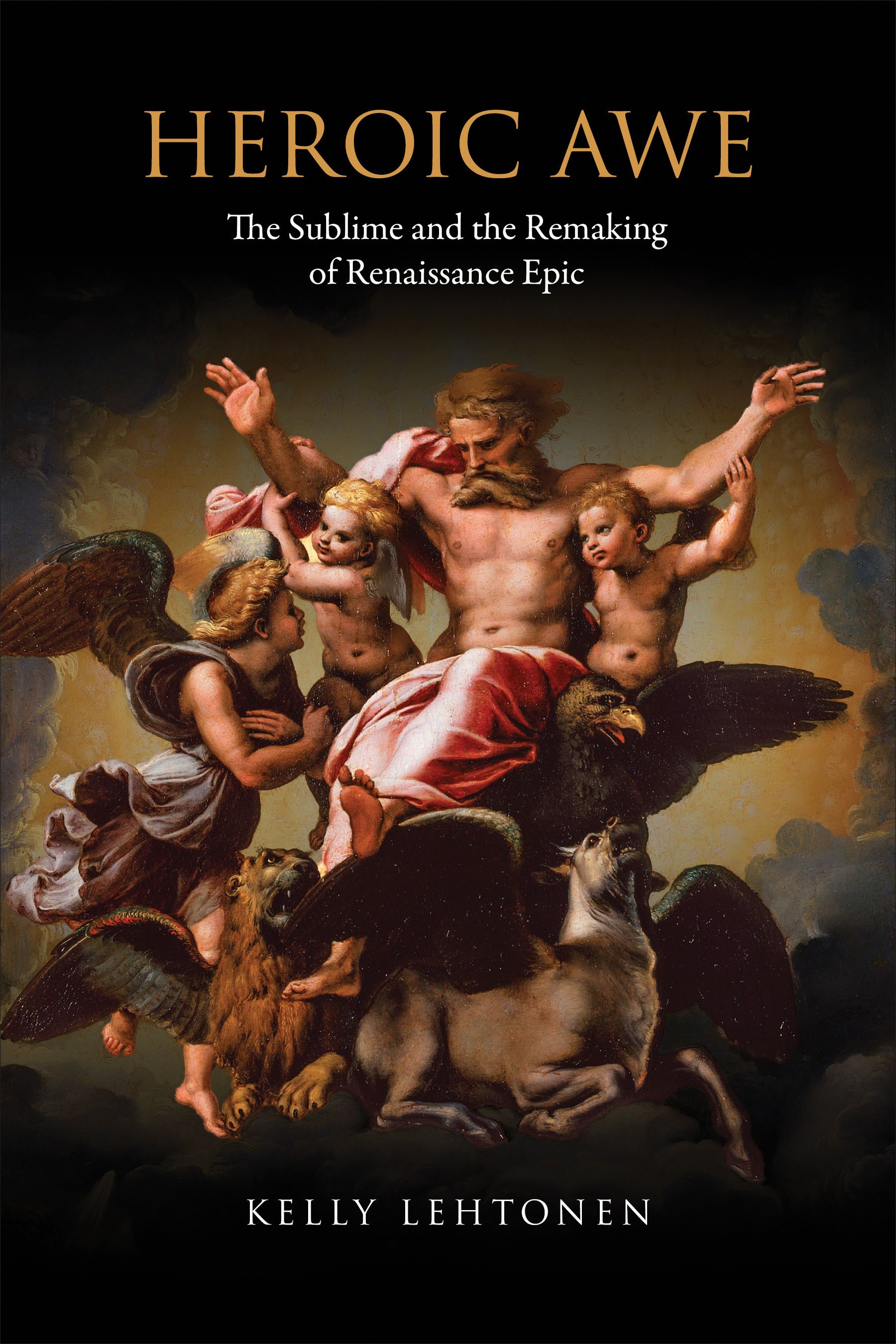
Heroic Awe
During the Renaissance, the most renowned model of epic poetry was Virgil's Aeneid, a poem promoting an influential concept of heroism based on the commitment to one's nation and gods. However, Longinus' theory of the sublime - newly recovered during the Renaissance - contradicted this absolute devotion to nation as a marker of religious piety. Heroic Awe explores how Renaissance epic poetry used the sublime to challenge the assumption that epic heroism was primarily about civic duty and glorification of state.The book demonstrates how the significant investment of Renaissance epic poetry in Longinus' theory of the sublime reshaped the genre of epic. To do so, Kelly Lehtonen examines the intersection between the Longinian sublime and early modern Protestant and Catholic discourses in Renaissance poems such as the Gerusalemme Liberata, Les Semaines, The Faerie Queene, and Paradise Lost. In illuminating the role of Longinus along with that of religious discourses, Heroic Awe offers a new perspective on epic heroism in Renaissance epic poetry, redefining heroism as the capacity to be overwhelmed emotionally, psychologically, and spiritually by encounters with divine glory. In considering the links between religion, the sublime, and epic, the book aims to shed new light on several core topics in early modern studies, including epic heroism, Renaissance philosophy, theories of emotion, and the psychology of religion.
eBook

The Transmission of \Beowulf\
The Transmission of \"Beowulf\"
like
The Iliad
and
The Odyssey
, is a foundational work of Western literature that
originated in mysterious circumstances. In
The Transmission of Beowulf , Leonard Neidorf addresses
philological questions that are fundamental to the study of the
poem. Is
Beowulf the product of unitary or composite
authorship? How substantially did scribes alter the text during
its transmission, and how much time elapsed between composition
and preservation?
Neidorf answers these questions by distinguishing linguistic
and metrical regularities, which originate with the
Beowulf poet, from patterns of textual corruption,
which descend from copyists involved in the poem's
transmission. He argues, on the basis of archaic features that
pervade
Beowulf and set it apart from other Old English poems,
that the text preserved in the sole extant manuscript (ca.
1000) is essentially the work of one poet who composed it circa
700. Of course, during the poem's written transmission, several
hundred scribal errors crept into its text. These errors are
interpreted in the central chapters of the book as valuable
evidence for language history, cultural change, and scribal
practice. Neidorf's analysis reveals that the scribes earnestly
attempted to standardize and modernize the text's orthography,
but their unfamiliarity with obsolete words and ancient heroes
resulted in frequent errors. The
Beowulf manuscript thus emerges from his study as an
indispensible witness to processes of linguistic and cultural
change that took place in England between the eighth and
eleventh centuries. An appendix addresses
J. R. R. Tolkien's Beowulf: A Translation and
Commentary , which was published in 2014. Neidorf assesses
Tolkien's general views on the transmission of Beowulf and
evaluates his position on various textual issues.
eBook

The Cult Towards Courage in Oral Epic and Chivalri Literature
The cult of bravery and deeds, of the horse, of weapons, and of the beautiful woman is old. It can be said with certainty that it has been present in epic oral poetry since the beginning of its existence. Ancient epics such as \"Iliad\" and \"Odyssey\" etc. convince us of this.In literary works, which dealt with such aspects of human action, the cult of bravery and deeds took on a marked dimension. These works had a great influence not only on the development of epic genres, but also on other literary genres of different periods. Works of this character were called chivalric literature and had a wide spread.This literature was characterized by the symbiosis of the creator, poet or singer, with the public; in it the miracles of the actions of the knights, the various descriptions of heroic acts, of the actions to kidnap (rob) beautiful girls, to gain fame, and to preserve personal and family honor are expressed.Literature with such features developed especially in France and is associated with gesture songs, which made an impact on other European literatures, as the initiator is the writer, Chrétien, who began to write in the second half of the XII century. Works of this quality were spread by the so-called jugglers, who were wandering poets. Through them was revived the \"old fame\" of the brave actions (res gestae) of the brave and the former leaders.Even our knightly songs are deeply permeated by a spirit of chivalrous cult, namely the testimony of bravery and chivalric deeds.
Journal Article

Ondřejov Echelle Spectrograph, Ground Based Support Facility for Exoplanet Missions This article is based on the data collected with Perek 2 m telescope
Fulfilling the goals of space-based exoplanetary transit surveys, like Kepler and TESS, is impossible without ground-based spectroscopic follow-up. In particular, the first-step vetting of candidates could easily necessitate several hundreds of hours of telescope time-an area where 2 m class telescopes can play a crucial role. Here, we describe the results from the science verification of the Ondřejov Echelle Spectrograph (OES) installed on the 2 m Perek telescope. We discuss the performance of the instrument as well as its suitability for the study of exoplanetary candidates from space-based transit surveys. In spite of being located at an average European observing site, and originally being conceived for the study of variable stars, OES can prove to be an important instrument for the exoplanetary community in the TESS and PLATO era-reaching accuracies of a few tens of m s−1 with reasonable sampling and signal-to-noise for sources down to V ∼ 13. The stability of OES is demonstrated via long-term monitoring of the standard star HD 109358, while its validity for exoplanetary candidate verification is shown using three K2 candidates EPIC 210925707, EPIC 206135267 and EPIC 211993818, to reveal that they are false positive detections.
Journal Article

Vanquishers of the Crusaders: Mujāhidūn Characters in Arabic Folk Epics
Although the militant jihād remains one of the most popular topics in modern Islamic studies, most of the works focus on ideologies and actions, leaving out the popular perception of this phenomenon. Our study of the storylines about confronting the Franks (ifranj) in the Arabic folk epics, inspired by the Crusades, shows that the protagonists of the epics are presented in the narratives precisely as the holy warriors, i.e., mujāhidūn, whose key attributes are the power of faith, which often goes through tests in the fights against the infidels, as well as the divine support and readiness for martyrdom on the path of jihād. The widespread jihād and anti-Frankish rhetorics in the epics make them a valuable source for the study of the Crusades’ memory in the Medieval Arab culture.
Journal Article

Visions and Revisions in Sanskrit Narrative
Sanskrit narrative is the lifeblood of Indian culture, encapsulating and perpetuating insights and values central to Indian thought and practice. This volume brings together eighteen of the foremost scholars across the globe, who, in an unprecedented collaboration, accord these texts the integrity and dignity they deserve. The last time this was attempted, on a much smaller scale, was a generation ago, with Purāṇa Perennis (1993). The pre-eminent contributors to this landmark collection use novel methods and theory to meaningfully engage Sanskrit narrative texts, showcasing the state of contemporary scholarship on the Sanskrit epics and purāṇas.
eBook

Use of Epic Electronic Health Record System for Health Care Research: Scoping Review
Electronic health records (EHRs) enable health data exchange across interconnected systems from varied settings. Epic is among the 5 leading EHR providers and is the most adopted EHR system across the globe. Despite its global reach, there is a gap in the literature detailing how EHR systems such as Epic have been used for health care research.
The objective of this scoping review is to synthesize the available literature on use cases of the Epic EHR for research in various areas of clinical and health sciences.
We used established scoping review methods and searched 9 major information repositories, including databases and gray literature sources. To categorize the research data, we developed detailed criteria for 5 major research domains to present the results.
We present a comprehensive picture of the method types in 5 research domains. A total of 4669 articles were screened by 2 independent reviewers at each stage, while 206 articles were abstracted. Most studies were from the United States, with a sharp increase in volume from the year 2015 onwards. Most articles focused on clinical care, health services research and clinical decision support. Among research designs, most studies used longitudinal designs, followed by interventional studies implemented at single sites in adult populations. Important facilitators and barriers to the use of Epic and EHRs in general were identified. Important lessons to the use of Epic and other EHRs for research purposes were also synthesized.
The Epic EHR provides a wide variety of functions that are helpful toward research in several domains, including clinical and population health, quality improvement, and the development of clinical decision support tools. As Epic is reported to be the most globally adopted EHR, researchers can take advantage of its various system features, including pooled data, integration of modules and developing decision support tools. Such research opportunities afforded by the system can contribute to improving quality of care, building health system efficiencies, and conducting population-level studies. Although this review is limited to the Epic EHR system, the larger lessons are generalizable to other EHRs.
Journal Article