
Catalogue Search | MBRL


Are you sure you want to remove the book from the shelf?

{{itemTitle}}
127
result(s) for
"EU internal security"
Sort by:

The Routledge Handbook of European Security Law and Policy
The Routledge Handbook of European Security Law and Policy offers a holistic discussion of the contemporary challenges to the security of the European Union and emphasizes the complexity of dealing with these through legislation and policy.
Considering security from a human perspective, the book opens with a general introduction to the key issues in European Security Law and Policy before delving into three main areas. Institutions, policies and mechanisms used by Security, Defence Policy and Internal Affairs form the conceptual framework of the book; at the same time, an extensive analysis of the risks and challenges facing the EU, including threats to human rights and sustainability, as well as the European Union's legal and political response to these challenges, is provided.
This Handbook is essential reading for scholars and students of European law, security law, EU law and interdisciplinary legal and political studies.
eBook

Guarding EU-wide Counter-terrorism Policing: The Struggle for Sound Parliamentary Scrutiny of Europol
Since the terrorist attacks in New York and Washington, DC (2001), Madrid (2004) and London (2005), the European Union (EU) has stepped up its efforts to develop new instruments and reinforce existing ones to fight terrorism jointly. One of the key aspects of the EU-wide fight against terrorism and serious crime is the facilitation and enforcement of information and intelligence exchange among law enforcement authorities and, to a limited extent, security and intelligence services. This article examines how far the EU’s commitment to democracy, accountability and transparency is actually fulfilled with respect to its efforts at fighting terrorism by drawing on the example of the activities of the European Police Office (Europol). Taking the European Parliament (EP) and National Parliaments (NPs), but also inter-parliamentary forums, into account, the article analyses how, and to what extent, mechanisms of democratic accountability and, in particular, parliamentary scrutiny are in place to hold EU-wide counter-terrorism actors, such as Europol, to account. This is a particularly timely question given that Europol’s parliamentary scrutiny procedures are currently subject to considerable changes due to the change in its legal mandate as of 1 January 2010 and the entry into force of the Lisbon Treaty.
Journal Article
UNUTARNJA SIGURNOST EUROPSKE UNIJE: TRANSFORMIRANA ULOGA POLICIJE U EUROPSKIM INTEGRACIJAMA
Transformacija suvremenog sigurnosnog okruženja, posebno proliferacija transnacionalnih sigurnosnih prijetnji, rezultirala je institucionalnom promjenom policije koja svoj način djelovanja prilagođava djelovanju transnacionalnih kriminalnih subjekata. Ključni trendovi u suvremenom policijskom radu su ekspanzija međunarodne policijske suradnje i usvajanje kriminalističko-obavještajnog modela rada. Policija je od tradicionalne law enforcement agencije sa striktnom ulogom u provedbi zakona, koja je usredotočena na rješavanje unutrašnjeg kriminala i obavljanje temeljnih državnih policijskih zadaća, transformirana u agenciju koja je aktivno uključena u prevenciju transnacionalnog kriminala i ima važnu ulogu u očuvanju nacionalne sigurnosti. U drugom dijelu rada razmatra se proces transformacije normativne uloge policije u kontekstu europskih integracija. EU je na jačanje transnacionalnih sigurnosnih prijetnji, posebno terorizma, reagirala institucionalizacijom i nadnacionalizacijom novih modela policijskog djelovanja. U procesu europske unutarnje sigurnosne integracije, koji je započeo 1970-ih i još uvijek traje, kreirano je nadnacionalno područje unutarnje sigurnosti EU-a, čiji je ključan dio policijska suradnja koju provodi europska agencija Europol na temelju kriminalističko-obavještajnog modela. Institucionalna promjena policije u Europskoj uniji ilustrirana je studijom slučaja „Europol kao protuteroristički akter”.
Web Resource
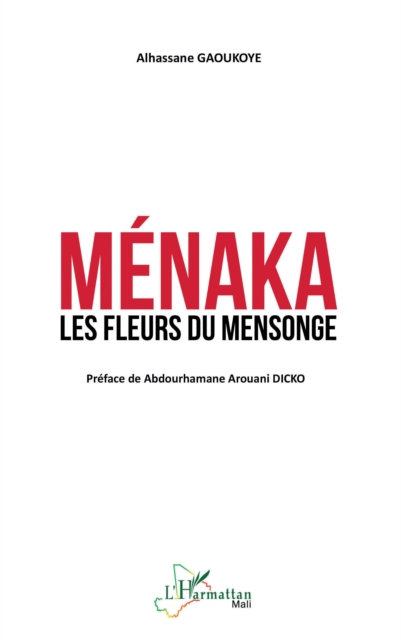
Ménaka
Cet ouvrage est une réflexion sur plusieurs problèmes brûlants du Mali. Il se présente comme un débat vivant bâti sur des récits vifs et réels, des discours poignants tenus par des témoins d'événements insolites, recueillis auprès des résidents des régions de Ménaka et de Gao. À travers des entretiens individuels et des focus groupes, l'auteur a tenté d'explorer plusieurs thématiques afférentes à l'histoire de Ménaka, aux rivalités politiques et sociales, au conflit intercommunautaire entre Peulh et Daoussak, à la régionalisation et aux représentations des résidents de la région de Ménaka sur la coexistence des forces internationales. Le livre s'achève par les récits émouvants de rescapés de la migration en Algérie et en Libye.
eBook

Security integration in Europe
At a time when many observers question the EU's ability to achieve integration of any significance, and indeed Europeans themselves appear disillusioned, Mai'a K. Davis Cross argues that the EU has made remarkable advances in security integration, in both its external and internal dimensions. Moreover, internal security integration-such as dealing with terrorism, immigration, cross-border crime, and drug and human trafficking-has made even greater progress with dismantling certain barriers that previously stood at the core of traditional state sovereignty.
Such unprecedented collaboration has become possible thanks to knowledge-based transnational networks, or \"epistemic communities,\" of ambassadors, military generals, scientists, and other experts who supersede national governments in the diplomacy of security decision making and are making headway at remarkable speed by virtue of their shared expertise, common culture, professional norms, and frequent meetings. Cross brings together nearly 80 personal interviews and a host of recent government documents over the course of five separate case studies to provide a microsociological account of how governance really works in today's EU and what future role it is likely to play in the international environment.
\"This is an ambitious work which deals not only with European security and defense but also has much to say about the policy-making process of the EU in general.\"-Ezra Suleiman, Princeton University
eBook


Ukraine's Challenge to Europe: The EU as an Ethical and Powerful Geopolitical Actor
In this essay, we bridge the gap between two understandings of the power of the European Union (EU): as a normative actor, guided by ethical principles and empowered by the internal market, and as a geopolitical actor, building its own military capabilities and ready to defend its interests through deterrence and defense. In view of Russia's invasion of Ukraine, we challenge the established “values vs. interests” dichotomy and argue that defending liberal democratic values is an essential foundation of the EU's existing and potential geopolitical power. We show how, over the last decade, opting for short-term expediency and capitulating to a kind of realpolitik “regime indifference” in dealings with authoritarian regimes at home and abroad have severely weakened the EU and also diminished Ukraine's capacities to defend itself as it fights for these shared values on the battlefield. We argue that it is in the EU's strategic interest to strengthen its commitment to values-based foreign and defense policies, revive a meritocratic and credible enlargement process, and work with the United States to provide more effective military assistance to Ukraine in its fight for liberal democratic values and a rules-based European security order.
Journal Article
Art. 72 TFEU as Seen by the Court of Justice of the EU: Reminder, Exception, or Derogation?
(Series Information) European Papers - A Journal on Law and Integration, 2024 9(3), 1330-1364 | Article | (Table of Contents) I. Introduction. – II. Art. 72 TFEU: no “general exception” from the scope of EU law. – III. Art. 72 TFEU: a reminder for the EU institutions. – IV. Art. 72 TFEU: a derogation to the benefit of the Member States? – V. Conclusion. | (Abstract) When the Member States of the European Union (EU) transferred to the latter the competences necessary to put in place an Area of Freedom, Security and Justice (AFSJ), they accepted that the EU determines policies on matters such as immigration and border control, which those States otherwise consider not only as sovereign, but also to be related to their security. Yet, the Member States were careful to lay down safeguards for their interests. Art. 72 TFEU constitutes one of those safeguards. That provision, which states that the development of AFSJ policies and instruments “shall not affect the exercise of the responsibilities incumbent upon Member States with regard to the maintenance of law and order and the safeguarding of internal security”, has been the focus of a recent series of decisions from the Court of justice of the European Union (CJEU). It stems from those decisions that, while art. 72 TFEU does not exclude national measures implemented for the purposes of maintenance of law and order or safeguarding internal security from the scope of EU law, that provision has two functions. First, it serves as a reminder of those responsibilities for the EU institutions. As such, it compels, inter alia, the EU legislature to ensure that AFSJ instruments leave a genuine possibility for the Member States to exercise them. Secondly, art. 72 TFEU could also, theoretically, justify Member States departing from AFSJ instruments in certain “exceptional circumstances”.
Journal Article
Can We Afford Solidarity? Socio-economic Rights Under EU Law and Their Relationship with the Internal Market Rationale Through an Economic Lens
Socio-economic rights have always held a controversial position in EU law. They are often seen as ‘costly’, dependent on the economic performance of Member States, and as a mere corrective measure to potential harmful effects of the internal market. However, looking at these rights through an economic lens reveals that their protection does not necessarily conflict with the internal market rationale. Encompassing both labour rights and social security rights, socio-economic rights both depend on and influence the economic performance of the EU and its Member States. This article thus argues that they should not be perceived as mere tolerable brakes or obstacles to the EU economy, but rather as integral components of it.
Journal Article

No-deal food planning in UK Brexit
A country that received 28% of its food in 2018 directly from the European Union (EU),2 plus 11% more through EU trade deals,3 is now planning, under the leadership of Prime Minister Boris Johnson, to leave the EU (“Brexit”) on Oct 31, 2019, with or without an agreement on how and what the terms are for trade, customs, and food security. Earlier this year, a leaked memorandum to cabinet ministers by Sir Mark Sedwill, the head of the civil service and National Security Adviser, indicated that food prices in the UK could rise by up to 10% and there would be disruptions to fresh produce supplies.4 The UK Government has used government and industry information to develop no-deal Brexit planning assumptions, including for food. Local Resilience Forums, set up under the Civil Contingencies Act to help coordinate action in emergencies, are multiagency bodies but lack resources to plan how food systems will be affected in their areas.17 Food being sorted at a UK foodbank Jonathan Brady/PA Wire/PA Images This situation is worrying.18 The UK state is reverting to its default positions of centralisation and planning secrecy that are reminiscent of what William Beveridge called, after World War 1, top-down “food control”.19 What is needed is engaged food democracy.
Journal Article