
Catalogue Search | MBRL


Are you sure you want to remove the book from the shelf?

{{itemTitle}}
7,206
result(s) for
"Early Christianity"
Sort by:

The Bride of Christ Goes to Hell
The early Christian writer Tertullian first applied the epithet \"bride of Christ\" to the uppity virgins of Carthage as a means of enforcing female obedience. Henceforth, the virgin as Christ's spouse was expected to manifest matronly modesty and due submission, hobbling virginity's ancient capacity to destabilize gender roles. In the early Middle Ages, the focus on virginity and the attendant anxiety over its possible loss reinforced the emphasis on claustration in female religious communities, while also profoundly disparaging the nonvirginal members of a given community.With the rising importance of intentionality in determining a person's spiritual profile in the high Middle Ages, the title of bride could be applied and appropriated to laywomen who were nonvirgins as well. Such instances of democratization coincided with the rise of bridal mysticism and a progressive somatization of female spirituality. These factors helped cultivate an increasingly literal and eroticized discourse: women began to undergo mystical enactments of their union with Christ, including ecstatic consummations and vivid phantom pregnancies. Female mystics also became increasingly intimate with their confessors and other clerical confidants, who were sometimes represented as stand-ins for the celestial bridegroom. The dramatic merging of the spiritual and physical in female expressions of religiosity made church authorities fearful, an anxiety that would coalesce around the figure of the witch and her carnal induction into the Sabbath.
eBook
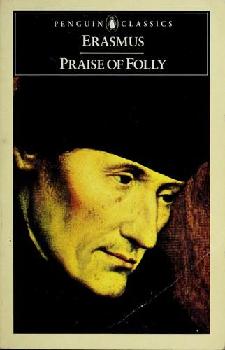
Praise of folly ; and, Letter to Martin Dorp, 1515
The classic work of the Renaissance humanist satirizes the organized Christian Church of the sixteenth century.

The Doctrine of Deification in the Greek Patristic Tradition
Deification in the Greek patristic tradition was the fulfilment of the destiny for which humanity was created — not merely salvation from sin but entry into the fullness of the divine life of the Trinity. This book traces the history of deification, from its birth as a second-century metaphor with biblical roots to its maturity as a doctrine central to the spiritual life of the Byzantine Church. Drawing attention to the richness and diversity of the patristic approaches from Irenaeus to Maximus the Confessor, the book offers a full discussion of the background and context of the doctrine, at the same time highlighting its distinctively Christian character.
eBook

Tolerance, Intolerance, and Recognition in Early Christianity and Early Judaism
This collection of essays investigates signs of toleration, recognition, respect and other positive forms of interaction between and within religious groups of late antiquity. At the same time, it acknowledges that examples of tolerance are significantly fewer in ancient sources than examples of intolerance and are often limited to insiders, while outsiders often met with contempt, or even outright violence. The essays take both perspectives seriously by analysing the complexity pertaining to these encounters. Religious concerns, ethnicity, gender and other social factors central to identity formation were often intertwined and they yielded different ways of drawing the limits of tolerance and intolerance. This book enhances our understanding of the formative centuries of Jewish and Christian religious traditions. It also brings the results of historical inquiry into dialogue with present-day questions of religious tolerance. The book contains contributions by Ismo Dunderberg, Carmen Palmer, Michael Labahn, Nina Nikki, Anna-Liisa Rafael, Sami Yli-Karjanmaa, Galit Hasan-Rokem Israel Yuval, Paul Middleton, Outi Lehtipuu, Elizabeth Dowling, and Amy-Jill Levine.
eBook

The praise of folly
\"Desiderius Erasmus (1466-1536) was a Dutch humanist, scholar, and social critic, and one of the most important figures of the Renaissance. The Praise of Folly is perhaps his best-known work. Originally written to amuse his friend Sir Thomas More, this satiric celebration of pleasure, youth, and intoxication irreverently pokes fun at the pieties of theologians and the foibles that make us all human, while ultimately reaffirming the value of Christian ideals. No other book displays quite so completely the transition from the medieval to the modern world, and Erasmus's wit, wisdom, and critical spirit have lost none of their timeliness today.\"--Publisher's description.
Book

Slandering the Jew
As Christian leaders in the first through fifth centuries embraced ascetic interpretations of the Bible and practices of sexual renunciation, sexual slander-such as the accusations Paul leveled against wayward Gentiles in the New Testament-played a pivotal role in the formation of early Christian identity. In particular, the imagined construct of the lascivious, literal-minded Jew served as a convenient foil to the chaste Christian ideal. Susanna Drake examines representations of Jewish sexuality in early Christian writings that use accusations of carnality, fleshliness, bestiality, and licentiousness as strategies to differentiate the \"spiritual\" Christian from the \"carnal\" Jew. Church fathers such as Justin Martyr, Hippolytus of Rome, Origen of Alexandria, and John Chrysostom portrayed Jewish men variously as dangerously hypersexual, at times literally seducing virtuous Christians into heresy, or as weak and effeminate, unable to control bodily impulses or govern their wives. As Drake shows, these carnal caricatures served not only to emphasize religious difference between Christians and Jews but also to justify increased legal constraints and violent acts against Jews as the interests of Christian leaders began to dovetail with the interests of the empire. Placing Christian representations of Jews at the root of the destruction of synagogues and mobbing of Jewish communities in the late fourth and early fifth centuries,Slandering the Jewcasts new light on the intersections of sexuality, violence, representation, and religious identity.
eBook


Thorns in the Flesh
The literature of late ancient Christianity is rich both in saints who lead lives of almost Edenic health and in saints who court and endure horrifying diseases. In such narratives, health and illness might signify the sanctity of the ascetic, or invite consideration of a broader theology of illness. In Thorns in the Flesh, Andrew Crislip draws on a wide range of texts from the fourth through sixth centuries that reflect persistent and contentious attempts to make sense of the illness of the ostensibly holy. These sources include Lives of Antony, Paul, Pachomius, and others; theological treatises by Basil of Caesarea and Evagrius of Pontus; and collections of correspondence from the period such as the Letters of Barsanuphius and John.Through close readings of these texts, Crislip shows how late ancient Christians complicated and critiqued hagiographical commonplaces and radically reinterpreted illness as a valuable mode for spiritual and ascetic practice. Illness need not point to sin or failure, he demonstrates, but might serve in itself as a potent form of spiritual practice that surpasses even the most strenuous of ascetic labors and opens up the sufferer to a more direct knowledge of the self and the divine. Crislip provides a fresh and nuanced look at the contentious and dynamic theology of illness that emerged in and around the ascetic and monastic cultures of the later Roman world.
eBook