
Catalogue Search | MBRL


Are you sure you want to remove the book from the shelf?

{{itemTitle}}
6,000
result(s) for
"Early Modern Period"
Sort by:
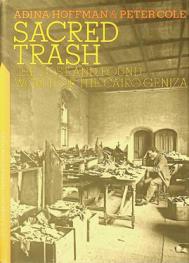
Sacred trash : the lost and found world of the Cairo Geniza
Traces the efforts of two women scholars who recovered what has become the most vital cache of Hebrew manuscripts ever discovered, in an account that explains what the findings reveal about Mediterranean Judaism.
Book

Rabbis, sorcerers, kings, and priests
Rabbis, Sorcerers, Kings, and Priests examines the impact of the Persian Sasanian context on the Babylonian Talmud, perhaps the most important corpus in the Jewish sacred canon. What impact did the Persian Zoroastrian Empire, as both a real historical force and an imaginary interlocutor, have on rabbinic identity and authority as expressed in the Talmud? Drawing from the field of comparative religion, Jason Sion Mokhtarian addresses this question by bringing into mutual fruition Talmudic studies and ancient Iranology, two historically distinct disciplines. Whereas most research on the Talmud assumes that the rabbis were an insular group isolated from the cultural horizon outside their academies, this book contextualizes the rabbis and the Talmud within a broader sociocultural orbit by drawing from a wide range of sources from Sasanian Iran, including Middle Persian Zoroastrian literature, archaeological data such as seals and inscriptions, and the Aramaic magical bowl spells. Mokhtarian also includes a detailed examination of the Talmud's dozens of texts that portray three Persian \"others\": the Persians, the Sasanian kings, and the Zoroastrian priests. This book skillfully engages and demonstrates the rich penetration of Persian imperial society and culture on the Jews of late antique Iran.
eBook


Forsaken
This book addresses a central question in the study of Jewish mysticism in the medieval and early modern periods: why are there no known female mystics in medieval Judaism, unlike contemporaneous movements in Christianity and Islam? Sharon Faye Koren demonstrates that the male rejection of female mystical aspirations is based in deeply rooted attitudes toward corporeality and ritual purity. In particular, medieval Jewish male mystics increasingly emphasized that the changing states of the female body between ritual purity and impurity disqualified women from the quest for mystical connection with God. Offering a provocative look at premodern rabbinical views of the female body and their ramifications for women's spiritual development, Koren compares Jewish views with medieval Christian and Muslim views of both female menstruation and the possibility of female mystical experience.
eBook

Concealment and Revelation
During the twelfth and thirteenth centuries, great new trends of Jewish thought emerged whose widely varied representatives--Kabbalists, philosophers, and astrologers--each claimed that their particular understanding revealed the actual secret of the Torah. They presented their own readings in a coded fashion that has come to be regarded by many as the very essence of esotericism. Concealment and Revelation takes us on a fascinating journey to the depths of the esoteric imagination. Carefully tracing the rise of esotericism and its function in medieval Jewish thought, Moshe Halbertal's richly detailed historical and cultural analysis gradually builds conceptual-philosophical force to culminate in a masterful phenomenological taxonomy of esotericism and its paradoxes. Among the questions addressed: What are the internal justifications that esoteric traditions provide for their own existence, especially in the Jewish world, in which the spread of knowledge was of great importance? How do esoteric teachings coexist with the revealed tradition, and what is the relationship between the various esoteric teachings that compete with that revealed tradition?
eBook

Medical Case Studies (Consilia medica) of the Early Modern Period
Consilia played an important role in not only medieval but also early modern professional health literature. A literary 'consilium' consisted of a written statement of one particular case, including the patient's condition and disease as well as advice concerning medical treatment. In the sixteenth century, consilia literature was a common component of the practices of many eminent physicians. This is illustrated through an analysis of consilia from twenty-two different collections and anthologies by fifteen selected authors, who represent university professors, personal physicians, and urban physicians from early modern Italy, France, and German-speaking Central Europe. A closer look at nearly 7,000 consilia shows how important a link they were within the medical community. A detailed view of consilia intended for patients suffering from the 'French disease' reveals details about, for instance, the most common treatments for syphilis - mercury and guaiacum - alongside many other interesting and important details.
eBook


The Jews in Late Antiquity
The lack of source material makes it challenging, but this short book uses the available evidence to present facts and debates around Jews in late antiquity and to provide a first step towards the understanding of this little-known period in Jewish history. It focuses on seven different regions: Italy, North Africa (except Egypt), Gaul, Spain, Egypt, the Land of Israel, and Babylonia.
eBook
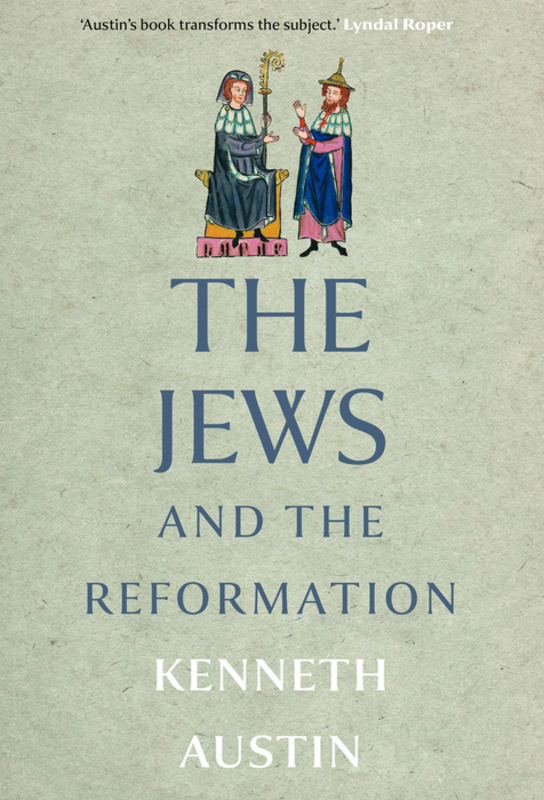
The Jews and the Reformation
The first comprehensive account of Protestant and Catholic attitudes toward Jews and Judaism in the European Reformation ?In this rich, wide-ranging, and meticulously researched account, Kenneth Austin examines the attitudes of various Christian groups in the Protestant and Catholic Reformations towards Jews, the Hebrew language, and Jewish learning. Martin Luther's writings are notorious, but Reformation attitudes were much more varied and nuanced than these might lead us to believe. This book has much to tell us about the Reformation and its priorities-and has important implications for how we think about religious pluralism more broadly.
eBook

Maniera Greca in Europe's Catholic East
How and why does vernacular art become foreign? What does 'Greek manner' mean in regions far beyond the Mediterranean? What stories do images need? How do narratives shape pictures? The study addresses these questions in Byzantine paintings from the former Grand Duchy of Lithuania, contextualized with evidence from Poland, Serbia, Russia, and Italy. The research follows developments in artistic practices and the reception of these images, as well as distinguishing between the Greek manner - based on visual qualities - and the style favoured by the devout, sustained by cults and altered through stories. Following the reception of Byzantine and pseudo-Byzantine art in Lithuania and Poland from the late fourteenth through the early eighteenth centuries, Maniera Greca in Europe's Catholic East argues that tradition is repetitive order achieved through reduction and oblivion, and concludes that the sole persistent understanding of the Greek image has been stereotyped as the icon of the Mother of God.
eBook