
Catalogue Search | MBRL


Are you sure you want to remove the book from the shelf?

{{itemTitle}}
1,803
result(s) for
"Earring"
Sort by:

Correlation between pierced earrings and the prevalence of metal allergies at Tokushima university hospital: a 15-year retrospective analysis
In Japan, metal allergies are becoming increasingly prevalent, raising concerns for public health. This study examined metal allergy characteristics, patient histories, and clinical signs associated with patch test results over a 15-year period at the Dental Metal Allergy Clinic of Tokushima University Hospital. A retrospective analysis of 1085 patients revealed that 65.4% tested positive for at least one metal allergen, with palladium chloride, nickel sulfate, potassium dichromate, and cobalt chloride identified as the most common allergens. Female patients were disproportionately affected, accounting for 78.4% of the study population. Notably, there was a substantial increase in patients reporting inflammation due to pierced earrings, increasing from 5.0% in 2005 to 43.2% in 2020, particularly among females. Patients with a history of inflammation from earrings had an 81.3% prevalence of metal allergies, which was significantly higher than the 60.4% reported in those without such a history (chi-square test,
p
<
0.001
). These findings suggest a strong link between earrings and metal allergies, underscoring the need for improved education, early detection, and preventive strategies to address the growing impact of metal allergies on public health.
Journal Article


Mapping the pigment distribution of Vermeer’s Girl with a Pearl Earring
As part of the 2018 Girl in the Spotlight project, reflectance and molecular fluorescence imaging spectroscopy (RIS, FIS), and macroscale X-ray fluorescence scanning (MA-XRF) were performed on Johannes Vermeer’s Girl with a Pearl Earring (c. 1665, Mauritshuis) with the goal of obtaining a comprehensive understanding of the distribution of pigments. Prior analysis of cross-sections in the 1990s, and their recent (re)-examination identified many of the pigments present in the painting. The results from all three imaging methods, along with site-specific fibre optic reflectance spectroscopy, confirmed Vermeer’s limited palette and determined how and where each pigment was used. RIS and MA-XRF found the blue region of the headscarf was painted with natural ultramarine and varying amounts of lead white. The yellow part of the headscarf was painted with yellow ochre and lead white, and the border of the headscarf additionally contained ultramarine and lead–tin yellow. The lit side of the jacket was painted with yellow ochre, lead white, and ultramarine, whereas the darker, ruddy blue-green areas that are in relative shadow contained yellow ochre with ultramarine. FIS also mapped a red lake in portions of the shadowed areas at the back of the jacket. The Girl’s skin was painted using earths (ochres), lead white, vermilion, and some red lake. Fluorescence emission from red lake was strongest in the lips, where vermilion was also found. The pearl earring was depicted using a scumble and highlight of lead white. In the dark background, the RIS data cube allowed the determination of the visible spectral shape even though the overall reflectance intensity was low (1 to 3%). A reflectance inflection point at ~ 700 nm indicated the presence of indigo, whereas lack of a reflectance peak at green wavelengths in most areas indicated degradation of the yellow pigment previously identified as weld. Some small green areas in the background (i.e. reflectance maximum at 525 nm) were found; these coincided with areas previously protected by old retouchings, and are thus better preserved. The combination of all three spectral imaging modalities provided a more complete understanding of how the colouration of the painting was achieved.
Journal Article
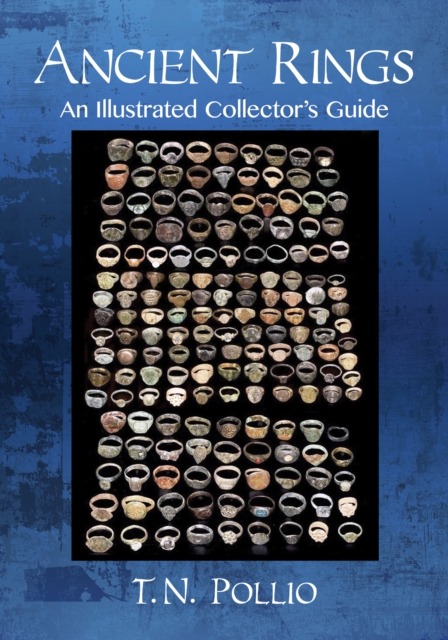
Ancient Rings
Ancient finger rings made of base metals and low-grade silver alloys are increasingly being unearthed and sold through a growing assortment of marketplaces worldwide.Reference material on ancient rings has focused mainly on historic and \"high-end\" pieces--the precious metals and stones of royalty and the wealthy--while little has been written on.
eBook

Sequential n-connectedness and infinite deformations of n-loops
A space
X
is “sequentially
n
-connected” at
x
∈
X
if for every
0
⩽
k
⩽
n
and sequence of
k
-loops
f
1
,
f
2
,
f
3
,
…
:
S
k
→
X
that converges toward the point
x
, the maps
f
m
contract by a sequence of null-homotopies that converge toward
x
. Unlike standard local contractibility conditions, the sequential
n
-connectedness property is closed under forming infinite products and infinite shrinking wedges. We use this property, in conjunction with the Whitney Covering Lemma, to construct homotopies that simultaneously perform infinite deformations of
n
-loops and, ultimately, allow us to continuously deform arbitrary
n
-loops into maps with simpler forms. As a direct application, we extend the computation of the
n
-th homotopy group of a shrinking wedge of certain
(
n
-
1
)
-connected spaces due to K. Eda and K. Kawamura.
Journal Article

Synthesis and characterization of π–extended “earring” subporphyrins
A π-extended “earring” subporphyrin 3 was synthesized from β,β′-diiodosubporphyrin and diboryltripyrrane via a Suzuki–Miyaura coupling and following oxidation. Its Pd complex 3Pd was also synthesized and both of the compounds were fully characterized by 1 H NMR, MS and X-ray single crystal diffraction. The 1 H NMR spectra and single crystal structures revealed that aromatic ring current did not extend to the “ear” in both of the two compounds. Their UV–vis/NIR spectra were recorded and the absorption of both compounds is extended to the NIR region and that the absorption of 3Pd is further red-shifted and more intense.
Journal Article

Las joyas de La Amarguilla y otros tesoros del siglo X
La exposición “Las Joyas de la Amarguilla”, que se ha podido visitar en el Museo Arqueológico de Córdoba del 19 de enero al 18 de abril de 2021, ha dado la oportunidad de descubrir un tesoro de una dimensión desconocida hasta el momento y calidad excepcional. Existen muchas incógnitas tanto acerca de las piezas como del conjunto en sí, pero al igual que éste, se han hallado otros tantos tesoros que fueron enterrados en los últimos momentos del Califato de Córdoba ante la inestabilidad política que desencadenó la fitna (guerra civil), la cual daría paso a los reinos de Taifas en el siglo XI. El examen comparado de los distintos tesoros muestra intensas relaciones entre ellos, siendo que algunas de ellas sólo se explican si las piezas hubieran salido del mismo taller, lo que podría ayudar a mejorar la comprensión de las relaciones comerciales y familiares del momento.
Journal Article
Comparison of three 3D scanning techniques for paintings, as applied to Vermeer’s ‘Girl with a Pearl Earring
A seventeenth-century canvas painting is usually comprised of varnish and (translucent) paint layers on a substrate. A viewer’s perception of a work of art can be affected by changes in and damages to these layers. Crack formation in the multi-layered stratigraphy of the painting is visible in the surface topology. Furthermore, the impact of mechanical abrasion, (photo)chemical processes and treatments can affect the topography of the surface and thereby its appearance. New technological advancements in non-invasive imaging allow for the documentation and visualisation of a painting’s 3D shape across larger segments or even the complete surface. In this manuscript we compare three 3D scanning techniques, which have been used to capture the surface topology of Girl with a Pearl Earring by Johannes Vermeer (c. 1665): a painting in the collection of the Mauritshuis, the Hague. These three techniques are: multi-scale optical coherence tomography, 3D scanning based on fringe-encoded stereo imaging (at two resolutions), and 3D digital microscopy. Additionally, scans were made of a reference target and compared to 3D data obtained with white-light confocal profilometry. The 3D data sets were aligned using a scale-invariant template matching algorithm, and compared on their ability to visualise topographical details of interest. Also the merits and limitations for the individual imaging techniques are discussed in-depth. We find that the 3D digital microscopy and the multi-scale optical coherence tomography offer the highest measurement accuracy and precision. However, the small field-of-view of these techniques, makes them relatively slow and thereby less viable solutions for capturing larger (areas of) paintings. For Girl with a Pearl Earring we find that the 3D data provides an unparalleled insight into the surface features of this painting, specifically related to ‘moating’ around impasto, the effects of paint consolidation in earlier restoration campaigns and aging, through visualisation of the crack pattern. Furthermore, the data sets provide a starting point for future documentation and monitoring of the surface topology changes over time. These scans were carried out as part of the research project ‘The Girl in the Spotlight’.
Journal Article

Microstructure and Chlorine Ion Corrosion Performance in Bronze Earring Relics
Chlorine ions play an important role in the corrosion of bronzeware. This study employs techniques such as XRD, OM, SEM, EBSD, and electrochemical testing to analyze the microstructure, crystal structure, chemical composition, and corrosion performance of bronze earrings unearthed at the Xindianzi site in Inner Mongolia. The results indicate the presence of work-hardened structures, including twinning and equiaxed crystals, on the earrings’ surface. With an increase in chloride ion concentration in NaCl solutions from 10−3 mol/L to 1 mol/L, the corrosion current density of the bronze earrings increased from 2.372 × 10⁻⁷ A/cm2 to 9.051 × 10⁻⁷ A/cm2, demonstrating that the alloy’s corrosion rate escalates with chloride ion concentration. A 3-day immersion test in 0.5% NaCl solution showed the formation of a passivation layer of metal oxides on the earrings’ surface. These findings underscore the significance of the impact chloride ions have on the corrosion of copper alloys, suggesting that activating the alloy’s reactive responses can accelerate the corrosion process and provide essential insights into the corrosion mechanisms of bronze artifacts in chloride-containing environments.
Journal Article