
Catalogue Search | MBRL


Are you sure you want to remove the book from the shelf?

{{itemTitle}}
903
result(s) for
"Earthenware"
Sort by:

Beautiful Clay
For most of human history, all pottery was what we would now
consider traditional folk pottery. Not all artifacts go beyond
the basic requirements of utility in pursuit of beauty, but
Beautiful Clay considers those that do.
In
Beautiful Clay , noted scholar of traditional ceramics
John A. Burrison writes about how a potter applies aesthetics
to utilitarian objects to transform raw clay into something
beautiful. Though what is considered beautiful in art changes
from culture to culture and person to person, there are
universal techniques such as manipulating form, color, texture,
and more that tap into clay's potential for beauty. Burrison
uses an approach from a perspective of international artistry
rather than an approach bound by history or geography. After
beginning with more than 40,000 images that the author curated
as a study resource,
Beautiful Clay narrows it down to around 230 images
that capture the artistry within traditional ceramics
worldwide.
Beautiful Clay examines the aesthetic dimensions of
what is essentially a traditional utilitarian craft, the
ancient clay-based craft of pottery, from earliest times to the
present.
eBook

Terahertz time-domain spectro-imaging and hyperspectral imagery to investigate a historical Longwy glazed ceramic
In this paper, we present the potential of Terahertz Time-Domain Imaging (THz-TDI) as a tool to perform non-invasive 3D analysis of an ancient enamel plate manufactured by Longwy Company in France. The THz data collected in the reflection mode were processed using noise filtering procedures and an advanced imaging approach. The results validate the capability to identify glaze layers and the thickness of ceramic materials. To characterize the nature of the pigments, we also use with X-ray images, visible near-infrared hyperspectral imaging spectroscopy, and p-XRF (portable X-ray fluorescence) to qualitatively and quantitively identify the materials used. The obtained information enables a better understanding of the decoration chromogens nature and, thus, to determine the color palette of the artists who produced such decorative object. We also establish the efficiency of a focus, Z-tracker, which enables to perform THz imaging on non-flat samples and to attenuate artifacts obtained with a short focus lens. Then, 3D images are extracted and generated, providing a real vision. We also report the evaluation of the internal damage state through the detection of fractures.
Journal Article

Terahertz Frequency-Modulated Continuous-Wave Inspection of an Ancient Enamel Plate
This study investigates the application of terahertz frequency-modulated continuous-wave (FMCW) imaging for the non-destructive inspection of a historical enamel plate, using both reflection and transmission modes. A 300 GHz FMCW radar system was employed to capture high-resolution images of the plate’s internal and surface structures. Through optimized data acquisition and processing, the system successfully revealed subsurface features such as fractures, as well as surface-level textural variations linked to the decorative glazes. Although pigment differentiation remains a challenge, contrast variations observed in THz images suggest correlations with material composition. The results highlight the potential of FMCW terahertz imaging as a compact, rapid, and non-contact diagnostic tool for cultural heritage analysis. Its practicality and adaptability make it particularly suitable for in situ inspections in museums or restoration contexts.
Journal Article

DIGITAL IMAGE COLORIMETRY OF ARCHAEOLOGICAL EARTHENWARE UNDER DIFFERENT LIGHTING SOURCES
This study investigated the effect of lighting sources on the smartphone colorimetry of 23 ar-chaeological earthenware samples. Comparable RGB and L*a*b* colors were obtained using both fluorescent room lighting and smartphone flashlight in a closed box for most samples, although some showed substantial differences likely due to variations in measurement points. Averaging readings from different areas of each sample could reduce this uncertainty. Using the color values to classify the earthenware, five coarse-paste wares averagely exhibited higher R, G, and L* values than 18 fine-paste wares made of fine-grained clay regardless of the lighting used. The L* is recommended as the parameter of choice, as RGB values substantially varied from one sample to another. In addition to the color parameters, the effect of lighting depends on the samples measured as the variations in average L*a*b* values were smaller for the fine-paste ware.
Journal Article

Kinetic modeling of a Sangiovese wine’s chemical and physical parameters during one-year aging in different tank materials
The present study aimed to model the kinetics of factors involved in wine aging to highlight the effects caused by different tank materials. It is known that materials affect wine composition through releasing of tannins, elementals and allowing different level of oxygen permeation. To monitor how the composition of a red wine was influenced by the contact with different kind of material, a Sangiovese red wine from the 2018 harvest was aged for one-year simultaneously in six different 5 hL tank materials including stainless steel, epoxy-coated concrete, uncoated concrete, raw earthenware, new and used oak wood. The registered differences were described through kinetic modeling of some wine’s chemical and physical parameters. In particular, the one-year evolution of the dissolved oxygen, redox potential and phenolic composition of the wines showed significant differences according to the tank material. Like the oak barrels, the raw earthenware amphorae and uncoated concrete tanks enhanced the polymerisation of the phenolic fraction of the wine. Instead, the stainless steel and epoxy-coated concrete proved to be the most chemically inert materials as they showed the least variability of redox potential and the lowest degree of color evolution.
Journal Article

Low-cost novel clay earthenware as separator in microbial electrochemical technology for power output improvement
A conventional reactor in microbial electrochemical technology (MET) consists of anode and cathode compartments divided by a separator, which is usually a proton exchange membrane (PEM), such as Nafion 117. In this study, a novel porous clay earthenware (NCE) was fabricated as the separator to replace the highly cost PEM. The fabrication of NCEs is with raw clay powder and starch powder that acts as a pore-forming agent at different starch powder contents (10 vol%, 20 vol%, and 30 vol%), ball-milled before hydraulically pressed to form green ceramic pellets and sintered up to 1200 °C. The highest power density of 2250 ± 21 mW/m2 (6.0 A/m2), the internal resistance of 75 ± 24 Ω and coulombic efficiency (CE) of 44 ± 21% were produced for MFC–NCE from 30 vol% starch powder content under batch mode operation. The MFC–PEM combination produced the lowest power density, CE and the highest internal resistance up to 1350 ± 17 mW/m2 (3.0 A/m2), 23 ± 15% and 326 ± 13 Ω, respectively.
Journal Article
An Archaeology of Woodland Transformation
Exploring a period of transformative change for the
Woodland -
era societies of Florida’s Lower Suwannee
region
In this book, Jessica Jenkins provides a detailed look at the
transition from the Middle to Late Woodland periods in the Lower
Suwannee region of Florida’s Gulf Coast. Drawing on ceramic
analysis techniques, Jenkins argues that this time of
transformative change, often interpreted as a societal collapse,
instead should be seen as a purposeful shift brought about by
emerging social movements.
Beginning around 650 CE, the region’s Indigenous
inhabitants dispersed from civic-ceremonial centers, moved away
from places associated with the dead, changed their burial
practices, and adopted new pottery surface treatments and
designs. Examining ceramic vessels from 12 sites located on
islands near the present-day town of Cedar Key, Jenkins catalogs
these shifts. Jenkins explores how people shared social
identities that connected them through relational networks and
laid the foundation for these changes.
An Archaeology of Woodland Transformation is the first
book to synthesize information on the villages, networks, and
identities of this time and place. Offering rich datasets and new
perspectives on sociocultural transformation in and around the
lower Suwannee River Estuary, this book represents a breakthrough
in current understandings of the Woodland period.
A volume in the Florida Museum of Natural History:
Ripley P. Bullen Series
eBook
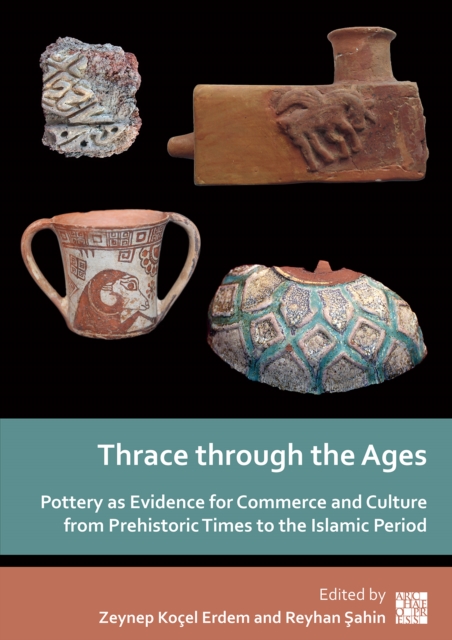
Thrace through the Ages
Thrace through the Ages draws attention to the importance of pottery evidence in evaluating archaeological material from Thrace. The volume considers the informative value of pottery in tracing cultural and political phases, by providing us with important data about production centres, commercial relations, daily life, religious rituals and burial customs.The first chapter examines ceramic research in Thrace from past to present. The second chapter is devoted to the interpretation of the data presented by ceramics regarding interregional commercial relations and cultural interaction. In the third chapter, ceramics are evaluated from the perspective of cult rituals. The fourth chapter includes the excavation and survey ceramics. The fifth chapter is classified according to the ceramic ware. In the last two chapters of the volume, various data presented by ceramics were evaluated by considering their qualitative and quantitative characteristics.
eBook
Corpus of Prehistoric Pottery and Palettes
Facsimile edition of the 1974 reissue of Flinders Petrie’s 1921 corpus of prehistoric pottery and slate palettes from pre-dynastic, prehistoric Egypt. The pottery corpus was produced separately to accompany the catalog of Egyptian artifacts in the volume Prehistoric Egypt and comprises hundreds of line drawings illustrating the shapes, forms and types of decoration. It was intended to be a ‘graveside’ aid for use during excavation, with the intent that it be used with record cards to classify and date pottery that could then be returned to the grave. The corpus of palettes updated Petrie’s original classification published Ballas and Naqada, to include many new finds and refine the typology and sequence.
eBook
Sasanian and Islamic Settlement and Ceramics in Southern Iran (4th to 17th Century AD)
This monograph comprises the final publication of a study supported by the British Institute of Persian Studies and undertaken by Seth Priestman and Derek Kennet at the University of Durham. The work presents and analyses an assemblage of just under 17,000 sherds of pottery and associated paper archives resulting from one of the largest and most comprehensive surveys ever undertaken on the historic archaeology of southern Iran. The survey was undertaken by Andrew George Williamson (1945–1975), a doctoral student at Oxford University between 1968 and 1971, at a time of great progress and rapid advance in the archaeological exploration of Iran. The monograph provides new archaeological evidence on the long-term development of settlement in Southern Iran, in particular the coastal region, from the Sasanian period to around the 17th century. The work provides new insights into regional settlement patterns and changing ceramic distribution, trade and use. A large amount of primary data is presented covering an extensive area from Minab to Bushehr along the coast and inland as far as Sirjan. This includes information on a number of previously undocumented archaeological sites, as well as a detailed description and analysis of the ceramic finds, which underpin the settlement evidence and provide a wider source of reference. By collecting carefully controlled archaeological evidence related to the size, distribution and period of occupation of urban and rural settlements distributed across southern Iran, Williamson aimed to reconstruct the broader historical development of the region. Due to his early death the work was never completed. The key aims of the authors of this volume were to do justice to Williamson’s remarkable vision and efforts on the one hand, and at the same time to bring this important new evidence to ongoing discussions about the development of southern Iran through the Sasanian and Islamic periods.
eBook