
Catalogue Search | MBRL


Are you sure you want to remove the book from the shelf?

{{itemTitle}}
1,407
result(s) for
"East Timor"
Sort by:

Headhunting and colonialism : anthropology and the circulation of human skulls in the Portuguese empire, 1870-1930
\"Explores headhunting in the colonial wars and the collection of heads for European museums, 1870s-1930s. By looking at Portuguese colonialism in East Timor, it shows how indigenous peoples and colonial powers interacted in a mutually dependent way, and how collected remains became objects of political, symbolic, and scientific significance\"--Provided by publisher.
Book

If you leave us here, we will die : how genocide was stopped in East Timor
\"Tells the story of East Timor, a half-island that suffered genocide after Indonesia invaded in 1975, and which was again laid to waste after the population voted for independence from Indonesia in 1999. Before international forces intervened, more than half the population had been displaced and 1,500 people killed. Geoffrey Robinson, an expert in Southeast Asian history, was in East Timor with the United Nations in 1999 and provides a gripping first-person account of the violence, as well as a rigorous assessment of the politics and history behind it. Robinson debunks claims that the militias committing the violence in East Timor acted spontaneously, attributing their actions instead to the calculation of Indonesian leaders, and to a \"culture of terror\" within the Indonesian army. He argues that major powers--notably the United States, Australia, and the United Kingdom--were complicit in the genocide of the late 1970s and the violence of 1999. At the same time, Robinson stresses that armed intervention supported by those powers in late 1999 was vital in averting a second genocide. Advocating accountability, the book chronicles the failure to bring those responsible for the violence to justice. A riveting narrative filled with personal observations, documentary evidence, and eyewitness accounts, [this book] engages essential questions about political violence, international humanitarian intervention, genocide, and transitional justice\"--From publisher description.
eBook


Timor-Leste in ASEAN
Timor-Leste has put in place institutional structures and implementing agencies for advancing cooperation with ASEAN. It is also moving towards harmonizing its laws with ASEAN instruments. However, its capacity remains in question due to a lack of substantive knowledge and technical expertise among government officials, as well as inadequate infrastructure, logistics and facilities for hosting ASEAN meetings.
eBook
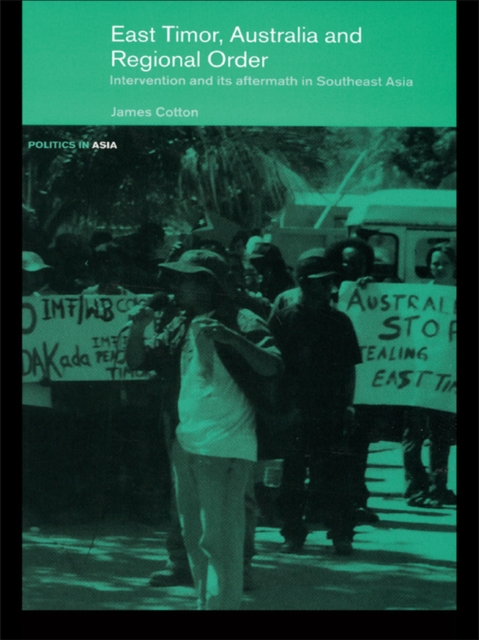
East Timor, Australia and Regional Order
This book explains the exceptional nature of the East Timor intervention of 1999, and deals with the background to the trusteeship role of the UN in building the new polity. All of these developments had an important impact on regional order, not least testing the ASEAN norm of 'non-interference'. Australian complicity in the Indonesian occupation of East Timor was a major factor in the persistence of Indonesian rule in the territory which was maintained for twenty-five years despite international censure and which required an unremitting campaign against the independence movement. This work reviews the reasons for that history of complicity, and explains the extraordinary change of policy that led ultimately to the occupation of the territory by the Australian-led INTERFET coalition.
1. East Timor and Australia: The 25-year policy legacy 2. Australian Relations with Indonesia and the East Timor Issue 3. The Failure of Indonesian Policy 4. The East Timor Intervention, Humanitarian Norms and Regional Order 5. Australia's East Timor Commitment: Causes and consequences 6. Australia's East Timor: The official version and its critique 7. Outcomes: Peacekeeping lessons, security dilemmas, bi-lateral tensions 8. Independent Timor-Leste in a Regional and Global Context
James Cotton is a highly respected Australian academic who has written extensively about Asian politics and political thought. A Professor at the University of New South Wales, he is the author of over 150 publications and currently acts as consulting editor of the Australian Journal of International Affairs .
eBook

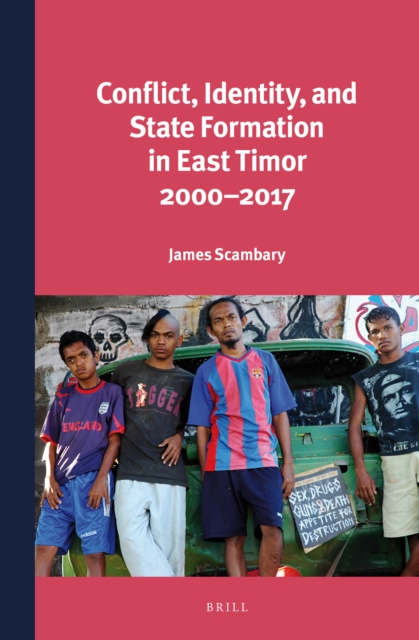
Conflict, Identity, and State Formation in East Timor 2000 - 2017
This book analyses conflict patterns in independent East Timor. It argues that understanding the role of local level actors and the dynamics of sub-national conflict is integral to understanding national level conflict and the contours of contemporary political power.
eBook
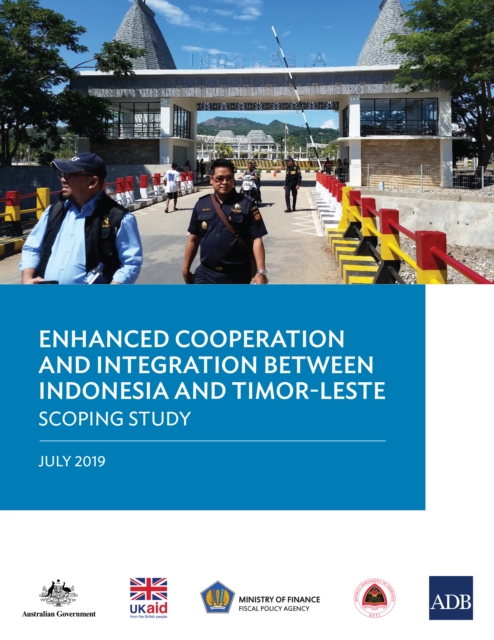
Enhanced Cooperation and Integration Between Indonesia and Timor-Leste
This report explores the challenges and opportunities for enhancing cross-border cooperation and integration between Indonesia---specifically the province of Nusa Tenggara Timur---and Timor-Leste. It is based on the findings of a study undertaken at the request of the governments of Indonesia and Timor-Leste and reflects their mutual appreciation of the benefits that greater cross-border trade, investment, and cooperative production contribute to socioeconomic development. The report focuses on transport connectivity, trade, business and investment, tourism, and livestock. It makes immediate and long-term recommendations to inform the design of future activities to support cross-border cooperation between the two countries.
eBook

