
Catalogue Search | MBRL


Are you sure you want to remove the book from the shelf?

{{itemTitle}}
975
result(s) for
"East and West in literature."
Sort by:


Relire la Tentation de L'Occident
To re-read La Tentation de l'Occident, almost a century after its publication in 1926, is to come face to face with the brilliance of a vivid writing style that established Malraux as one of the major players in the debates on the obsessive presence of the ‘Orient’ that marked the 1920s and 1930s. This strange essay has perhaps too often been reduced to a minor prequel to the novel Les Conquérants, published in 1930. The first part of the book sets out to unravel its singularities, crossing perspectives: the ideological issues of the period, the generic perspective, the comparative perspective, aesthetic reflection and formal analysis in the contemporary critical studies that make it up. In the second part, the press kit situates the essay in its time and measures the importance of a nuanced reception, which takes up the burning question of an ambiguous Orientalism and salutes a style in the process of asserting itself. Relire La Tentation de l’Occident, près d’un siècle après sa parution en 1926, c’est se confronter à l’éclat d’une écriture vive, qui impose Malraux comme l’un des acteurs majeurs des débats sur la présence obsédante de « l’Orient » qui marquent les années vingt et trente. On a peut-être trop souvent réduit cet étrange essai à n’être qu’un avant-texte, en mineur, du roman Les Conquérants, publié en 1930. La première partie de l’ouvrage propose d’en déplier les singularités, en croisant les perspectives : enjeux idéologiques d’époque, perspective générique, perspective comparatiste, réflexion esthétique, analyses formelles, dans les études critiques contemporaines qui la constituent. Dans une seconde partie, le dossier de presse permet de resituer l’essai dans son temps et de mesurer l’importance d’une réception nuancée, qui prend en charge la question brûlante d’un orientalisme ambigu et salue un style en train de s’affirmer.
eBook


Emperor of the World
Emperor of the World , traces the curious history of the
story of the alliances forged by Charlemagne while visiting
Jerusalem and Constantinople, revealing how the memory of the
Frankish Emperor was manipulated to shape the institutions of
kingship and empire in the High Middle Ages.
The legend incorporates apocalyptic themes such as the
succession of world monarchies at the End of Days and the prophecy
of the Last Roman Emperor. Charlemagne's apocryphal journey to the
East increasingly resembled the eschatological final journey of the
Last Emperor, who was expected to end his reign in Jerusalem after
reuniting the Roman Empire prior to the Last Judgment. Latowsky
finds that the writers who incorporated this legend did so to
support, or in certain cases to criticize, the imperial pretentions
of the regimes under which they wrote. Latowsky removes
Charlemagne's encounters with the East from their long-presumed
Crusading context and shows how a story that began as a rhetorical
commonplace of imperial praise evolved over the centuries as an
expression of Christian Roman universalism.
eBook

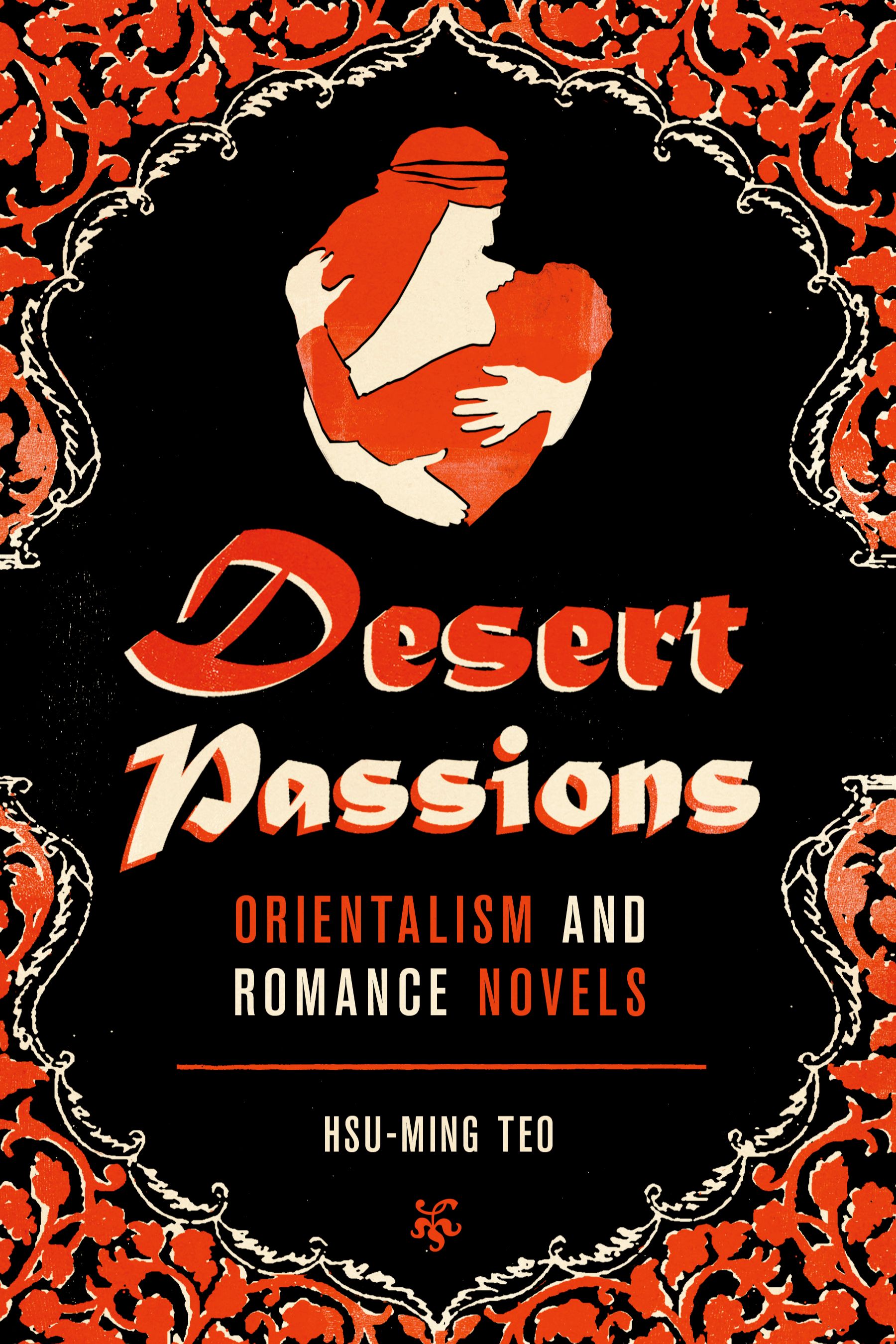
Desert Passions
The Sheik—E. M. Hull’s best-selling novel that became a wildly popular film starring Rudolph Valentino—kindled “sheik fever” across the Western world in the 1920s. A craze for all things romantically “Oriental” swept through fashion, film, and literature, spawning imitations and parodies without number. While that fervor has largely subsided, tales of passion between Western women and Arab men continue to enthrall readers of today’s mass-market romance novels. In this groundbreaking cultural history, Hsu-Ming Teo traces the literary lineage of these desert romances and historical bodice rippers from the twelfth to the twenty-first century and explores the gendered cultural and political purposes that they have served at various historical moments. Drawing on “high” literature, erotica, and popular romance fiction and films, Teo examines the changing meanings of Orientalist tropes such as crusades and conversion, abduction by Barbary pirates, sexual slavery, the fear of renegades, the Oriental despot and his harem, the figure of the powerful Western concubine, and fantasies of escape from the harem. She analyzes the impact of imperialism, decolonization, sexual liberation, feminism, and American involvement in the Middle East on women’s Orientalist fiction. Teo suggests that the rise of female-authored romance novels dramatically transformed the nature of Orientalism because it feminized the discourse; made white women central as producers, consumers, and imagined actors; and revised, reversed, or collapsed the binaries inherent in traditional analyses of Orientalism.
eBook

Captivating Westerns : the Middle East in the American West
\"Tracing the transnational influences of what has been known as a uniquely American genre, \"the Western,\" Susan Kollin's Captivating Westerns analyzes key moments in the history of multicultural encounters between the Middle East and the American West. In particular, the book examines how experiences of contact and conflict have played a role in defining the western United States as a crucial American landscape. Kollin interprets the popular Western as a powerful national narrative and presents the cowboy hero as a captivating figure who upholds traditional American notions of freedom and promise, not just in the region but across the globe. Captivating Westerns revisits popular uses of the Western plot and cowboy hero in understanding American global power in the post-9/11 period. Although various attempts to build a case for the war on terror have referenced this quintessential American region, genre, and hero, they have largely overlooked the ways in which these celebrated spaces, icons, and forms, rather than being uniquely American, are instead the result of numerous encounters with and influences from the Middle East. By tracing this history of contact, encounter, and borrowing, this study expands the scope of transnational studies of the cowboy and the Western and in so doing discloses the powerful and productive influence of the Middle East on the American West\"-- Provided by publisher.
Book
Eastern and Western Synergies and Imaginations
Eastern and Western Synergies and Imaginations traces and investigates multi-cultural interpretations of fictional and non-fictional narratives that feature people and events in East-West hubs. The Three Ladies of Macao, premièred in December 2016, is now published as appendix in this volume.
eBook


Postmodern ethics, emptiness, and literature
An interdisciplinary study of postmodern ethics and literary criticism from the perspective of Chan/Seon/Zen Buddhism, this book combines the tradition of Western metaphysics and its contact with Asian thought, contemporary Western thought, Buddhism, Taoism (to a minor extent), and literary criticism.
eBook