
Catalogue Search | MBRL


Are you sure you want to remove the book from the shelf?

{{itemTitle}}
18,801
result(s) for
"Ecology Statistical methods."
Sort by:

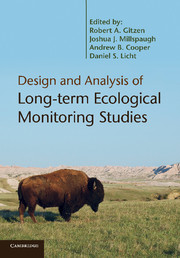
Design and Analysis of Long-term Ecological Monitoring Studies
To provide useful and meaningful information, long-term ecological programs need to implement solid and efficient statistical approaches for collecting and analyzing data. This volume provides rigorous guidance on quantitative issues in monitoring, with contributions from world experts in the field. These experts have extensive experience in teaching fundamental and advanced ideas and methods to natural resource managers, scientists and students. The chapters present a range of tools and approaches, including detailed coverage of variance component estimation and quantitative selection among alternative designs; spatially balanced sampling; sampling strategies integrating design- and model-based approaches; and advanced analytical approaches such as hierarchical and structural equation modelling. Making these tools more accessible to ecologists and other monitoring practitioners across numerous disciplines, this is a valuable resource for any professional whose work deals with ecological monitoring. Supplementary example software code is available online at www.cambridge.org/9780521191548.
eBook

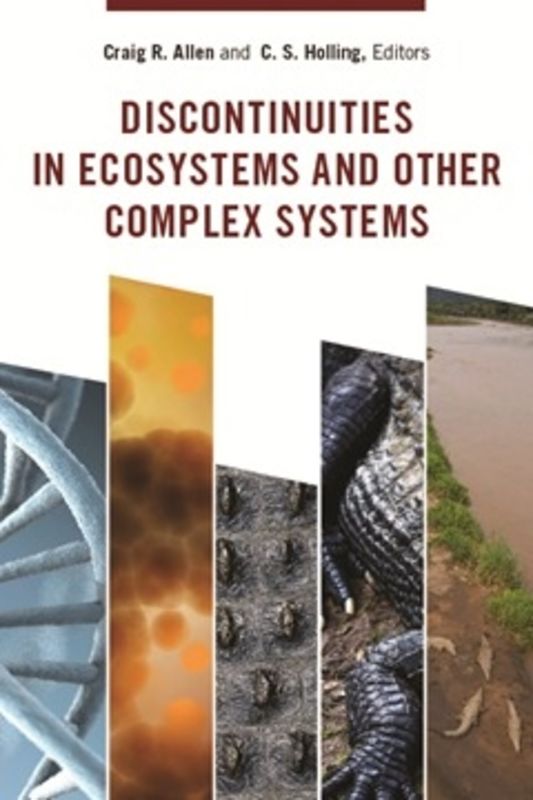
Discontinuities in ecosystems and other complex systems
Following the publication of C. S. Holling's seminal work on the relationship between animal body mass patterns and scale-specific landscape structure, ecologists began to explore the theoretical and applied consequences of discontinuities in ecosystems and other complex systems. Are ecosystems and their components continuously distributed and do they adhere to scaling laws, or are they discontinuous and more complex than early models would have us believe? The resulting propositions over the structure of complex systems sparked an ongoing debate regarding the mechanisms generating discontinuities and the statistical methods used for their detection.
This volume takes the view that ecosystems and other complex systems are inherently discontinuous and that such fields as ecology, economics, and urban studies greatly benefit from this paradigm shift. Contributors present evidence of the ubiquity of discontinuous distributions in ecological and social systems and how their analysis provides insight into complex phenomena. The book is divided into three sections. The first focuses on background material and contrasting views concerning the discontinuous organization of complex systems. The second discusses discontinuous patterns detected in a number of different systems and methods for detecting them, and the third touches on the potential significance of discontinuities in complex systems. Science is still dominated by a focus on power laws, but the contributors to this volume are convinced power laws often mask the interesting dynamics of systems and that those dynamics are best revealed by investigating deviations from assumed power law distributions.
In 2008, a grand conference on resilience was held in Stockholm, hosting 600 participants from around the world. There are now three big centers established with resilience, the most recent one being the Stockholm Resilience Center, with others in Australia (an international coral reef center), Arizona State University's new sustainability center focusing on anthropology, and Canada's emerging social sciences and resilience center. Activity continues to flourish in Alaska, South Africa, and the Untied Kingdom, and a new center is forming in Uruguay.
eBook
Design and analysis of ecological experiments
Ecological research and the way that ecologists use statistics continues to change rapidly. This second edition of the best-selling Design and Analysis of Ecological Experiments leads these trends with an update of this now-standard reference book, with a discussion of the latest developments in experimental ecology and statistical practice. The goal of this volume is to encourage the correct use of some of the more well known statistical techniques and to make some of the less well known but potentially very useful techniques available. Chapters from the first edition have been substantially revised and new chapters have been added. Readers are introduced to statistical techniques that may be unfamiliar to many ecologists, including power analysis, logistic regression, randomization tests and empirical Bayesian analysis. In addition, a strong foundation is laid in more established statistical techniques in ecology including exploratory data analysis, spatial statistics, path analysis and meta-analysis. Each technique is presented in the context of resolving an ecological issue. Anyone from graduate students to established research ecologists will find a great deal of new practical and useful information in this current edition.
eBook
Spatial Pattern Analysis in Plant Ecology
The predictability of the physical arrangement of plants, at whatever scale it is viewed, is referred to as their spatial pattern. Spatial pattern is a crucial aspect of vegetation which has important implications not only for the plants themselves, but also for other organisms which interact with plants, such as herbivores and pollinators, or those animals for which plants provide a habitat. This book describes and evaluates methods for detecting and quantifying a variety of characteristics of spatial pattern. As well as discussing the concepts on which these techniques are based, examples from real field studies and worked examples are included, which, together with numerous line figures, help guide the reader through the text. The result is a book that will be of value to graduate students and research workers in the fields of vegetation science, conservation biology and applied ecology.
eBook
Structural Equation Modeling
Structural equation modelling (SEM) is a technique that is used to estimate, analyse and test models that specify relationships among variables. The ability to conduct such analyses is essential for many problems in ecology and evolutionary biology. This book begins by explaining the theory behind the statistical methodology, including chapters on conceptual issues, the implementation of an SEM study and the history of the development of SEM. The second section provides examples of analyses on biological data including multi-group models, means models, P-technique and time-series. The final section of the book deals with computer applications and contrasts three popular SEM software packages. Aimed specifically at biological researchers and graduate students, this book will serve as valuable resource for both learning and teaching the SEM methodology. Moreover, data sets and programs that are presented in the book can also be downloaded from a website to assist the learning process.
eBook

Handbook of Environmental and Ecological Statistics
This handbook focuses on the enormous literature applying statistical methodology and modelling to environmental and ecological processes. The 21st century statistics community has become increasingly interdisciplinary, bringing a large collection of modern tools to all areas of application in environmental processes. In addition, the environmental community has substantially increased its scope of data collection including observational data, satellite-derived data, and computer model output. The resultant impact in this latter community has been substantial; no longer are simple regression and analysis of variance methods adequate. The contribution of this handbook is to assemble a state-of-the-art view of this interface.
Features:
An internationally regarded editorial team.
A distinguished collection of contributors.
A thoroughly contemporary treatment of a substantial interdisciplinary interface.
Written to engage both statisticians as well as quantitative environmental researchers.
34 chapters covering methodology, ecological processes, environmental exposure, and statistical methods in climate science.
eBook

Bayesian data analysis in ecology using linear models with R, Bugs, and Stan
Bayesian Data Analysis in Ecology Using Linear Models with R, BUGS, and STAN examines the Bayesian and frequentist methods of conducting data analyses. The book provides the theoretical background in an easy-to-understand approach, encouraging readers to examine the processes that generated their data. Including discussions of model selection, model checking, and multi-model inference, the book also uses effect plots that allow a natural interpretation of data. Bayesian Data Analysis in Ecology Using Linear Models with R, BUGS, and STAN introduces Bayesian software, using R for the simple modes, and flexible Bayesian software (BUGS and Stan) for the more complicated ones. Guiding the ready from easy toward more complex (real) data analyses ina step-by-step manner, the book presents problems and solutions-including all R codes-that are most often applicable to other data and questions, making it an invaluable resource for analyzing a variety of data types.
eBook

Ecosystem function in Savannas
Spanning biophysics, biochemistry, land use change, and measuring and modeling, this book addresses the quantitative spatial and temporal dynamics of global savannas. It describes the global savanna biome in terms of broad ecological properties, temporal dynamics, disturbance levels, and human dimensions. The text examines carbon, water, energy, and trace gas fluxes for major global savanna regions. It also looks at quantitative surface properties of savannas that can be retrieved using remote sensing, presents numerical approaches to explore savanna dynamics, and explores the unification of savanna modeling and measurement.
eBook