
Catalogue Search | MBRL


Are you sure you want to remove the book from the shelf?

{{itemTitle}}
1,113
result(s) for
"Economic assistance -- Mexico"
Sort by:

Mexico and the Spanish Civil War : domestic politics and the Republican cause
\"Based on first-hand diplomatic, political and journalistic sources, most unpublished, Mexico and the Spanish Civil War investigates the backing of the Second Republic by Mexico during the Spanish Civil War. Significant military, material and financial aid was given by the government of Lâazaro Câardenas (1934-1940) to the Republic, which involved not only direct sales of arms, but also smuggling operations covertly undertaken by Mexican diplomatic agents in order to circumvent the embargo imposed by the London Committee of Non Intervention. This path-breaking account reveals the operations in Spain of Mexican workers, soldiers, artists and intellectuals--such as later Nobel Laureate Octavio Paz and the Muralist David Alfaro Siqueiros--as volunteers and propagandists for the Republican cause. Engagement with the Spanish Civil War also had a profound impact upon Mexico's domestic politics as support for the Republic was equated by Câardenas with his own revolutionary project\"--Provided by publisher.
Book

The Political Economy of Global Remittances
Over the last decade, a new phenomenon has emerged within the international community: the Global Remittances Trend (GRT). Thereby, government institutions, international (financial) organisations, NGOs and private sector actors have become interested in migration and remittances and their potential for poverty reduction and development, and have started to devise institutions and policies to harness this potential.
This book employs a gender-sensitive governmentality analysis to trace the emergence of the GRT, to map its conceptual and institutional elements, and to examine its broader implications. Through an analysis of the GRT at the international level, combined with an in-depth case study on Mexico, this book demonstrates that the GRT is instrumental in spreading and deepening specific forms of gendered neoliberal governmentality.
This innovative book will be of interest to students and scholars of political science, international relations, sociology, development studies, economics, gender studies and Latin American studies.
eBook

Progress Against Poverty: Sustaining Mexico's Progresa-Oportunidades Program
In 1997, Mexico launched a new incentive-based poverty reduction program to enhance the human capital of those living in extreme poverty. This book presents a case study of Progresa-Oportunidades, focusing on the main factors that have contributed to the program's sustainability, policies that have allowed it to operate at the national level, and future challenges.
eBook

How Good Are Ex Ante Program Evaluation Techniques? The Case of School Enrollment in PROGRESA
This paper evaluates a microsimulation technique by comparing the simulated outcome of a program with its actual effect. The ex ante evaluation is carried out for a conditional cash transfer program, where poor households were given money if the children attended school. A model of occupational choice is used to simulate the expected impact of the program. The results suggest that the transfer would indeed increase school attendance and do more so among girls than boys. While the simulated effect tends to be larger than the actual effect, the latter lies within bootstrapped confidence intervals of the simulation.
eBook

Progress against poverty
\"Case study of Progresa-Oportunidades that describes the origins, objectives, and institutional design and scope of Progresa; provides a broad assessment of results to date; discusses the main challenges faced by the program in the future; and makes some suggestions for poverty programs drawn from the main lessons of the study\"--Provided by publisher
Book

U.S. aid package to Mexico
In January 1995, the value of the Mexican peso dropped dramatically and put the country in danger of defaulting on its obligations. In these opening statements at a news conference, U.S. Secretary Christopher and Treasury Secretary Rubin explain how providing aid to Mexico in its time of crisis is helping to protect American interests. A description of the aid package provided to Mexico by the United States is included.
Journal Article
Exercising American Leadership and Restoring Financial Confidence
In a statement given before the House Committee on Banking, Finance and Urban Affairs on January 25, 1995, Secretary of State Warren Christopher spoke about the issue of providing economic support to Mexico. The importance of developing democratic governments and open markets in the hemisphere is stressed. Foreign policy and national security interests that would be served by providing a loan guarantee package to Mexico are identified.
Magazine Article

The Real War in Mexico
As Mexico has become engulfed in drug violence, American observers have warned of state collapse and cross-border bloodshed. But such hysteria clouds the real challenge: the rising violence is a product of Mexico's democratization-and the only real solution is to continue strengthening Mexican democracy. [PUBLICATION ABSTRACT]
Magazine Article
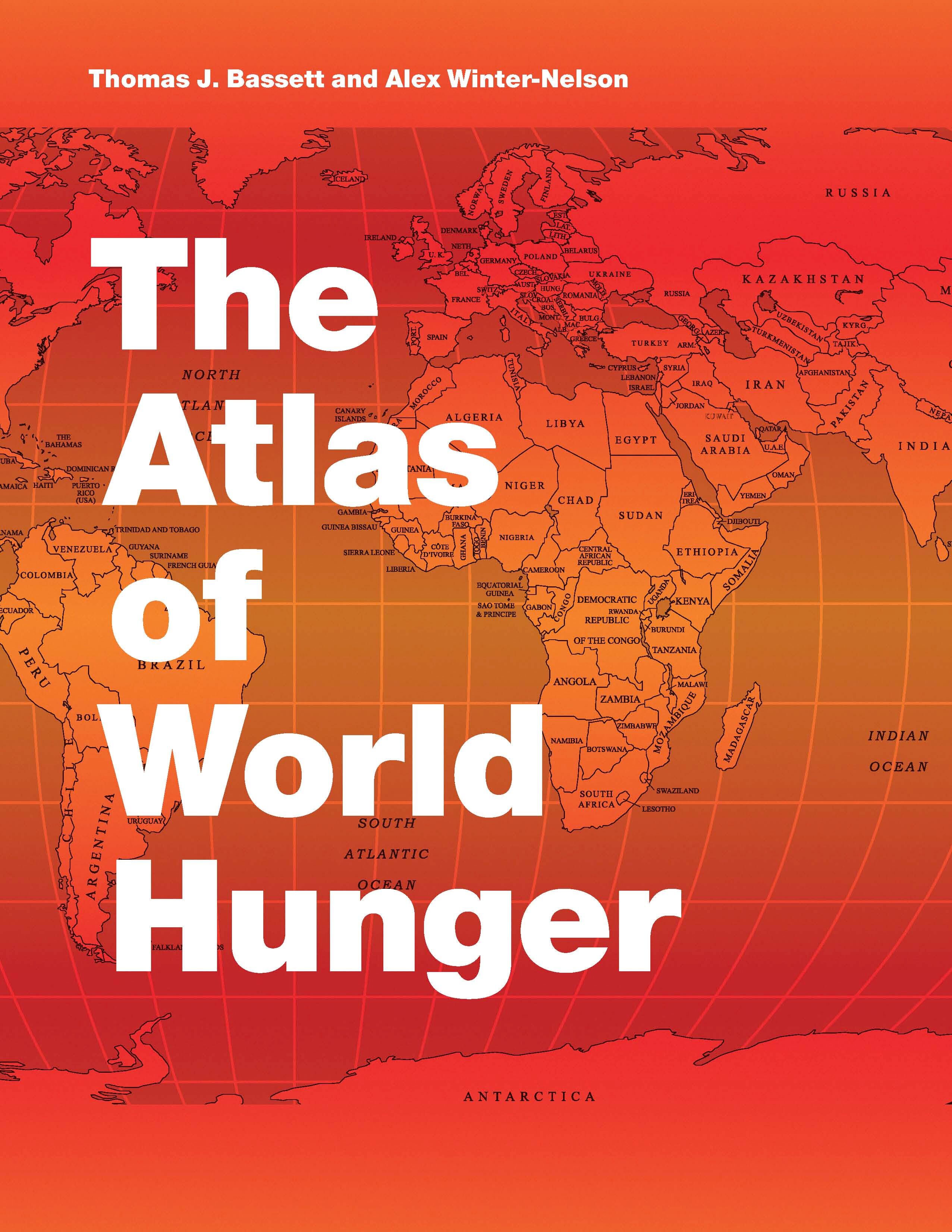
atlas of world hunger
Earlier this year, President Obama declared one of his top priorities to be “making sure that people are able to get enough to eat.” The United States spends about five billion dollars on food aid and related programs each year, but still, both domestically and internationally, millions of people are hungry. In 2006, the Food and Agricultural Organization of the United Nations counted 850 million hungry people worldwide, but as food prices soared, an additional 100 million or more who were vulnerable succumbed to food insecurity. If hunger were simply a matter of food production, no one would go without. There is more than enough food produced annually to provide every living person with a healthy diet, yet so many suffer from food shortages, unsafe water, and malnutrition every year. That’s because hunger is a complex political, economic, and ecological phenomenon. The interplay of these forces produces a geography of hunger that Thomas J. Bassett and Alex Winter-Nelson illuminate in this empowering book. The Atlas of World Hunger uses a conceptual framework informed by geography and agricultural economics to present a hunger index that combines food availability, household access, and nutritional outcomes into a single tool—one that delivers a fuller understanding of the scope of global hunger, its underlying mechanisms, and the ways in which the goals for ending hunger can be achieved. The first depiction of the geography of hunger worldwide, the Atlas will be an important resource for teachers, students, and anyone else interested in understanding the geography and causes of hunger. This knowledge, the authors argue, is a critical first step toward eliminating unnecessary suffering in a world of plenty.
eBook

Measuring Up
Measuring Up traces the high levels of poverty and inequality that Mexico faced in the mid-twentieth century. Using newly developed multidisciplinary techniques, the book provides a perspective on living standards in Mexico prior to the first measurement of income distribution in 1957. By offering an account of material living conditions and their repercussions on biological standards of living between 1850 and 1950, it sheds new light on the life of the marginalized during this period.
Measuring Up shows that new methodologies allow us to examine the history of individuals who were not integrated into the formal economy. Using anthropometric history techniques, the book assesses how a large portion of the population was affected by piecemeal policies and flaws in the process of economic modernization and growth. It contributes to our understanding of the origins of poverty and inequality, and conveys a much-needed, long-term perspective on the living conditions of the Mexican working classes.
eBook