
Catalogue Search | MBRL


Are you sure you want to remove the book from the shelf?

{{itemTitle}}
46,287
result(s) for
"Economic development -- Statistics"
Sort by:


Poor numbers: how we are misled by African development statistics and what to do about it
One of the most urgent challenges in African economic development is to devise a strategy for improving statistical capacity. Reliable statistics, including estimates of economic growth rates and per-capita income, are basic to the operation of governments in developing countries and vital to nongovernmental organizations and other entities that provide financial aid to them. Rich countries and international financial institutions such as the World Bank allocate their development resources on the basis of such data. The paucity of accurate statistics is not merely a technical problem; it has a massive impact on the welfare of citizens in developing countries.
Where do these statistics originate? How accurate are they?Poor Numbersis the first analysis of the production and use of African economic development statistics. Morten Jerven's research shows how the statistical capacities of sub-Saharan African economies have fallen into disarray. The numbers substantially misstate the actual state of affairs. As a result, scarce resources are misapplied. Development policy does not deliver the benefits expected. Policymakers' attempts to improve the lot of the citizenry are frustrated. Donors have no accurate sense of the impact of the aid they supply. Jerven's findings from sub-Saharan Africa have far-reaching implications for aid and development policy. As Jerven notes, the current catchphrase in the development community is \"evidence-based policy,\" and scholars are applying increasingly sophisticated econometric methods-but no statistical techniques can substitute for partial and unreliable data.
eBook


Little Green Data Book 2011
The Little Green Data Book is a pocket-sized ready reference on key environmental data for over 200 countries. Key indicators are organized under the headings of agriculture, forestry, biodiversity, energy, emission and pollution, and water and sanitation.
eBook

The little data book on private sector development 2016
Contains reliable cross-country data on aspects of private sector development, crucial in planning for economic recovery and growth. In targeting increased exports and investment, many governments prioritize an improved climate for business as a basis to attract capital, create jobs, and provide basic services. The availability of cross-country data on the business environment has rapidly expanded in recent years, including data from the World Bank Group's Doing Business project, Enterprise Surveys, and the Entrepreneurship Snapshots. Included in this guide are indicators on the economic and social context, the investment climate, private sector investment, finance and banking, and infrastructure. Though a pocket guide cannot include all relevant variables, the included indicators provide users with a general understanding of the private sector in each country. Indicators displayed in the tables are defined in the glossary, which also lists data sources.
Book

Moderating and mediating role of renewable energy consumption, FDI inflows, and economic growth on carbon dioxide emissions: evidence from robust least square estimator
The relationship between renewable energy consumption (REC), foreign direct investment (FDI) inflows, economic growth, and their resulting impact on CO2 emissions is widely discussed area in energy and environmental literature; however, there is an unseen literature on moderation and mediation effect of per capita income and FDI inflows with the renewable energy consumption on CO2 emissions in developing countries like Pakistan, which is being evaluated in this study by using a consistent time series data for a period of 1975–2016. The results show that economic growth and FDI inflows both increase CO2 emissions, while REC substantially decreases CO2 emissions during the study time period. The results do not support the inverted U-shaped Environmental Kuznets Curve (EKC) hypothesis for per capita income (and FDI inflows) and per capita CO2 emissions in a country. The results supported ‘pollution haven hypothesis’ where FDI inflows damage the natural flora of the country. By inclusion of moderation and mediation effect of per capita income and FDI inflows with the REC on CO2 emissions averted the positive impact of REC, and converted into negative externality, where environmental sustainability agenda is compromised by lower environmental regulations and unsustainable production techniques that increase country’s economic growth. The study concludes that by adding REC in existing energy portfolio may help to reduce CO2 emissions while strict environmental compliance may disregard the negative externality of unsustainable production and it will support to achieve green development programmes in a country.
Journal Article

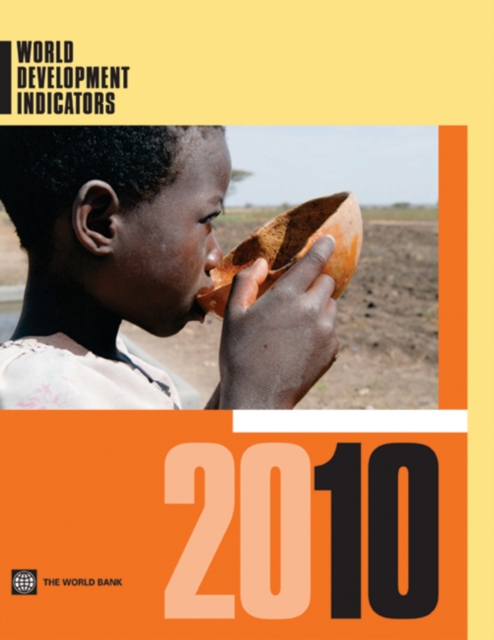
World Development Indicators 2010
Looking for accurate, up-to-date data on development issues? 'World Development Indicators' is the World Bank's premier annual compilation of data about development. This indispensable statistical reference allows you to consult over 800 indicators for more than 150 economies and 14 country groups in more than 90 tables. It provides a current overview of the most recent data available as well as important regional data and income group analysis in six thematic sections: World View, People, Environment, Economy, States and Markets, and Global Links. World Development Indicators 2010 presents the most current and accurate development data on both a national level and aggregated globally. It allows you to monitor the progress made toward meeting the Millennium Development Goals endorsed by the United Nations and its member countries, the World Bank, and a host of partner organizations. These goals, which focus on development and the elimination of poverty, serve as the agenda for international development efforts.
eBook

Atlas of sustainable development goals 2018 : from world development indicators
\"The Atlas of Sustainable Development Goals 2018 is built around World Development Indicators--the World Bank's compilation of statistics from over 200 economies about global development and the quality of people's lives. For each of the 17 Sustainable Development Goals, selected indicators have been identified and visualized to anaylze trends and challenges, and to catalyze discussion on measurement issues.\" -- From back cover.
Book

The Agricultural Origins of Time Preference
This research explores the origins of observed differences in time preference across countries and regions. Exploiting a natural experiment associated with the expansion of suitable crops for cultivation in the course of the Columbian Exchange, the research establishes that pre-industrial agro-climatic characteristics which were conducive to higher return to agricultural investment triggered selection, adaptation, and learning processes that generated a persistent positive effect on the prevalence of long-term orientation in the contemporary era. Furthermore, the research establishes that these agro-climatic characteristics have had a culturally embodied impact on economic behavior such as technological adoption, education, saving, and smoking.
Journal Article