
Catalogue Search | MBRL


Are you sure you want to remove the book from the shelf?

{{itemTitle}}
1,577
result(s) for
"Economic development California History."
Sort by:

Water and the California dream : historic choices for shaping the future
\"Imported water has transformed the Golden State's environment and quality of life. Land ownership patterns and real estate boosterism dramatically altered both urban and rural communities across the entire state. The key has been redirecting water from the Eastern Sierra, the Colorado River, and Northern California rivers. 'Whoever brings the water, brings the people,' wrote engineer William Mullholland, whose leadership began the process of water irrigating unlimited growth. Using first-person voices of Californians to reveal the resulting changes, Carle concludes that now is the time to stop drowning the California Dream. With extensive use of oral histories, contemporary newspaper articles and autobiographies, Carle provides a rich exploration of the historic changes in California, as imported water shaped patterns of growth and development. In this thoroughly revised edition, Carle brings that history up to date, as water choices remain the primary tool for shaping California's future. In a land where climate change is exacerbating the challenges of a naturally dry region, the state's damaged environment and reduced quality of life can be corrected, Carle argues, if Californians step out of the historic pattern and embrace limited water supplies as a fact of life\"-- Provided by publisher.
Book

The Impact of Transit-oriented Development on Housing Prices in San Diego, CA
This research measures the influence of transit-oriented development (TOD) on the San Diego, CA, condominium market. Many view TOD as a key element in creating a less auto dependent and more sustainable transport system. Price premiums indicate a potential for a market-driven expansion of TOD inventory. A hedonic price model is estimated to isolate statistically the effect of TOD. This includes interaction terms between station distance and various measures of pedestrian orientation. The resulting model shows that station proximity has a significantly stronger impact when coupled with a pedestrian-oriented environment. Conversely, station area condominiums in more auto-oriented environments may sell at a discount. This indicates that TOD has a synergistic value greater than the sum of its parts. It also implies a healthy demand for more TOD housing in San Diego.
Journal Article

South Central is home : race and the power of community investment in Los Angeles
South Central Los Angeles is often characterized as an African American community beset by poverty and economic neglect. But this depiction obscures the significant Latina/o population that has called South Central home since the 1970s. More significantly, it conceals the efforts African American and Latina/o residents have made together in shaping their community. As residents have faced increasing challenges from diminished government social services, economic disinvestment, immigration enforcement, and police surveillance, they have come together in their struggle for belonging and justice. South Central Is Home investigates the development of relational community formation and highlights how communities of color like South Central experience racism and discrimination—and how in the best of situations, they are energized to improve their conditions together. Tracking the demographic shifts in South Central from 1945 to the present, Abigail Rosas shows how financial institutions, War on Poverty programs like Headstart for school children, and community health centers emerged as crucial sites where neighbors engaged one another over what was best for their community. Through this work, Rosas illuminates the promise of community building, offering findings indispensable to our understandings of race, community, and place in U.S. society.
eBook

Spaces of conflict, sounds of solidarity
In Spaces of Conflict, Sounds of Solidarity, Gaye Theresa Johnson examines interracial anti-racist alliances, divisions among aggrieved minority communities, and the cultural expressions and spatial politics that emerge from the mutual struggles of Blacks and Chicanos in Los Angeles from the 1940s to the present. Johnson argues that struggles waged in response to institutional and social repression have created both moments and movements in which Blacks and Chicanos have unmasked power imbalances, sought recognition, and forged solidarities by embracing the strategies, cultures, and politics of each others' experiences. At the center of this study is the theory of spatial entitlement: the spatial strategies and vernaculars utilized by working class youth to resist the demarcations of race and class that emerged in the postwar era. In this important new book, Johnson reveals how racial alliances and antagonisms between Blacks and Chicanos in L.A. had spatial as well as racial dimensions.
eBook

Black and brown in Los Angeles
Black and Brown in Los Angeles is a timely and wide-ranging, interdisciplinary foray into the complicated world of multiethnic Los Angeles. The first book to focus exclusively on the range of relationships and interactions between Latinas/os and African Americans in one of the most diverse cities in the United States, the book delivers supporting evidence that Los Angeles is a key place to study racial politics while also providing the basis for broader discussions of multiethnic America. Students, faculty, and interested readers will gain an understanding of the different forms of cultural borrowing and exchange that have shaped a terrain through which African Americans and Latinas/os cross paths, intersect, move in parallel tracks, and engage with a whole range of aspects of urban living. Tensions and shared intimacies are recurrent themes that emerge as the contributors seek to integrate artistic and cultural constructs with politics and economics in their goal of extending simple paradigms of conflict, cooperation, or coalition. The book features essays by historians, economists, and cultural and ethnic studies scholars, alongside contributions by photographers and journalists working in Los Angeles.
eBook

Sustainable water : challenges and solutions from California
Water scarcity, urban population growth, and deteriorating infrastructure are impacting water security around the globe. Struggling with the most significant drought in its recorded history, California faces all of these challenges to secure reliable water supplies for the future. The unfolding story of California water includes warnings and solutions for any region seeking to manage water among the pressures of a dynamic society and environment.Written by leading policy makers, lawyers, economists, hydrologists, ecologists, engineers, and planners, Sustainable Water reaches across disciplines to address problems and solutions for the sustainable use of water in urban areas. The solutions and ideas put forward in this book integrate water management strategies to increase resilience in a changing world.Contributors: John T. Andrew, Carolina Balazs, Celeste Cantú, Juliet Christian-Smith, Matthew Deitch, Caitlin Dyckman, Howard Foster, Julian Fulton, Peter Gleick, Brian E. Gray, Ellen Hanak, Maurice Hall, Michael Hanemann, Sasha Harris-Lovett, Matthew Heberger, G. Mathias Kondolf, Jay Lund, Damian Park, Kristen Podolak, John Radke, Isha Ray, David Sedlak, Fraser Shilling, Daniel Wendell, Robert Wilkinson, Cleo Woelfle-Erskine, Sarah Yarnell.
eBook
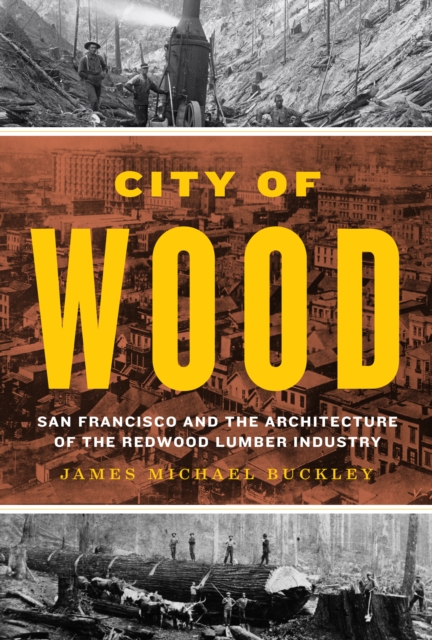
City of Wood
2025 John Brinckerhoff Jackson Prize, Association of American Geographers 2025 Abbott Lowell Cummings Award, Vernacular Architecture Forum How San Franciscans exploited natural resources such as redwood lumber to produce the first major metropolis of the American West.
eBook
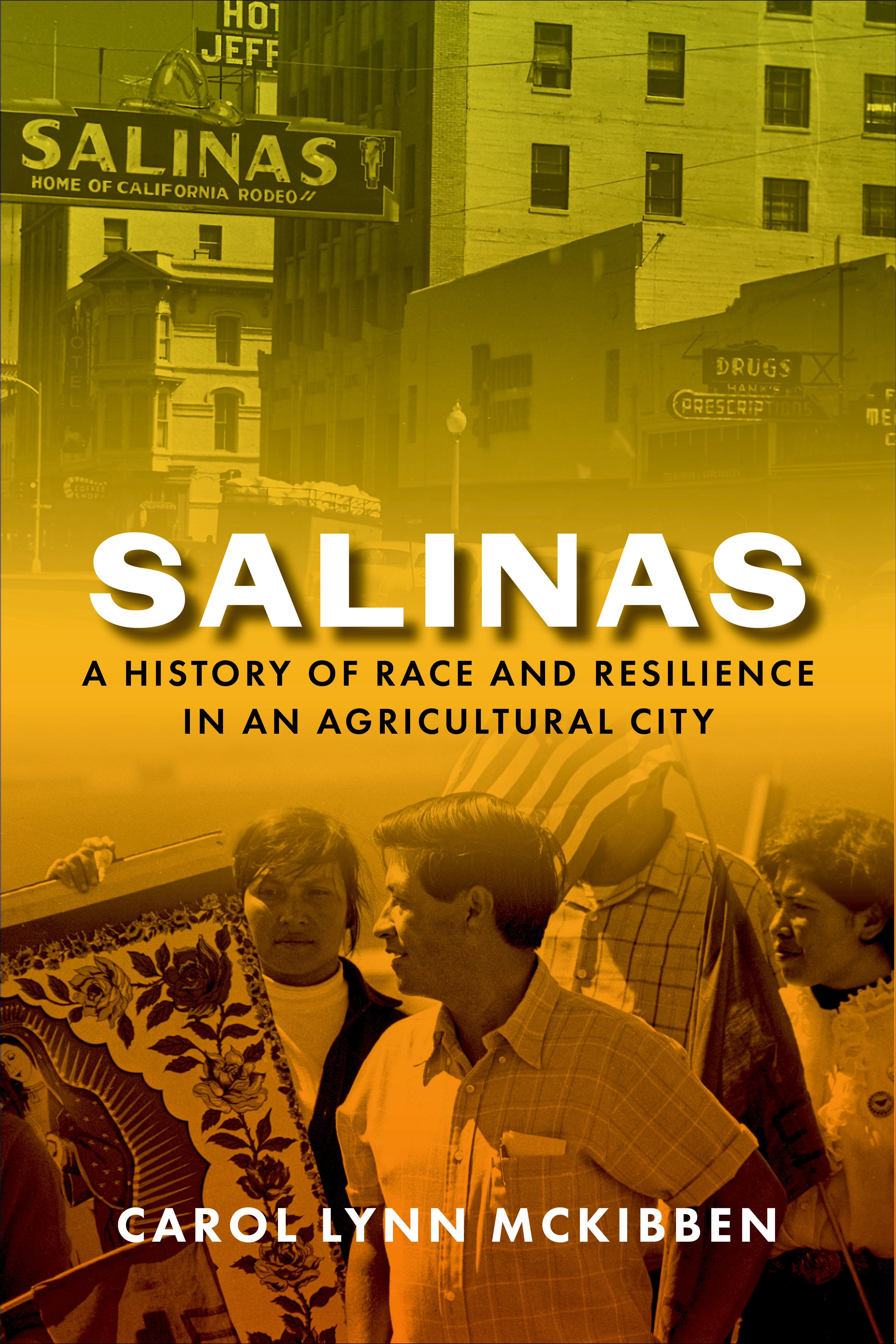
Salinas : a history of race and resilience in an agricultural city
An ambitious history of a California city that epitomizes the history of race relations in modern America. Although much has been written about the urban–rural divide in America, the city of Salinas, California, like so many other places in the state and nation whose economies are based on agriculture, is at once rural and urban. For generations, Salinas has been associated with migrant farmworkers from different racial and ethnic groups. This broad-ranging history of \"the Salad Bowl of the World\" tells a complex story of community-building in a multiracial, multiethnic city where diversity has been both a cornerstone of civic identity and, from the perspective of primarily white landowners and pragmatic agricultural industrialists, essential for maintaining the local workforce. Carol Lynn McKibben draws on extensive original research, including oral histories and never-before-seen archives of local business groups, tracing Salinas's ever-changing demographics and the challenges and triumphs of Chinese, Japanese, Filipino, and Mexican immigrants, as well as Depression-era Dust Bowl migrants and white ethnic Europeans. McKibben takes us from Salinas's nineteenth-century beginnings as the economic engine of California's Central Coast up through the disproportionate impact of Covid-19 on communities of color today, especially farmworkers who already live on the margins. Throughout the century-plus of Salinas history that McKibben explores, she shows how the political and economic stability of Salinas rested on the ability of nonwhite minorities to achieve a measure of middle-class success and inclusion in the cultural life of the city, without overturning a system based in white supremacy. This timely book deepens our understanding of race relations, economic development, and the impact of changing demographics on regional politics in urban California and in the United States as a whole.
eBook

Replacing humans with machines: a historical look at technology politics in California agriculture
Media outlets, industry researchers, and policy-makers are today busily extolling new robotic advances that promise to transform agriculture, bringing us ever closer to self-farming farms. Yet such techno-optimist discourse ignores the cautionary lessons of past attempts to mechanize farms. Adapting the Social Construction of Technology framework, we trace the history of efforts to replace human labor with machine labor on fruit, nut, and vegetable farms in California between 1945 and 1980—a place and time during which a post-WWII culture of faith in the beneficence of technoscience applications to agriculture reached an apex. The degree to which and forms whereby mechanization gains momentum hinges on whether, how, and among whom a technological frame for mimicking human capabilities and supplanting workers coalesces. These frames, we find, vary considerably across crops, reflecting complex interactions of biology, farmer and farm worker behavior, industry supply chains, agricultural research and development, financial flows, and beliefs about labor, race, gender, and immigration. To tease out these complex dynamics, we draw directly from archival evidence to follow the development of cultivation and harvest machines through four cases spanning a spectrum of outcomes—tomatoes, nuts, peaches, and lettuce. In comparing across these cases, we find that although agricultural engineers, scientists, and their boosters framed mechanization as a triumphal narrative of progress in ‘human vs. nature’ conflicts, this techno-optimist rhetoric camouflaged deeper ‘human vs. human’ conflicts, particularly among agribusiness, farmers, and farm workers. We conclude with several insights that this historical study brings to the study of agricultural automation today.
Journal Article

The Rise and Fall of Urban Economies
Today, the Bay Area is home to the most successful knowledge economy in America, while Los Angeles has fallen progressively further behind its neighbor to the north and a number of other American metropolises. Yet, in 1970, experts would have predicted that L.A. would outpace San Francisco in population, income, economic power, and influence. The usual factors used to explain urban growth—luck, immigration, local economic policies, and the pool of skilled labor—do not account for the contrast between the two cities and their fates. So what does? The Rise and Fall of Urban Economies challenges many of the conventional notions about economic development and sheds new light on its workings. The authors argue that it is essential to understand the interactions of three major components—economic specialization, human capital formation, and institutional factors—to determine how well a regional economy will cope with new opportunities and challenges. Drawing on economics, sociology, political science, and geography, they argue that the economic development of metropolitan regions hinges on previously underexplored capacities for organizational change in firms, networks of people, and networks of leaders. By studying San Francisco and Los Angeles in unprecedented levels of depth, this book extracts lessons for the field of economic development studies and urban regions around the world.
eBook